 Follow Us on Google News


 Follow Us on Google Discover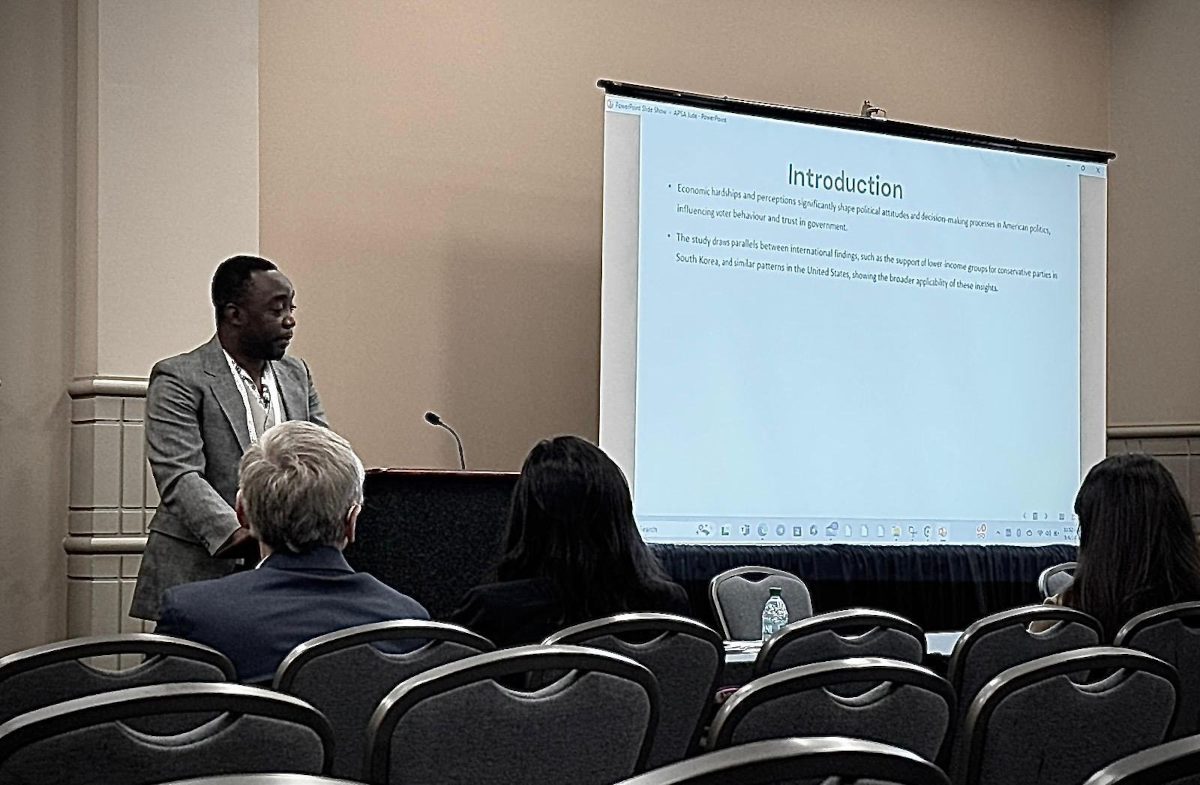
What makes a nursing student finish a clinical shift believing it went well or badly?
Workload is part of the answer, but preliminary research at Auburn University in the United States suggests that clinical department, interactions with patients and colleagues, and expectations from supervisors may also shape how students assess individual shifts.
Auburn University graduate researcher Jude Chukwuebuka Ugwuoke is among the researchers examining that question through a project titled “Identifying Single Shift Quality Measures in the Case of Nursing Students.”
Ugwuoke, a graduate research assistant in Auburn University’s Department of Political Science, contributed to the study led by health services administration student Kelly Moore. Auburn University’s College of Liberal Arts identified him alongside Haneen Ali, Yasin Fatemi and Astin Cole as political science graduate research assistants who assisted Moore throughout the research, placing him within an interdisciplinary team examining a healthcare workforce question.
The study examines how workload, workplace interactions and other conditions are associated with nursing students’ perceptions of whether a clinical shift was positive or negative.
Rather than asking students to assess their clinical experience over several months, the project focuses on individual shifts. Participating students are interviewed before shifts about the experiences and pressures they expect, then again afterwards about what occurred. Researchers compare the responses to identify changes and determine which factors are associated with stress and perceptions of shift quality.

Auburn reported that the team considered workload, clinical department, interactions during shifts and expectations from supervisors.
The approach gives empirical form to a question hospital administrators and health workers often encounter less formally: why can two people spend comparable hours in similar working environments yet leave with different assessments of their day? By examining individual shifts, the researchers are trying to identify which elements account for those differences.
Preliminary findings reported by Auburn indicate that workload matters, but not alone. Clinical department and interactions with patients, co-workers and supervisors were also associated with how nursing students assessed their shifts.
The findings remain preliminary because data collection was still continuing when Auburn reported on the research.
Moore, who presented the project at Auburn’s 2023 Student Research Symposium, said her interest developed from concern about conditions facing healthcare workers.
“Burnout is a real issue in health care,” she said in the university’s account.
Her concern reflects a wider debate in the United States over pressures facing the health workforce. In 2022, the Office of the U.S. Surgeon General issued an advisory warning that difficult working environments could strain health workers’ physical, emotional and psychological wellbeing, contribute to departures from the profession and make it harder for patients to obtain care.
The national concern, however, is broader than the Auburn project. The university study concerns nursing students and measures perceptions of individual clinical shifts rather than diagnosing burnout.
That narrower focus allows researchers to examine how particular workplace experiences accumulate during one shift rather than relying only on workers’ broad recollections after longer periods.
A demanding workload, for example, may be experienced differently depending on department, support from colleagues, interactions with patients or supervisory demands. Examining those factors separately may help identify recurring patterns behind positive and negative shift experiences.
The method also compares expectations with actual experience. A student may anticipate a difficult workload but encounter fewer pressures than expected, while another may begin with positive expectations and experience conflict, an unexpectedly demanding patient load or supervisory difficulties. Those differences become part of the information available for analysis.
Collecting the information has presented practical challenges. Moore said the project had to navigate Institutional Review Board requirements and obtain data from nursing students already balancing academic and clinical schedules. Auburn reported that participation had to be arranged around students’ limited availability.
The team’s interdisciplinary composition is also significant. Ugwuoke and the other graduate assistants identified by Auburn are based in political science, while Moore’s programme is health services administration. The project therefore brings social-science research into a healthcare workforce problem centred on measuring organisational conditions and individual workplace experiences.
That combination allows the issue to be examined not only through clinical considerations but also through questions familiar to social-science research, including how individual experiences are measured, how workplace conditions differ and how patterns can be identified from participant responses.
Instead of studying students’ general attitudes towards clinical training, the project focuses on particular shifts and the circumstances surrounding them. This makes it possible to distinguish among potential sources of workplace pressure, with workload being one factor, clinical department another, and relationships with patients and colleagues and expectations from supervisors potentially altering how similar workloads are experienced.
Auburn’s preliminary findings indicate that several of these factors may operate simultaneously.
It would be premature, however, to conclude that changing any one factor would reduce burnout or improve patient outcomes. The research has not established that.
What it has begun to show is that students’ assessments of clinical shifts appear to reflect a combination of organisational and interpersonal experiences rather than workload alone.
That matters because clinical training introduces nursing students to environments they are likely to encounter after qualification, including demanding workloads, supervisory relationships, patient interactions and healthcare institutions’ organisational routines.
Studying those experiences during training may provide researchers with information about how future health workers respond to workplace conditions before such experiences become part of longer-term professional routines.
The Auburn project does not claim to have resolved the wider problem of health-worker burnout, nor does it establish that an unpleasant shift will cause a nursing student to leave the profession. Its focus is more immediate: identifying what occurs during individual shifts and how differences between expectations before work and experiences afterwards influence students’ assessments.
That distinction may eventually help administrators determine whether recurring problems are associated with workload, particular work environments, supervisory relationships or interactions with others in clinical settings.
For health-services researchers, it can also move discussions of workplace stress from broad descriptions towards conditions that can be examined separately.
The project therefore begins with a narrow unit of analysis — one shift and one student’s experience — while asking a wider question: whether identifying recurring conditions associated with difficult shifts can help healthcare educators and administrators understand where avoidable workplace pressures originate.
For Ugwuoke and the other graduate researchers, the project also applies social-science research to a problem outside the conventional boundaries of political science, bringing the study of individual behaviour and organisational conditions into a healthcare setting.
The project was presented at Auburn University’s 2023 Student Research Symposium, where Moore outlined its approach to identifying determinants of shift quality and comparing anticipated stress with experiences reported after shifts.
Data collection was continuing when Auburn reported on the research, so the findings remain preliminary.
What they suggest so far is that the experience of a clinical shift cannot be reduced to workload alone. Clinical department, relationships with patients and colleagues, and expectations from supervisors may all contribute to how students assess their working day.
For now, the study’s conclusion remains restrained: whether a nursing student experiences a shift positively or negatively appears to involve several workplace conditions acting together.

