 Follow Us on Google News
 Follow Us on Google Discover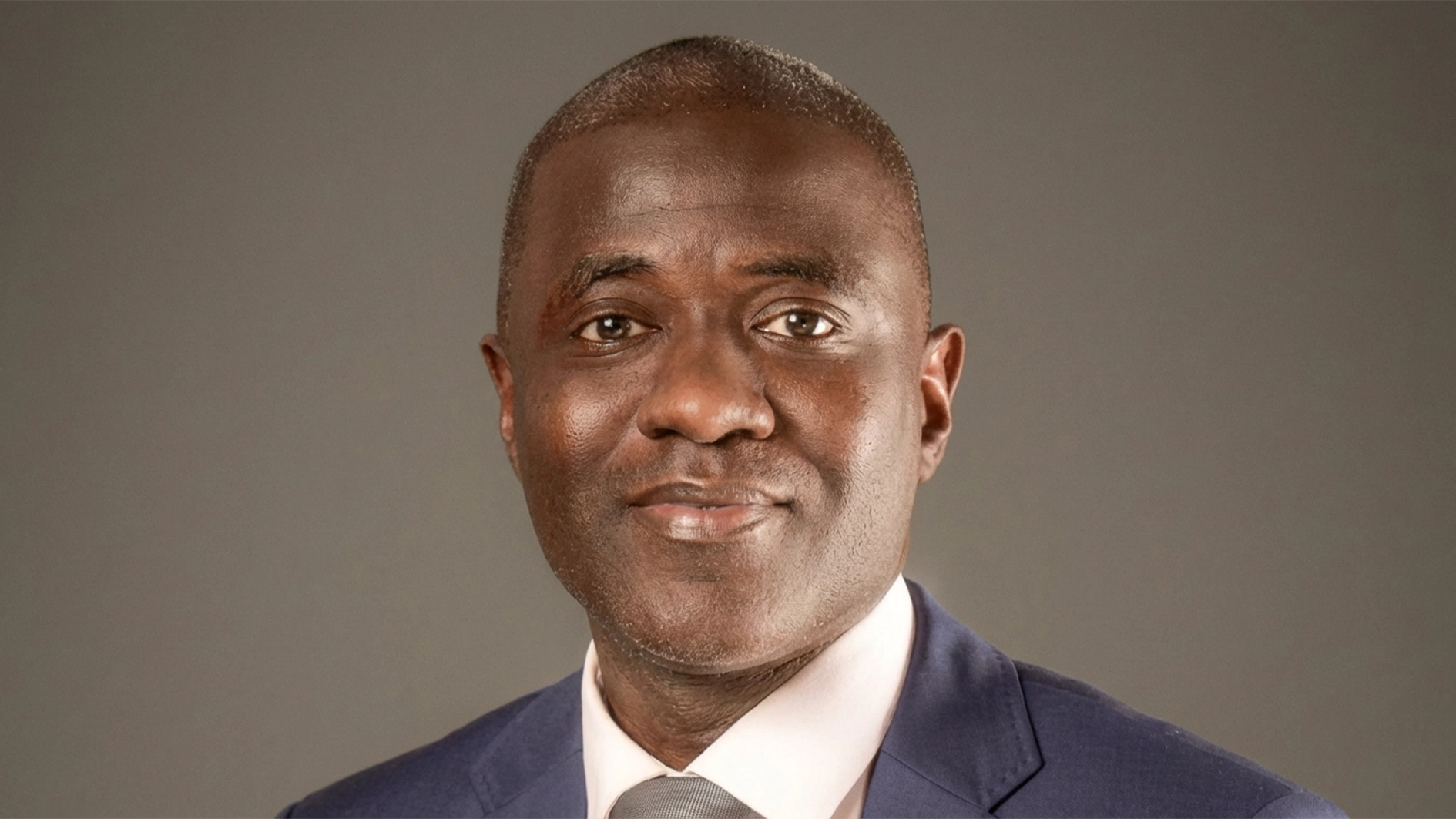
A fibre cable buried beneath a Nigerian road may look like a telecom asset. But when that cable is carrying a bank transfer, powering a point-of-sale terminal, connecting a logistics operator to customers or enabling a software developer to serve a client abroad, its economic value extends far beyond the telecommunications company that paid for it.
That is the larger question emerging from Nigeria’s sustained investment in telecommunications infrastructure: what does the country actually gain from the networks being built, expanded and upgraded across the economy?
For economist and Financial Derivatives Company Managing Director, Bismarck Rewane, the answer cannot be found simply by looking at the telecommunications sector’s contribution to Gross Domestic Product.
Rewane recently described the telecommunications revolution as one of the most significant transformations in Nigeria’s economy in the past 25 years, arguing that operators have evolved from service providers into critical economic infrastructure.
He recalled that Nigeria had only about 250,000 fixed telephone lines in 2000. By July 2026, the Nigerian Communications Commission recorded 157.27 million active internet subscriptions, alongside a much larger mobile subscription base.
Rewane said the transformation had also been accompanied by a dramatic increase in investment, estimating that combined telecommunications investment had risen from about $500 million at the beginning of the period to more than $75 billion.

“That is not just money invested in telecommunications companies. That is investment in the Nigerian economy, investment in infrastructure and investment in the capacity of the economy to produce and transact,” he said.
It is that phrase — produce and transact — that captures the multiplier effect of telecommunications investment.
The economic value of a network does not stop when an operator installs a base station, lays fibre or upgrades a data platform. The investment becomes an input into the activities of thousands of businesses and millions of consumers.
A merchant accepting a digital payment, a farmer accessing market information, a bank processing a transfer, a courier locating a customer, a manufacturer coordinating suppliers, a doctor communicating with a patient or a Nigerian professional delivering a service to an overseas client are all using the same underlying digital infrastructure.
Nigeria’s own telecommunications statistics illustrate how deeply that infrastructure has become embedded in economic activity.
The NCC puts the sector’s contribution to real GDP at 9.72 per cent in the second quarter of 2026, up from 9.19 per cent in the first quarter. Broadband subscriptions stood at 124.42 million in July, while fibre-to-the-X subscriptions reached 319,735 in the second quarter.
But the GDP number, important as it is, captures only part of the story.
Rewane has argued that telecommunications should be assessed not only by its direct contribution to GDP but by the activities it enables across banking, commerce, healthcare, transportation, education and other sectors.
“If you look only at the numbers, you may say telecommunications contributes a certain percentage to GDP. But if you look at the effective value, you begin to see the linkages,” he said.
One of the clearest demonstrations of those linkages is Nigeria’s payments ecosystem.
According to data from the Nigeria Inter-Bank Settlement System, the value of transactions conducted through point-of-sale terminals rose 79.03 per cent year-on-year to N18.78 trillion in the first quarter of 2026, compared with N10.49 trillion in the corresponding period of 2025. NIBSS data also showed that deployed POS terminals had reached 5.56 million by December 2024.
The POS terminal itself is not the whole economic story. Its usefulness depends on connectivity.
For the trader, connectivity means a customer can pay. For the agent, it means a transaction can be processed. For the bank or fintech, it means another digital financial service can be delivered.
For the customer, it can mean access to cash, transfers and bill payments without travelling to a bank branch.
The same transmission mechanism is visible across the small-business economy.
A restaurant using a digital ordering platform, a fashion entrepreneur advertising on social media, a small manufacturer communicating with distributors through messaging applications, or a retailer receiving transfers from customers is converting network availability into commercial activity.
The connection between telecommunications and financial technology is particularly significant.
Nigeria’s rapid expansion of fintech, agency banking and digital payments has occurred alongside the expansion of mobile connectivity. The network is not the financial service itself, but it provides part of the infrastructure through which the service reaches the customer.
That is why Rewane has described telecommunications as a high-linkage sector — an investment area capable of transmitting economic activity into other parts of the economy. His argument is consistent with the broader economic literature around digital connectivity: investment in networks can generate effects beyond the direct revenues and employment of telecom operators.
The GSMA, for example, estimated that the mobile sector’s broader contribution to Nigeria’s economy reached N33 trillion in 2023 when direct value added, wider ICT activity and productivity effects were considered. It also estimated N2.4 trillion in tax contributions that year. These are industry estimates rather than national-account figures, but they illustrate the scale of the wider economic effects being attributed to connectivity.
The association has also estimated that increased digitalisation of agriculture, manufacturing, transport, trade and government could add about two percentage points to GDP by 2028, create nearly two million jobs and generate an additional N1.6 trillion in tax revenue. Again, those are projections, not realised outcomes.
There is no single official Nigerian statistic showing that every naira invested by a telecom operator generates a particular number of naira elsewhere in the economy. The “multiplier effect” is therefore better understood here as a chain of economic transmission rather than a single measured coefficient.
The chain, however, is increasingly visible.
Telecom operators and other industry players reported capital expenditure of N2.13 trillion in 2025 and projected another N1.86 trillion in 2026 for network expansion, technology upgrades and related investment.
Those investments create direct demand for equipment, construction, engineering, fibre deployment, power, security, maintenance and technical services.
But their larger significance may lie downstream.
A stronger network can support more reliable digital payments. More reliable payments can support more transactions. More transactions can support more businesses. More businesses create demand for labour, logistics, finance, advertising and other services.
That is the multiplier chain.
It also explains why the economics of telecommunications investment cannot be separated from the question of reliability.
Nigeria’s digital economy is becoming more dependent on infrastructure that remains physically vulnerable.
The NCC reported more than 5,000 fibre-cut incidents during the first six months of 2026, many linked to road construction, excavation and other civil works. NCC Executive Vice Chairman Aminu Maida warned that damage to fibre infrastructure could translate into failed calls, stalled payments, interrupted services and lost economic opportunities.
“Roads” and “fibre” are therefore increasingly becoming part of the same economic conversation.
A road enables physical commerce. Fibre enables digital commerce. A damaged road can delay a truck; a damaged fibre route can interrupt payments, communication and digital services. Both can impose costs beyond the infrastructure itself.
The issue becomes even more important as Nigeria seeks to expand broadband access.
The World Bank’s Building Resilient Digital Infrastructure for Growth project involves $1.6 billion in total project costs, including $500 million in World Bank concessional financing. It is designed to support more than 90,000 kilometres of fibre, extending the national backbone from about 35,000 kilometres to 125,000 kilometres and connecting millions of households as well as thousands of schools, health facilities and local government offices.
That is not simply a telecommunications expansion programme.
It is an attempt to create an underlying platform for economic activity.
The World Bank’s design explicitly envisages private-sector participation, open-access infrastructure and the crowding-in of commercial capital. Its economic logic is that wider and more resilient connectivity can support digital services, businesses and public institutions across the country.
The investment story is therefore evolving.
The first phase of Nigeria’s telecommunications revolution was about connecting people. The next phase is increasingly about what those connections allow people and businesses to do.
That distinction is important because the value of infrastructure is ultimately determined by utilisation.
A fibre network that remains unused has limited economic value. A network carrying payments, business transactions, education, healthcare, logistics, government services and international digital work becomes an economic platform.
This is where the multiplier effect becomes most visible.
Consider a small business that moves from cash-only transactions to digital payments. The immediate benefit is convenience. But the wider chain can include better transaction records, access to financial services, easier customer payments, faster supplier settlement and potentially greater capacity to scale.
The same principle applies to a digital worker.
Connectivity allows a Nigerian designer, software developer, consultant or creative professional to reach a customer outside the country. The telecom operator earns revenue from the connection, but the economic value of the transaction extends into professional services, foreign exchange earnings, taxation and household income.
The infrastructure therefore creates an enabling layer beneath economic activity.
That is also why the quality and resilience of investment matter as much as its volume.
The sector can spend heavily on network expansion, but if fibre is repeatedly cut, electricity is unreliable, rights-of-way remain difficult or infrastructure is damaged, part of the economic value of that investment is lost through downtime and repair costs.
In that sense, Nigeria faces a paradox: the more of the economy that migrates onto digital infrastructure, the more expensive disruption becomes.
The country is no longer simply investing in telecommunications so Nigerians can make calls or browse the internet.
It is investing in infrastructure increasingly used to move money, coordinate businesses, deliver public services, educate students, connect health facilities and create new forms of employment.
The economic question, therefore, is no longer only how much telecom companies invest.
It is what that investment unlocks.
Rewane’s formulation provides a useful lens: telecommunications investment is investment in the capacity of the Nigerian economy “to produce and transact.”
The figures from the NCC and NIBSS show the scale of the underlying network and the transactions already flowing through it. Industry investment figures show that operators continue to put substantial capital into expanding that capacity. The World Bank’s BRIDGE project shows that public and development-finance institutions are also treating broadband infrastructure as an economy-wide development platform.
Taken together, they point to an important shift in the economics of connectivity.
Telecommunications is increasingly less a standalone sector sitting alongside banking, transport, commerce, education and manufacturing, and more an infrastructure layer running through all of them.
That is the real multiplier.
The return on telecom investment is not measured only by the revenue generated by the network. It is also measured by the economic activity that becomes possible because the network exists.

