 Follow Us on Google News
 Follow Us on Google Discover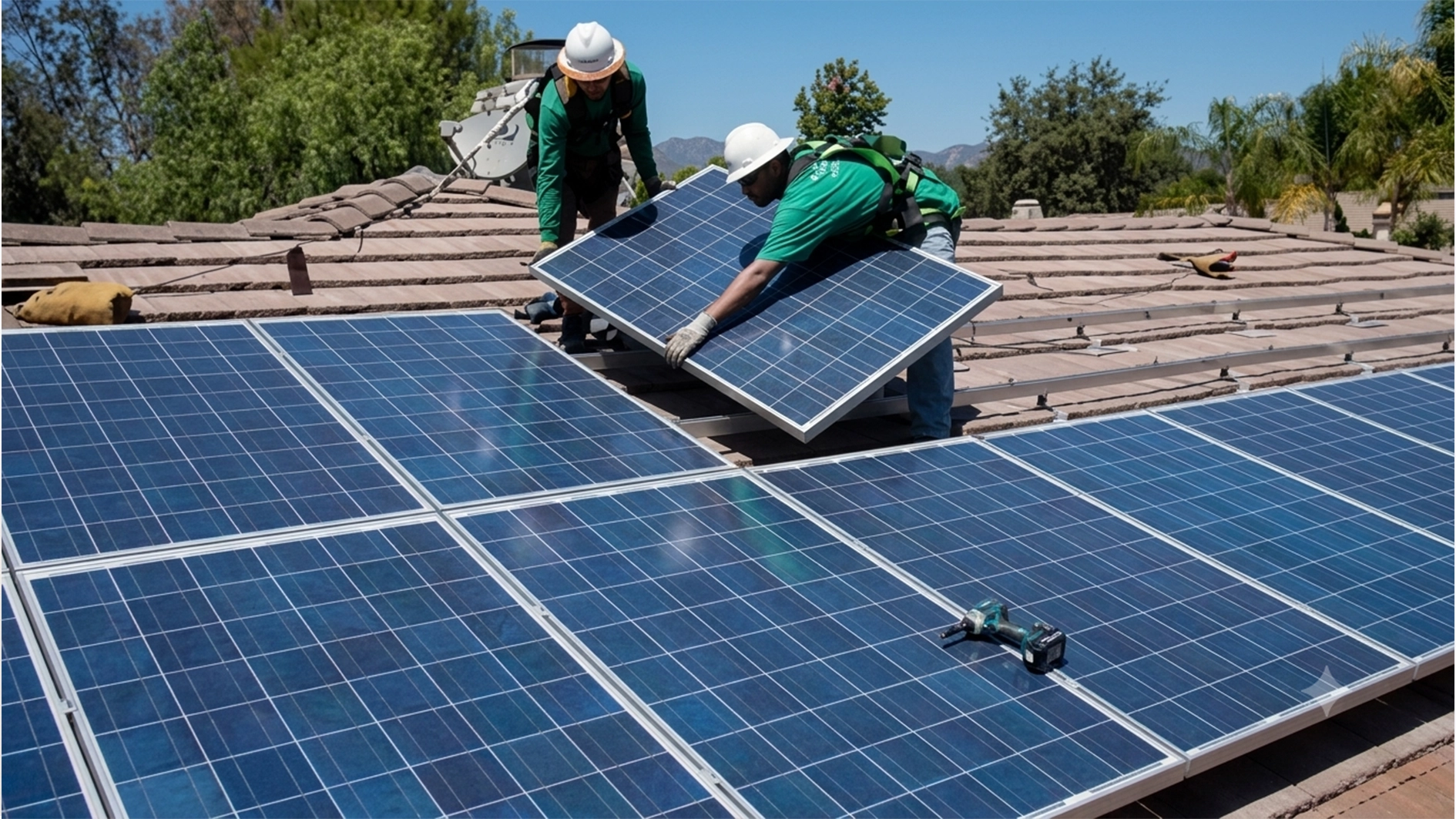
The growing cost of electricity and the need for reliable power are continuing to drive interest in solar energy among businesses, but access to appropriate financing is increasingly determining whether planned projects are implemented.
After years of rapid renewable energy adoption, particularly in response to power supply challenges, the commercial solar market is entering a more measured phase, with businesses paying greater attention to how projects will be financed.
While the economics of solar remain attractive for many organisations seeking to reduce exposure to rising electricity costs, financing arrangements can determine the affordability, risk allocation, cash flow requirements and speed of implementation of projects.
Nicolette Pombo-van Zyl, Editor-in-Chief of ESI Africa, said about 80 per cent of distributed solar capacity across Africa now serves commercial and industrial customers, describing the trend as businesses effectively building their own power networks.
“Our reporting this year shows that African businesses are, in effect, building their own grid. Roughly 80% of distributed solar capacity on the continent now serves commercial and industrial customers,” she said.
She, however, noted that businesses and developers increasingly need to determine whether the financing structure supporting a solar project is suitable for the organisation that will operate with it over the long term.
Financing choices become critical
As businesses seek to manage long-term electricity costs, they are increasingly confronted with different ways of financing solar installations, each carrying different implications for capital requirements, risk and ownership.
Options such as power purchase agreements, leases, bank loans and upfront capital investments can provide different pathways to deployment, depending on a company’s cash flow, risk appetite and willingness to take on operational responsibilities.
Pombo-van Zyl said businesses needed to understand these trade-offs before approaching potential funders.
“A power purchase agreement, a lease, a bank loan or an upfront capital investment can each be the right answer, depending on a company’s cash flow, its appetite for risk and who it wants carrying the operational burden,” she said.
She identified upfront cost as one of the major obstacles facing businesses considering solar investments.
According to her, companies that understand the implications of different financing structures are better positioned to engage funders and move projects forward.
From solar proposals to bankable projects
Although solar technology has become increasingly accessible and better understood by commercial energy users, financing remains a significant point of uncertainty in the commercial and industrial market.
For project developers, the challenge is not only to design systems that can generate adequate power, but also to structure projects around the financial circumstances of their customers.
Pombo-van Zyl said capital was available for energy infrastructure projects, but projects needed to be sufficiently prepared to attract financing.
“Across ESI Africa’s coverage of energy infrastructure funding, one theme keeps coming up: capital is available, but it goes to projects that are prepared for it,” she said.
She added that the same principle applied to projects ranging from utility-scale power plants to rooftop solar installations serving factories.
For businesses, understanding how commercial finance works, the information funders require and the circumstances under which different financing models are most appropriate could therefore become increasingly important as distributed solar expands.
The shift also highlights a broader issue in Africa’s renewable energy market: attracting investment is not only about demonstrating the technical viability of solar projects, but also about developing financing structures that provide sufficient certainty for businesses, developers and funders.
As organisations seek to balance energy costs, power reliability and long-term sustainability, the ability to match solar projects with suitable financing could increasingly determine which projects progress beyond the planning stage and which remain on hold.

