 Follow Us on Google News
 Follow Us on Google Discover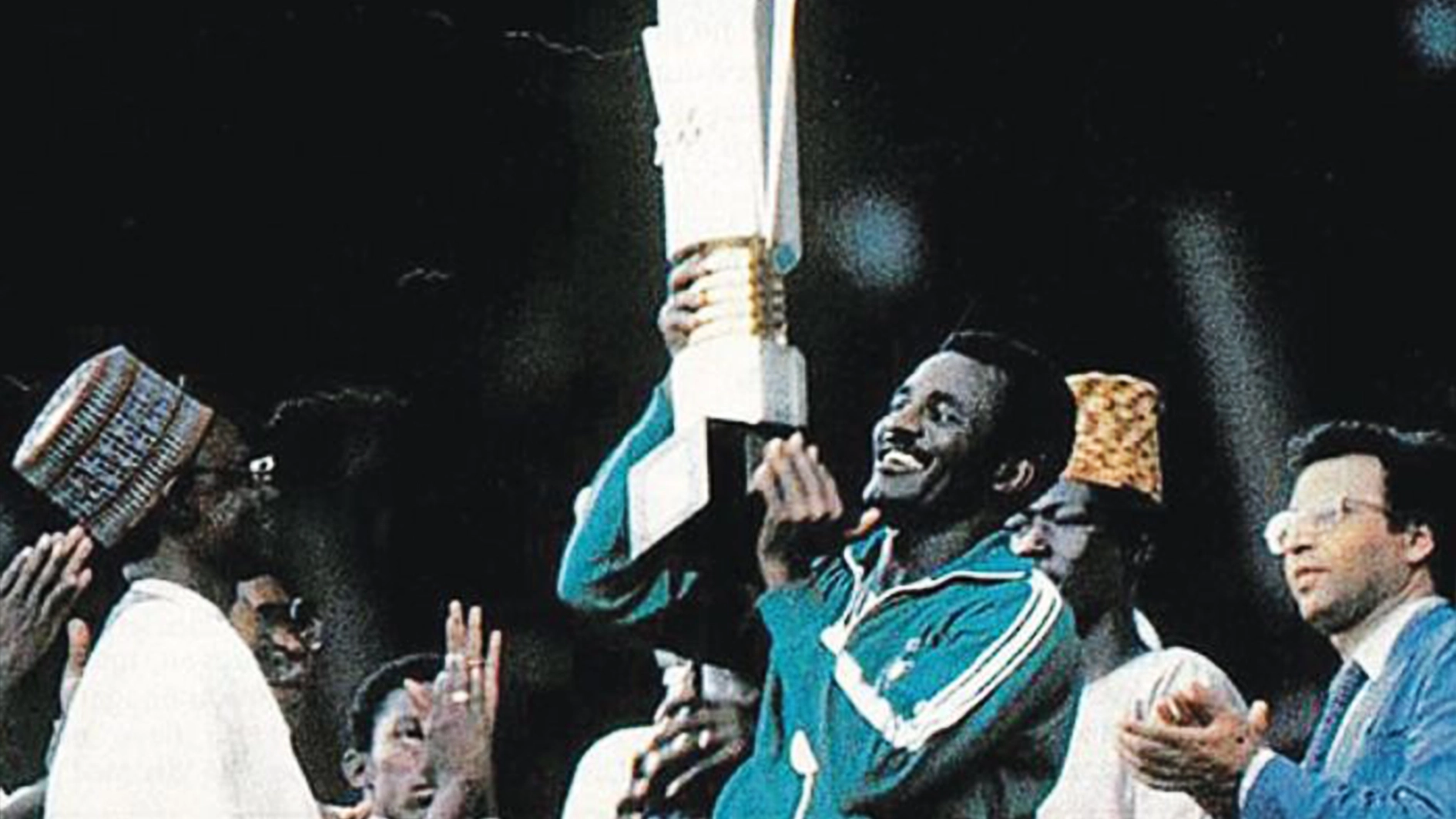
Politics, governance, the economy, and the nation’s current state will likely dominate online discussions and television screens as Nigeria marks its 66th year of independence from Britain, leaving Sports as an afterthought.
The brutal civil war between 1967 and 1970 that claimed over 2 million lives and the country’s bloodthirsty military rule in the 1970s to the eve of the new millennium are also major talking points that might overshadow sports, as those with vested interests in Nigeria cast their minds to how far the country has come.
However, the place of sports in Nigeria’s history cannot be overemphasized, nor can it be swept under the carpet, as it predates some of the historic events the country has witnessed over its 66 years of being called an independent state.
It would probably not be out of line for anyone to argue that sports is the only fabric that is still holding the nation together to date, given how the country appears to have been divided along ethnic and religious lines recently, especially with the turn of events at the last general elections. Ethnic loyalty appears to supersede the sense of nationality and meritocracy among Nigerians nowadays.
Nevertheless, sports have served as a great tool of national unity, uniting athletes and fans to a common cause: etching the name of the nation in global sporting history.
Sports: individual and team, brought the country success as soon as it became a republican nation in 1963 and have continued to do so to date, from football, athletics, basketball, boxing, among others.

Sadly, two of the country’s most popular football teams, the Super Eagles and Falcons, have ironically ignited a renaissance in the administration of the sport after failing to qualify for their respective FIFA World Cups within the same period. The Super Eagles fared worse, missing out on back-to-back tournaments.
However, as Nigeria celebrates its 66th anniversary, Guardian Nigeria takes readers down memory lane on the country’s most iconic sporting moments across various sports.
1963 — The Green Eagles (Super Eagles) made their debut at the Africa Cup of Nations and finished last in Group B with no points.
1964 — Najim Maiyegun won Nigeria’s first-ever Olympic medal. He won bronze in the 71kg middleweight division despite losing to France’s Joseph Gonzales in the semis.
1976 — Nigeria boycotted the Montreal Olympics in protest against the Apartheid Government in South Africa.
1976 — Shooting Stars won the African Cup Winners’ Cup. The Oluyole Warriors defeated Tonnerre Yaoundé 4-2 on aggregate, to become the first Nigerian club to win any continental title.
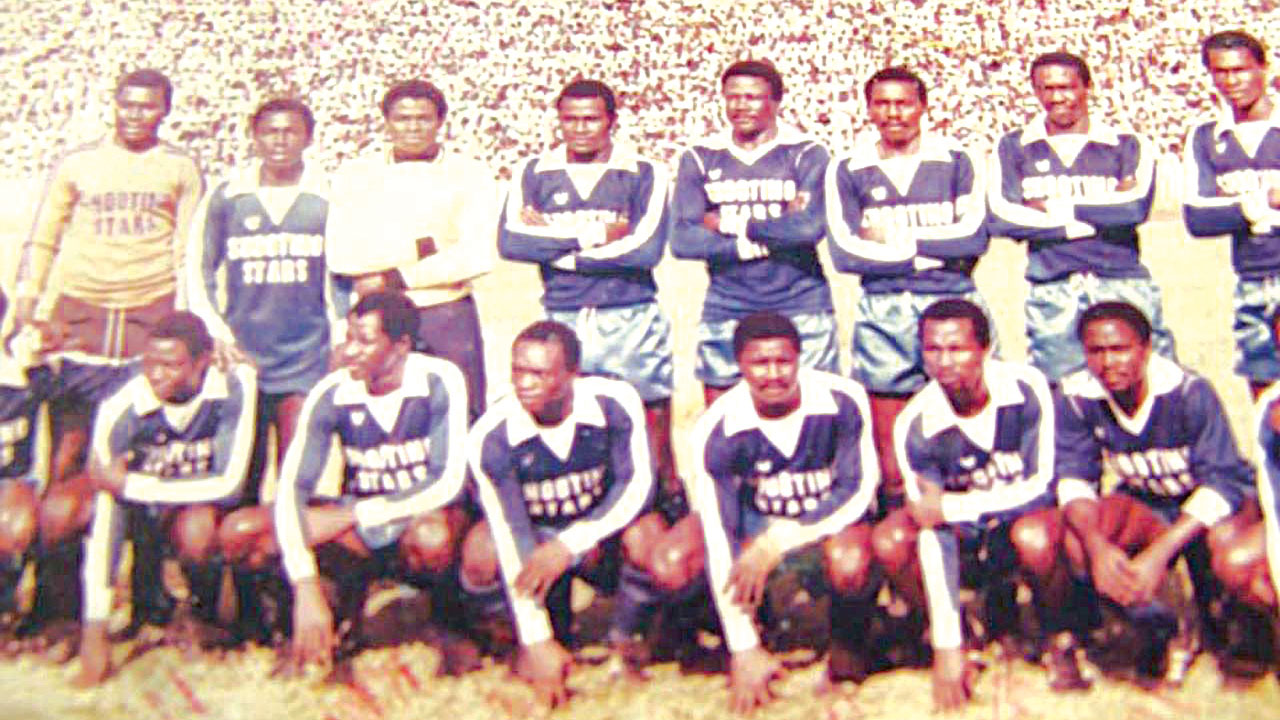
1977 — Enugu Rangers win the African Cup Winners’ Cup. Rangers sealed the win over Cameroon’s Canon Yaoundé 5-2 on aggregate, replicating the success of Shooting Stars a year earlier.
1980 — Led by the late Brazilian coach, Otto Gloria, Nigeria won its first Africa Cup of Nations title. The Green Eagles won on home soil with a 3-0 win over Algeria at the National Stadium in Surulere, Lagos.
1993 — The late Rashidi Yekini, “Goalsfather,” became the first Nigerian player to win African Footballer of the Year. Coming off his AFCON ’92 golden boot.
1994 — Nigeria won its second AFCON title. The late Stephen Keshi captained the Super Eagles to a 2-1 win over Zambia in Tunis.
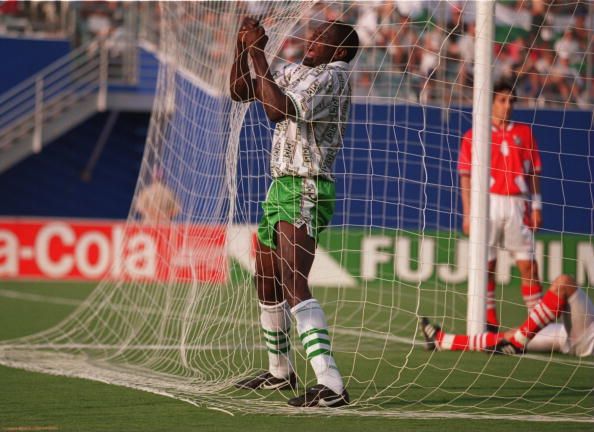
1994 — USA ’94 World Cup. Nigeria’s maiden World Cup appearance, headlined by Rashidi Yekini’s net-tearing celebration against Bulgaria, which remains one of football’s most iconic single images at the FIFA World Cup.
1996 — The Olympic football gold in Atlanta remains undeniably the most iconic moment in Nigeria’s sporting history. The “Dream Team,” inspired by Emmanuel Amunike’s stoppage-time winner, beats Argentina 3-2 after a sensational semifinal comeback against reigning World Champions, Brazil. Nigeria became the first African team to win football gold at the Olympics. Cameroon followed suit four years later in Sydney.

1996 — Chioma Ajunwa’s long jump gold. Chioma Ajunwa won Nigeria’s first individual Olympic gold. She won on her very first attempt in the final. The feat came days after the dream team made history.
2000 — Sydney relay gold. Clement Chukwu, Jude Monye, Sunday Bada, and Enefiok Udo-Obong, the men’s 4x400m team, were retroactively awarded gold after the American team’s doping disqualification. The upgrade to gold came 12 years later following Antonio Pettigrew’s confession.
2001 — Mercy Akide won the first-ever African Women’s Footballer of the Year off the back of Nigeria’s quarterfinal run at the 1999 World Cup. Akide won the award’s inaugural edition, which set the tone for Nigeria’s dominance. The country has produced 13 of the award’s winners since, with Asisat Oshoala winning a record six – the most in history.
2003–2004 — Enyimba‘s back-to-back CAF Champions League titles. The Aba Elephant remains the only Nigerian club to win Africa’s top club competition back-to-back.

2013 — Nigeria’s third AFCON title. The late Stephen Keshi used a blend of local and foreign-based talent en route to triumph. Former NPFL star Sunday Mba’s strike secured a 1-0 win over Burkina Faso to end a 19-year continental wait.
2022 — Nigeria’s Hurdles queen Tobi Amusan’s world record and gold. A 100m hurdles world record in the semifinal, then World Championship gold in Eugene — Nigeria’s first individual world title in track and field.
2025 — Super Falcons’ record 10th WAFCON title. Nigeria came from two goals down in the final to secure a 3-2 win over hosts Morocco in Rabat. The win further cemented Nigeria as Africa’s most dominant football team, men’s or women’s.
2025 — Nigeria’s senior women’s basketball team, the D’Tigress, secured their fifth straight AfroBasket title with a
78-64 win over Mali at the Palais des Sports de Treichville in Abidjan, Côte d’Ivoire.

