 Follow Us on Google News
 Follow Us on Google Discover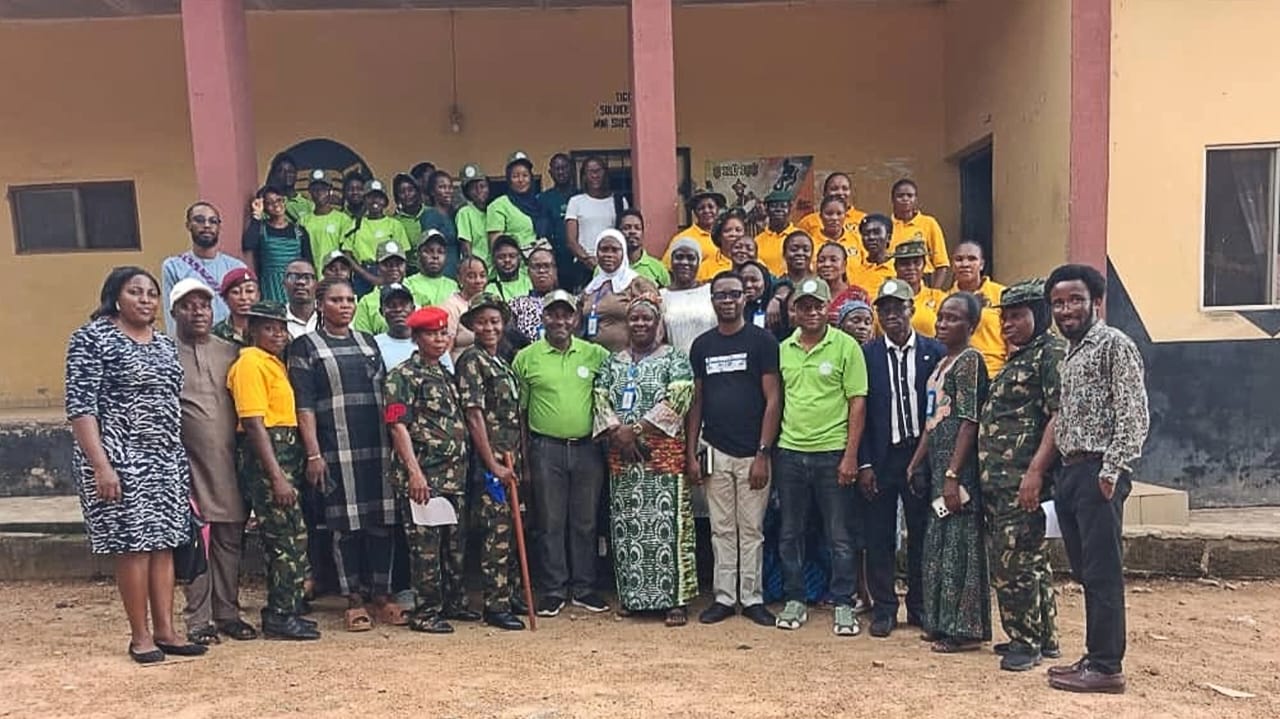
University of Ibadan (UI) dons and environmental health experts have called for stronger community participation in environmental protection, urging Nigerians to adopt responsible waste management practices and turn recyclable materials into sources of economic value.
The experts and dons made the call during a three-day celebration of the 2026 World Environmental Health Day with the theme: “Environmental Health: Standing with Science to Protect Communities”.
The programme was organised by the Department of Environmental Health Sciences of UI, in collaboration with the Nigerian National Federation of Environmental Health (NINAFEH), Environmental Health Scientists Association of Nigeria (EHSAN) and Environmental Health Students Association of Nigeria, University of Ibadan (EHSA-UI).
The first day of the programme featured the launch of Young Environmental Stewards (YES) Clubs in schools, which was described as a sustainable platform for catching children young and entrenching enduring environmental values among them.
The inauguration of the clubs emerged as one of the major highlights of the celebration, with the organisers stressing the importance of introducing environmental health education to children at an early age.
They said the clubs would provide pupils from public and private schools with opportunities to participate in environmental awareness and sustainability activities, develop responsible environmental habits and influence their peers and communities.
The second day featured a symposium and exhibition.
There was a community sensitisation programme on the last day which was held at the Mami Market, Second Mechanised Division of the Nigerian Army, Adekunle Fajuyi Cantonment, Odogbo Barracks, Ojoo, Ibadan.
The waste-to-wealth message featured prominently during the sensitisation at the Odogbo Army Barracks, as participants were shown how materials commonly regarded as waste could be reused, recycled and converted into economic value.
Speaking during the programme, the Acting Head, Department of Environmental Health Sciences, University of Ibadan, Dr. Oyewale Mayowa Morakinyo, said the celebration was designed to raise awareness about the relationship between environmental conditions and human health.
Morakinyo said environmental health covered the conditions in which people lived and worked as well as their daily activities, all of which could affect their well-being.
He urged Nigerians to pay greater attention to the quality of food, air and water, while warning against practices capable of degrading the environment.
The don discouraged open burning of waste and indiscriminate dumping of refuse in drainage channels, especially during the rainy season.
He said, “The kind of food that we eat, the quality of the air that we breathe, and the water that we drink, all of these have a way of affecting our health. So, we need to be conscious.”
Also speaking, Professor Godson Ana of the Department of Environmental Health Sciences, Faculty of Public Health, College of Medicine of the premier university, said the community sensitisation was aimed at translating scientific knowledge and research into practical action.
Ana explained that Mami Market was selected because of the large number of traders who could benefit from practical knowledge on environmental health and waste management.
He said, “There must be a connection between what we are doing and the community. This is why we have come this year to ensure that we show them what we have done and try to motivate them to use the evidence that we have generated over the years to help in the improvement of their communities.”
According to him, the programme was expected to improve participants’ knowledge, skills and environmental practices while contributing to a cleaner physical environment.
Ana added that proper waste management could also provide employment and income opportunities through the collection, sorting and sale of recyclable materials.
“Not only picking the waste, not only getting the jobs, but the ability to sell the waste to get some money. So, the advantages here are multifaceted,” he said.
The professor said the World Environmental Health Day theme was relevant because of the need to increase awareness, stimulate action and promote community-level participation in making the environment safer, healthier and more sustainable.
He said regular and sustained awareness programmes were necessary to educate members of the public about environmental health risks and encourage practical action to preserve their surroundings.
A lecturer in the Department of Environmental Health Sciences, University of Ibadan, Dr. Taiwo Babatunde Hammed, said Nigeria needed to move away from conventional approaches to waste disposal and embrace an integrated waste management system.
Hammed, who spoke on “Solid Waste Management in Growing Cities: The Challenges and Solutions,” said the country possessed largely untapped technological and human resources that could be mobilised to address its solid waste challenges while creating employment opportunities for young people.
He advocated waste segregation, reuse and recycling through the involvement of youths and women in communities and institutions.
The don identified population growth, increasing refuse generation and poor solid waste management as major challenges confronting urban centres.
He warned that uncollected waste could encourage the breeding of flies and mosquitoes and attract rodents and stray animals capable of spreading diseases.
Hammed also noted that dust from waste heaps could contain harmful heavy metals, including lead, mercury, cadmium and arsenic, while leachate from waste dumps could contaminate drinking water and contribute to diseases such as diarrhoea, gastroenteritis, cholera, typhoid and dysentery.
He linked poor waste management with environmental challenges, including flooding and fire incidents, among other climate-related risks.
To address the problem, Hammed advocated a waste management hierarchy that prioritised waste prevention and minimisation at source, followed by reuse, recycling and composting, energy recovery and, as a last resort, disposal in sanitary landfills.
He also called for waste segregation at source through colour-coded waste bins to enable recyclable, organic and other forms of waste to be properly separated and processed.
According to him, adopting a circular economy approach would enable Nigeria to derive economic and environmental value from waste instead of treating it solely as a disposal problem.
He said such an approach could conserve natural resources, reduce dependence on landfill sites, conserve energy, protect biodiversity and provide recovered materials for local industries.
Other benefits, he said, included job creation, poverty reduction, production of organic fertiliser, promotion of local technology and more efficient resource utilisation.
Hammed cited organic fertiliser production and smokeless charcoal production as examples of resource-recovery initiatives that could be developed under a circular economy model.
He stressed the need for an approach suited to the African context, saying Nigeria could harness its large volume of solid waste for productive economic and environmental purposes.
The don urged individuals, communities, institutions and governments to take responsibility for proper waste handling, stressing that sustained improvement in waste management would require public awareness and behavioural change.
At the cantonment, the 2 Division General Manager, Mrs. Olabisi Olaniyi, said the sensitisation had changed her perception of waste, noting that participants had learned that materials regarded as waste could become sources of income.
Using plastic bottles as an example, she said they could be washed, dried and reused for storing different materials before eventually being recycled.
Olaniyi said recycling could provide an additional source of income for families while contributing to the wider economy.
Also speaking, the Mami Market Magajiya and market manager, Mrs Oluwatobi Enoch, said the programme had enlightened and encouraged women in the market to take environmental cleanliness more seriously.
She said maintaining a clean environment was important in the barracks because poor sanitation could expose residents to hazards, including snakes and other risks.
Enoch said the training had also helped participants understand that materials previously considered waste could be put to productive use.
“Not everything is a waste. Nothing is wasted anymore,” she said.
The market chairman, Taiwo Kamorudeen, lauded the organisers for bringing the sensitisation programme to the cantonment and expressed the hope that the initiative would continue.

