 Follow Us on Google News
 Follow Us on Google Discover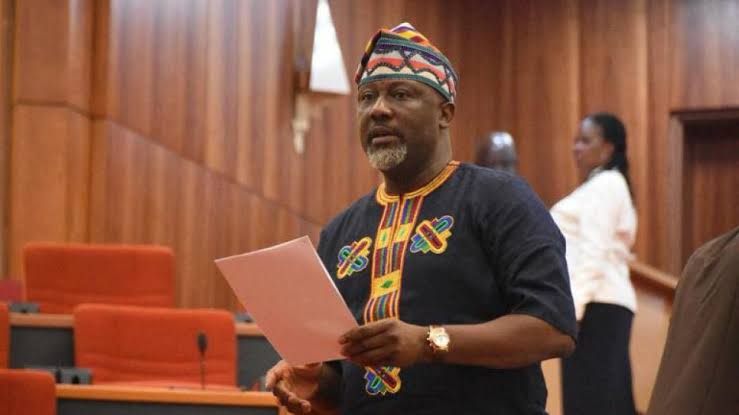
Germany’s decision to cut taxes on petrol and diesel has given fresh impetus to the argument by African Democratic Congress presidential candidate, Atiku Abubakar, that governments can intervene to cushion citizens from severe energy-price shocks, former Kogi West Senator Dino Melaye has said.
Melaye made the comparison in an intervention titled, “Like Germany… Like Atiku,” arguing that Germany’s response to rising fuel costs showed that government intervention in the energy market was not necessarily incompatible with economic reform.
Germany announced a reduction of about €0.17 per litre in taxes on gasoline and diesel as part of measures to ease the pressure of rising fuel prices on households and businesses.
For Melaye, the German intervention provides a useful reference point for Atiku’s proposal to use government policy to reduce the burden of high fuel prices on Nigerians.
He argued that fuel costs extend far beyond motorists, affecting transportation, food distribution, manufacturing, small businesses and other economic activities.
“When the price of fuel rises, almost everything else rises with it,” Melaye said, linking the cost of energy to Nigeria’s wider cost-of-living crisis.
Atiku has maintained that he would reintroduce a form of fuel subsidy if elected in 2027, but has sought to distinguish his proposal from the former import-subsidy regime.
The former vice-president has described his plan as a targeted, capped and transparently administered intervention focused on domestic production and refining rather than the old system.
Atiku’s camp has said the proposed model would involve making crude available to domestic refiners at a lower cost, with the objective of reducing production costs and, ultimately, petrol prices.
Melaye said the German experience challenged the argument that government should simply leave consumers to absorb the full impact of global energy shocks.
He said Nigeria, where fuel prices have a direct impact on transportation and the prices of goods and services, should also consider mechanisms that protect households during periods of severe economic pressure.
The comparison, however, is not a claim that Germany has adopted Atiku’s exact policy. Germany’s measure is a temporary tax reduction, while Atiku’s proposal centres on government support for domestic petroleum production and refining.
The broader issue is whether government should absorb part of an energy shock or allow the entire burden to fall on consumers.
That debate has already become a major economic fault line ahead of the 2027 presidential election.
The Tinubu administration removed petrol subsidy in 2023, while defending the decision as necessary to end the fiscal burden and weaknesses associated with the previous system.
Atiku has argued that the removal contributed to increased pressure on household incomes and has maintained that Nigeria can design a more transparent intervention that protects consumers without recreating the old system.
His position has attracted criticism from the ruling All Progressives Congress, whose Presidential Campaign Council has demanded details of the legal, fiscal and operational framework for the proposed intervention.
Melaye’s latest comparison with Germany therefore adds another dimension to the subsidy debate, placing the question within the wider global response to rising energy costs.
For him, the lesson from Germany is that government intervention can be considered when extraordinary energy shocks threaten households and businesses.
The controversy in Nigeria is now less about whether fuel prices affect the wider economy and more about how government can provide relief without returning to the opaque and costly practices associated with the former subsidy regime.

