 Follow Us on Google News
 Follow Us on Google Discover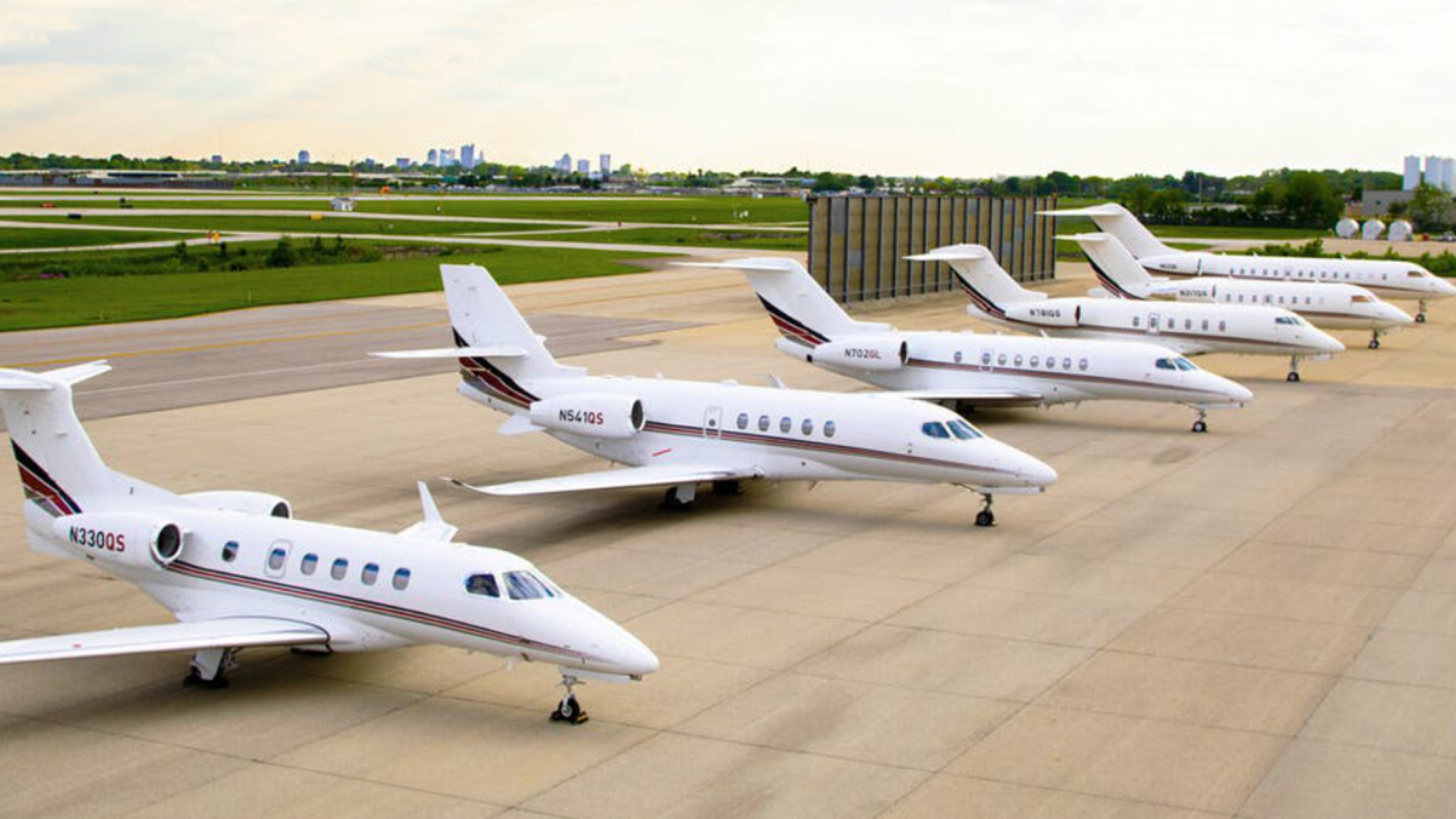
• Nigeria’s private jet fleet increases to 240
• ‘Insecurity, unreliable commercial airlines reasons for private jet preference’
• Stakeholders disagree over flight delays, cancellations
As political activities gather momentum ahead of the 2027 general elections, politicians and their supporters may spend millions of dollars on private aircraft and helicopter charter services traversing the entire country for almost six months.
The projected expenditure, which could make the 2027 electioneering period one of the busiest for Nigeria’s business aviation sector, is expected to cover aircraft charter, crew, fuel, and other operational costs associated with nationwide campaign tours.
An investigation by The Guardian found that private jet charter rates in Nigeria currently range from about $5,000 to $7,000 (N6.6 million to N9.3 million) per flight hour, depending on aircraft type, capacity, route, and operating conditions.
Already, activities in the private jet segment have commenced, with politicians making bookings in bits ahead of the peak season.
One of the charter operators told The Guardian that his company had, in the last two weeks, negotiated two charter services for “politicians and personalities,” all related to campaigns.
Another operator confirmed that during the same period, three charter services had been booked for politicians and election campaigns.
Unlike scheduled commercial airline services, which are largely denominated in naira, business aviation charter services are generally priced in dollars.
During campaign periods, politicians hire private jets for about four to six hours per trip to both sunset and sunrise airports, costing about $30,000 to $42,000 (N38.8 million and N55.7 million) in total.
The Independent National Electoral Commission (INEC) has approved 22 registered political parties ahead of the 2027 general elections, with at least a quarter of them expected to charter private jets or helicopters for their election campaigns nationwide.
INEC officially declared campaigns open for the Presidential and National Assembly polls on Wednesday, August 19, while those for governorship and State Houses of Assembly officially kicked off on Tuesday, September 8.
Presidential and National Assembly elections are scheduled to hold on Saturday, January 16, 2027, while those of Governorship and State Houses of Assembly are to hold on Saturday, February 6, 2027.
Candidates and supporters of the major political parties are also expected to undertake multiple visits to states and campaign locations between now and the elections, potentially resulting in thousands of flight hours.
The projected campaign spending comes amid a massive increase in the number of private jets operating in Nigeria.
The Minister of Aviation and Aerospace Development, Festus Keyamo, had disclosed in July that about 240 private jets were operating in the country, compared with approximately 150 aircraft barely two years earlier.
However, the growth of the sector has also raised concerns over compliance with aviation regulations, particularly allegations that some aircraft operating under Private Non-Commercial Flight (PNCF) permits are being deployed for commercial charter operations.
In June 2024, Keyamo inaugurated a seven-member Ministerial Task Force to investigate and tackle illegal air charter operations in Nigeria.
Although the committee submitted its report in March 2025, its recommendations are yet to be fully implemented.
Investigations also revealed that election periods usually provide a lucrative market for some aircraft owners, including those who may be tempted to deploy privately registered aircraft for commercial charter services to generate revenue, support aircraft maintenance, and remunerate crew.
A private jet operator, who preferred to remain anonymous, told The Guardian that business was gaining momentum at the moment.
The source, however, dismissed the claim that the increased patronage by politicians for political campaigns was responsible for the recent flight delays and cancellations among scheduled operators.
According to him, the equipment used for charters is quite different from the one scheduled operators deploy for commercial services.
He said: “The fact is that business has picked up in the last few months, even before the official lifting of the embargo on political activities by INEC. Some of these politicians have been moving around before then. But we are gradually approaching the peak period.
“However, to say the rising political activities were responsible for recent flight delays and cancellations among the scheduled operators may not be true after all. Most of the aircraft used for charter are narrow-body rather than wide-body aeroplanes.
“Having said this, some of the scheduled operators also have jets used for charter, but a responsible airline will not list such for operations once it is scheduled for charter.”
The Managing Director of Merchant Express Cargo Airlines, Samuel Caulcrick, said that the proliferation of private jets, particularly during political campaigns, was a manifestation of the country’s widening income inequality, massive liquidity outside the formal tax net, and weaknesses in the tax system.
Caulcrick said the financial capacity of politicians and wealthy Nigerians to acquire or charter private jets had increased in recent times following market reforms and the emergence of large pools of liquidity in the economy.
According to him, it costs an average of $6,000 (N7.9 million) per flight hour, depending on the aircraft type, route and operating conditions, to charter a private jet.
Caulcrick said a politician undertaking an intensive campaign tour across four states in a weekend could spend more than $100,000 (N132.7 million) on private aviation alone.
He, however, questioned the source of such funds amid growing poverty in the land, wondering whether the resources affected the economy.
Caulcrick, who was also a former Rector at the Nigerian College of Aviation Technology (NCAT), Zaria, maintained that the burden of inadequate taxation ultimately shifted to the entire population when wealthy individuals and businesses do not contribute proportionately to government revenue.
“Who pays for this lifestyle? The people do. When the top 10 per cent don’t pay taxes, the government prints or borrows more or taxes consumption or Value Added Tax (VAT) more. Same market, same food prices.
“Their unpaid taxes become our inflation, as they can afford any price. They then use their cash to buy dollars, land and jets to beat that inflation.”
Also, the Chief Executive Officer (CEO) of Jet Afrique Services, Theodore Chikelu, said that customers willing to book the services do so in advance, at least a week before the due date.
He explained that this was necessary in order to ensure the availability of the equipment, while the charter company also seek necessary approvals from the Nigeria Civil Aviation Authority (NCAA) and the Nigerian Airspace Management Agency (NAMA).
Besides, Chikelu dismissed the notion that the increasing use of private jets by politicians and other high-net-worth individuals was contributing to the recent flight delays and disruptions experienced by passengers across Nigeria.
He attributed this to inadequate fleet capacity and weaknesses in operational management, rather than the recent increase in political activities.
Chikelu argued that politicians who own or charter private aircraft had the right to use them for campaigns and other personal or political engagements, stressing that private aviation operates independently of the scheduled commercial airline system.
He added that most political figures who require charter service do not rely on commercial aircraft.
He reckoned that individuals should be free to use their resources to achieve their objectives, including political campaigns, provided such activities complied with relevant laws and regulations.
Chikelu disclosed that the cost of chartering a private jet or helicopter in Nigeria currently averages between $12,000 and $20,000 (N15.9 million and N26.5 million), depending on the type of aircraft and the distance to be covered. But this cost was not calculated on an hourly basis.
Also, the Senior Advisor, African Region, Aircraft Acquisition, Sales & Management at Superba Consulting, Nuhu Adam, said business aviation remained a legitimate campaign logistics tool, but its use could create negative public perception when juxtaposed with the hardship confronting millions of citizens.
Adam, a business aviation expert, declared that the industry should distinguish between business or corporate aviation and helicopter charter, rather than lumping the operations as private-jet owners or operators.
According to him, business jet services enable political candidates to cover several cities in a single day while avoiding road congestion and security risks.
Adam also cited insecurity and the unpredictability of commercial airline schedules as major factors behind the preference for charter aircraft.
He said: “Road insecurity and kidnapping make air travel the only viable option for high-profile candidates. Commercial schedules are unpredictable. You can’t tell a 50,000 crowd, ‘my flight was delayed’.
“When your default is a chartered flight to beat traffic and insecurity, it’s difficult to fully feel the pain of someone spending four hours on a N1,500 bus or being told ‘no bed space’ at a public hospital.
“This is not to indict every politician. But the system insulates them. And that insulation is what citizens react to. Leadership is measured not just by what you do, but by what you are seen to understand.”
A business consultant, Pius Isiekwene, expressed that the country’s operating airlines currently lacked sufficient capacity to meet growing passenger demand.
He said the situation could worsen as politicians begin to charter aircraft to move themselves and their supporters across the country.
According to him, airlines are already stretching their available fleets to improve operating margins, with some aircraft deployed on multiple domestic, regional and international routes.
He noted that charter operations could further compound the capacity problem because of the potentially attractive returns available to airlines from such engagements.
Isiekwene, who is a frequent air traveller, emphasised that the poor condition of major interstate roads had also increased pressure on domestic air transport, as more travellers were turning to air travel due to concerns about safety and security on the highways.
He warned that unless urgent measures were taken to expand airline capacity, passengers could face more disruptions during the campaign season.
Also, he advocated improved access to affordable financing for airlines, stressing that aviation was highly capital-intensive and operators needed financial support to expand their fleets.

