 Follow Us on Google News


 Follow Us on Google Discover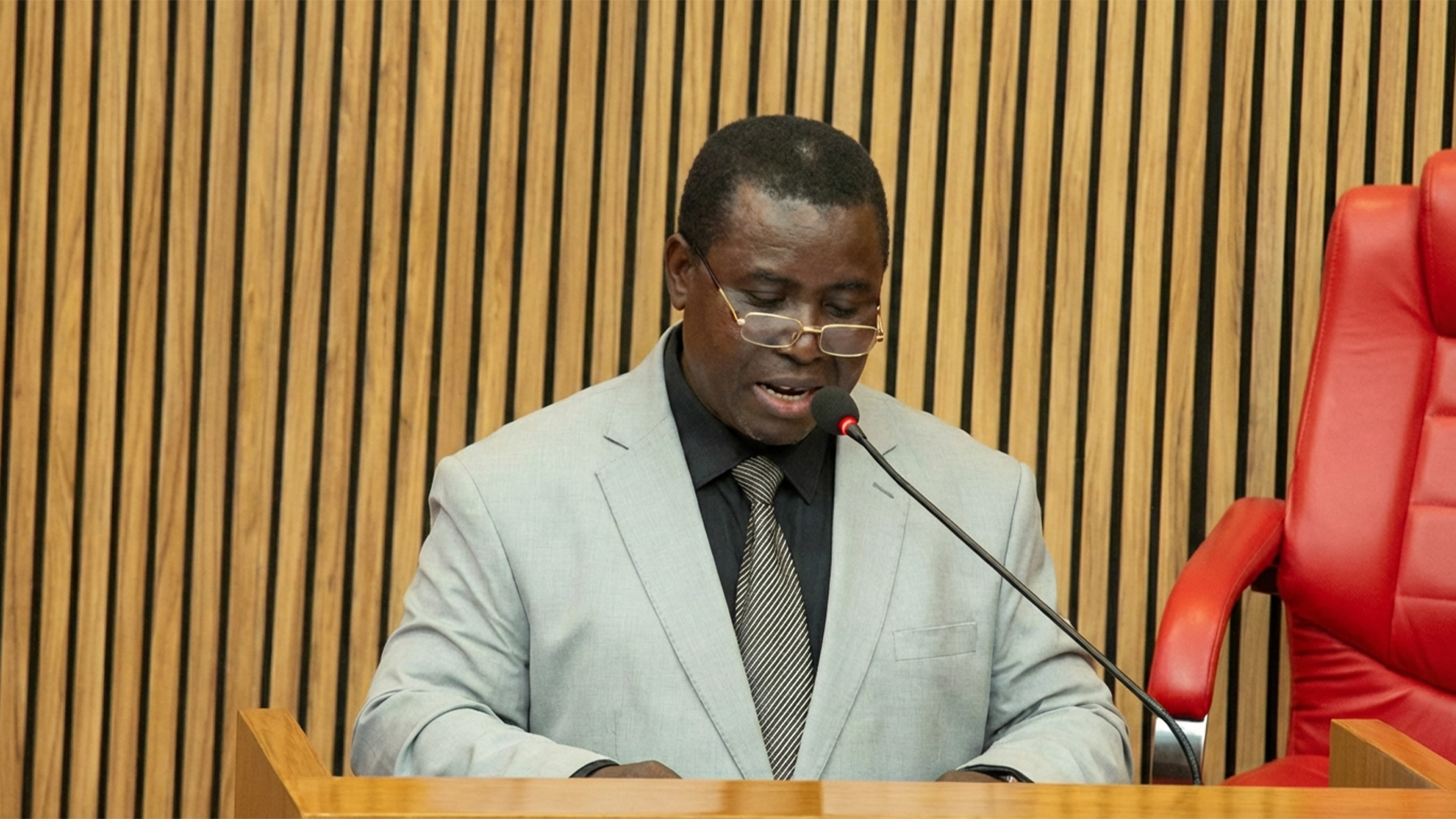
• Vote-buying, misinformation identified as major challenges
• IGP hints security clearance operations ongoing in Kogi, Niger, Benue, Taraba
• EU backs INEC, pledges neutrality
With some 100 days to the 2027 general elections, the Independent National Electoral Commission (INEC) and the Nigeria Police Force (NPF) yesterday raised fresh concerns over funding and security, as the electoral body entered the final phase of preparations for what is expected to be one of the country’s largest electoral exercises.
This came as the North-West emerged as the zone with the largest share of Nigeria’s 103,428,715 registered voters following the conclusion of the three-phase Continuous Voter Registration (CVR) and biometric clean-up exercise.
While the INEC Chairman, Prof. Joash Amupitan, called for the prompt release of the commission’s outstanding budgetary allocations to enable it to complete critical procurement and logistics, the police disclosed that the country’s security crisis had created pockets of fear in parts of the country.
INEC also identified vote-buying, election-related disinformation, deepfakes, logistical and security challenges, and delays in the release of funds as major challenges that could undermine the credibility of the election.
The police said security clearance operations were being conducted around Kogi, Niger, Benue and Taraba states, as part of efforts to stabilise areas considered vulnerable ahead of the elections.

INEC also announced plans to deploy 57,000 new Bimodal Voter Accreditation System (BVAS) devices, introduce Artificial Intelligence (AI)-based election-monitoring tools, and mobilise 1,414,768 ad hoc personnel for the 2027 general elections.
Amupitan, who spoke at a World Press Conference and National Stakeholders’ Meeting in Abuja to mark 100 days to the polls, said the commission had moved from planning and tendering into active production, delivery and construction.
He, however, said the remaining budgetary releases were necessary to ensure the final phase of preparations proceeded without disruption.
The INEC chairman said the commission had already awarded contracts for additional BVAS devices, voting cubicles, and ballot boxes, and that some of the newly acquired devices had already been delivered.
He added that construction of dedicated BVAS storage facilities and local council offices was ongoing, while solar power installations across INEC offices had also been contracted.
Amupitan disclosed that political parties submitted 36 presidential and vice-presidential candidates for the 2027 election, with 18 of the 22 registered political parties participating in the presidential race.
He said the Accord Party, All Progressives Grand Alliance (APGA) and Youth Party did not nominate presidential candidates, while the New Nigeria Peoples Party (NNPP) withdrew its presidential nomination during the substitution window.
For the National Assembly elections, 21 of the 22 political parties sponsored 1,313 candidates for the Senate and 3,547 candidates for the House of Representatives, bringing the total number of National Assembly candidates to 4,860.
INSPECTOR-GENERAL of Police (IGP), Olatunji Disu, at the meeting, said security agencies were already reviewing the country’s security situation ahead of the polls.
Disu, represented by Assistant Inspector-General of Police, Alinyenu Idu, said the police were deploying operational and tactical assets to prevent the electoral process from becoming a source of violence.
According to him, security arrangements would cover polling units, movement and protection of election materials, collation centres and the final stages of result management.
The police chief said the force had conducted an after-action review of previous elections and addressed concerns raised by citizens over the conduct of its personnel.
He said complaints, including allegations of drunkenness among policemen deployed for elections, had been reviewed, stressing that alcohol was not part of officers’ election supplies.
EUROPEAN Union (EU) Ambassador to Nigeria and ECOWAS, Gautier Mignot, described the 2027 elections as a crucial moment for Nigeria’s democracy, urging stakeholders to support INEC in delivering credible polls.
Noting that the commission is facing a Herculean task, Mignot said INEC’s work was not limited to its commissioners and senior officials, but involved hundreds of thousands of Nigerians who would be deployed across the country on election day.
The EU envoy said the recent off-cycle elections showed that INEC had made efforts to improve citizens’ trust in the electoral process, expressing the hope that the 2027 elections would produce credible results accepted by stakeholders.
Mignot said the mission would build on recommendations from the EU Electoral Observation Mission following the 2023 elections.
MEANWHILE, INEC said the national voter register had risen to 103,428,715, following the registration of 10,772,421 new voters during the three phases of the CVR.
Amupitan disclosed that Lagos remains the state with the highest number of registered voters at 7,488,633, followed by Kano with 6,570,276, Kaduna with 4,662,640, Katsina with 3,876,051 and Rivers with 3,736,434.
The lowest figures were recorded in Ekiti with 1,055,708, Bayelsa with 1,200,691, FCT with 1,732,043, Yobe with 1,733,671, and Gombe with 1,768,566.
Additional data obtained by The Guardian yesterday revealed that at the geopolitical zones level, the North-West leads with 25.08 million voters (about 24.25 per cent), followed by the South-West with 19.61 million (18.96 per cent), while the South-East has the lowest with 11.98 million (11.58 per cent).
From the figures, North-Central has 16,965,787 voters (16.41 per cent), while South-South has 15,823,550 (15.3 per cent).
A six-day stress test of the configured devices is scheduled for October 23 to 28, following the commission’s establishment of an AI Division within its ICT Department.
During the panel session, Amupitan disclosed that the commission had taken radical steps to improve the welfare of its personnel, arguing that better remuneration was necessary to strengthen accountability.
He said: “INEC staff are the least paid in Nigeria. So, we felt if we want to demand and hold our staff accountable, we should give them a living wage.”
Chairman of the Senate Committee on Electoral Matters, Simon Lalong, said the credibility of the 2027 election would depend on the collective responsibility of INEC, political parties, candidates, security agencies, media, civil society organisations and voters.
He urged political parties and candidates to respect the rules, promote issue-based campaigns and conduct themselves peacefully.
Amupitan said the final 100 days would be critical to ensuring that the election was not only successfully conducted but also met global standards of transparency, integrity and peaceful participation.
He acknowledged that the scale of the election presented significant operational challenges, particularly the movement of personnel and electoral materials to 176,846 Polling Units (PUs) across 8,838 Registration Areas (RAs), including remote riverine communities, mountainous terrain and difficult-to-access locations.
He said the commission had therefore developed a multi-modal logistics strategy involving more than 100,000 vehicles and 4,000 boats through partnerships with transport unions.

