 Follow Us on Google News
 Follow Us on Google Discover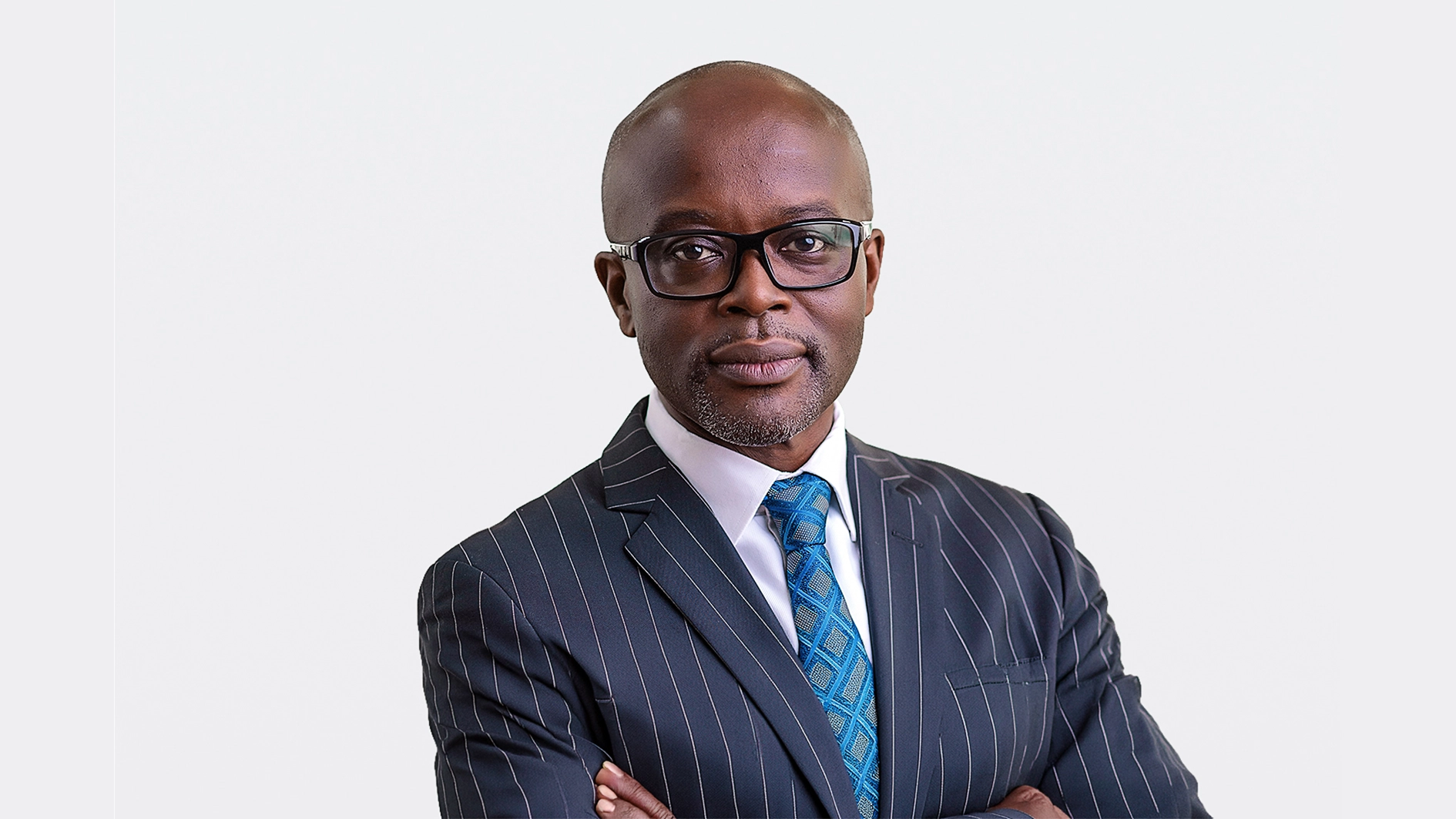
Chief Executive Officer, KPMG One Africa, Tola Adeyemi, has urged Nigerian businesses to prepare for multiple political and economic scenarios as the country approaches the 2027 general elections.
Adeyemi said businesses must remain agile and resilient as political developments, global economic realignment, geopolitical tensions and changing policy directions create both risks and opportunities for companies operating in Nigeria.
Speaking at the KPMG–Franco-Nigerian Chamber of Commerce and Industry (FNCCI) CEO Luncheon Series, themed “Political Dynamics and Global Realignment: A CEO’s Playbook for Resilient Growth,” Adeyemi said corporate leaders could not afford to base their strategies on a single expected outcome.
The presentation identified three broad scenarios for Nigeria following the 2027 elections: continuity if the incumbent retains power, policy recalibration if the opposition wins, and heightened uncertainty if an inconclusive election leads to a rerun.
According to Adeyemi, the ability of businesses to anticipate and respond to these possible outcomes would be critical to sustaining growth.
“Resilience is the ability to deal with adversity, withstand shocks and continuously adapt and accelerate as disruptions and crises arise over time,” Adeyemi said.

He said businesses needed to develop the capacity to anticipate emerging risks, absorb shocks, adapt their resources and priorities, and accelerate faster than competitors when new opportunities emerged.
KPMG’s assessment showed that the global environment was becoming increasingly uncertain, with declining trust in institutions, rising nationalism, geopolitical tensions, trade fragmentation, inflation and higher financing costs reshaping the foundations of economic growth.
For Nigeria, the firm said these global shifts could translate into greater exposure to external shocks, currency volatility, trade disruptions and commodity-price swings.
However, it identified stronger trade and investment relationships with China, Gulf countries and other emerging markets as opportunities for Nigerian businesses, alongside the country’s strategic oil, gas, mineral and agricultural resources and its large, young population.
Adeyemi said businesses should therefore look beyond short-term political uncertainty and position themselves to benefit from structural changes in the economy.
KPMG identified five areas that businesses and investors should monitor as the political environment evolves: fiscal and taxation policy; monetary policy; infrastructure and investment; social development and security; and sector priorities.
Under a continuity scenario, the firm expects the government to maintain its tax and structural reform agenda, continue the fuel-subsidy-free regime and sustain the Central Bank of Nigeria’s focus on inflation, liquidity and foreign exchange conditions.
It also expects continued investment in transport, power, housing, water and digital infrastructure, alongside efforts to improve power-sector reliability.
Under an opposition victory, KPMG projects a possible review of the pace and sequencing of existing economic reforms, alongside potential changes to fuel policy, taxes, customs duties and import restrictions, with greater emphasis on industrialisation, local manufacturing, agriculture and energy.
Adeyemi said businesses should also recognise that disruption could create opportunities for companies that are sufficiently prepared.
The firm’s CEO playbook advises companies to plan for multiple scenarios, view Nigeria as a platform rather than merely a market, turn the country’s challenges into opportunities, convert artificial intelligence into measurable business value, localise operations and remain patient.
Adeyemi, who became CEO of KPMG One Africa in March 2026, has said the continent presents significant opportunities that businesses must learn to unlock amid a changing global environment.
The KPMG presentation also noted that Africa’s young and expanding population would provide a growing consumer market and labour pool, with emerging markets expected to account for most global labour-force growth.
For Nigerian companies, Adeyemi said the priority should be to build organisations capable not only of surviving economic and political shocks but of moving quickly enough to capture opportunities created by them.
Earlier in his remarks, Consul General, France, Lagos, Laurent Favier, said the gathering has become a trusted space to share ideas that could shape the economy.
He said the event will delve on how businesses can sustain better resilience within the political election period.
He stated that the consul hoped for a free and fair election in the country, while urging businesses to transform global economic risks to regional markets.
Chief Executive Officer, NGX, Jude Chiemeka, said CEOs should be transformational in their approach, while engaging technology as a major enabler.
Chiemeka said businesses should think of how to scale, stating that the capital market is a place to raise funds for businesses.
Founding Partner of Olisa Agbakoba Legal (OAL), Dr Olisa Agbakoba, said cost of living is going to be a challenge for Nigerians, while we are going to see a new argument between political parties.
He mentioned that there will be a fall in the crude price going forward.

