 Follow Us on Google News
 Follow Us on Google Discover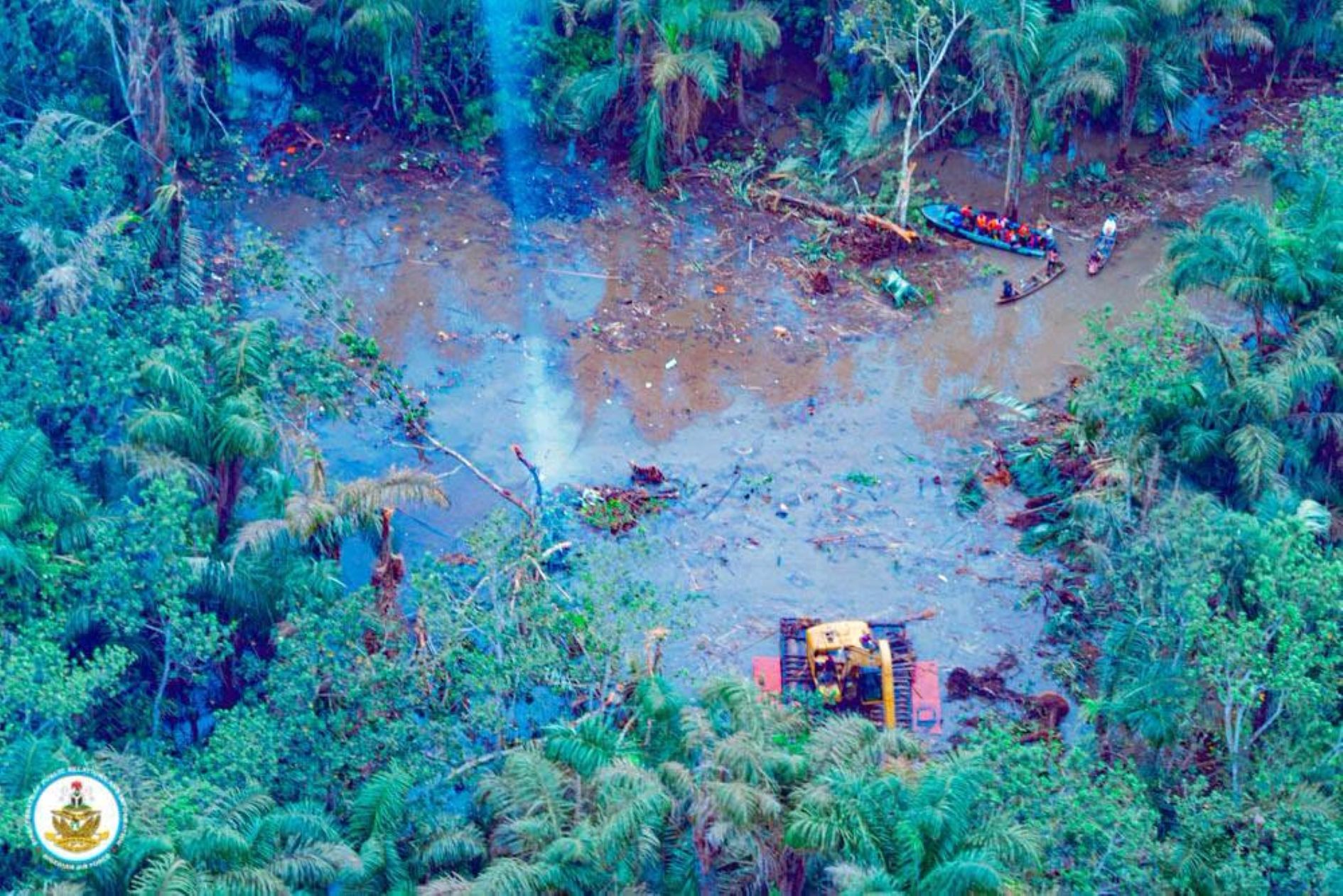
… We’re from an oil-producing area, yet we’ve nothing – Residents
Rarely in the news and relatively unknown to many Nigerians, despite its fishing prowess, Igbokoda, a coastal community in Ilaje Local Government Area of Ondo State, made headlines following the Nigerian Air Force ATR-42 aircraft crash. The tragic incident, however, drew attention to a community whose story extends far beyond the crash. Adewale Momoh visited Igbokoda to show how a single day of disaster has illuminated a community whose deeper emergency continues to be ignored.
In the past few days, the riverine community of Igbokoda, headquarters of Ilaje Local Council Area of Ondo State, has been thrust into national consciousness by a tragedy not of its making.
A Nigerian Air Force aircraft crashed near the Naval Base in the creekside town on October 5, 2026, killing all 25 souls on board and drawing the eyes of the nation to a place that has long existed on the margins of Nigeria’s radar.
But Igbokoda is far more than the site of a fatal crash. It is the beating heart of the fishing economy in the Southwest, home to one of the largest fish markets in the region and the administrative center of a local government area with a population exceeding 300,000.
It is also an oil-producing community that has been left behind by the very industry that extracts wealth from beneath its waters.

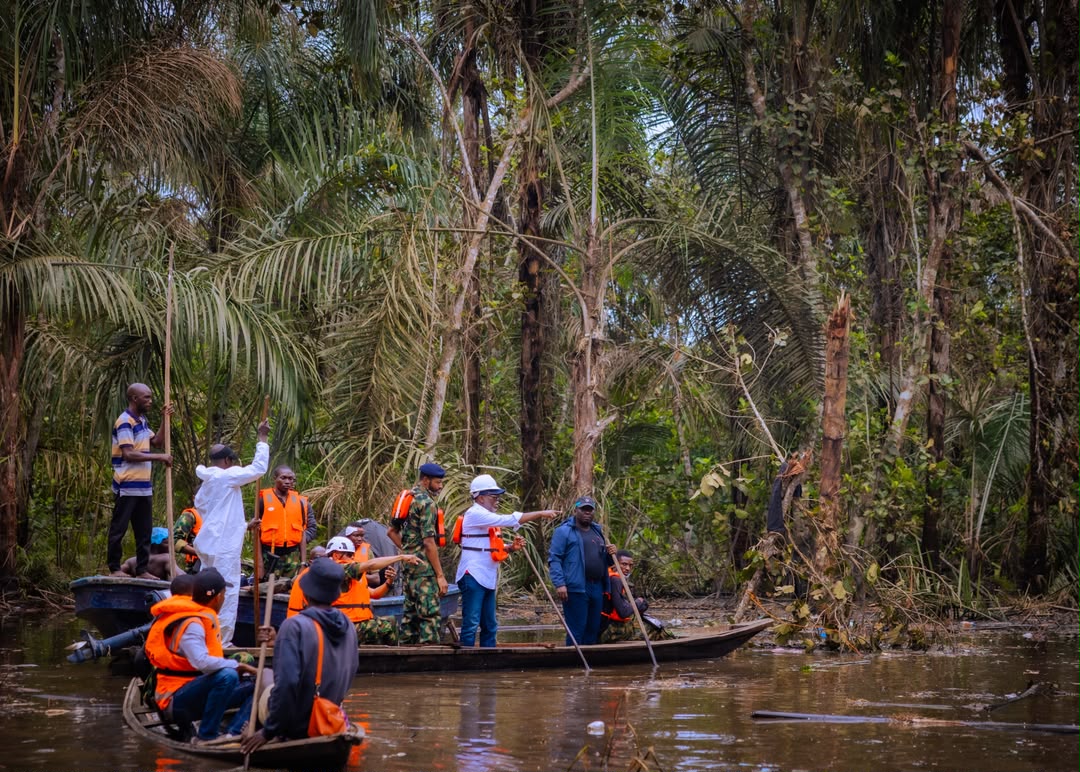
Ondo State Governor, Lucky Aiyedatiwa at the crash site. PHOTO: Adewale Momoh.
The crash, which prompted President Bola Tinubu to declare a three-day national mourning, has briefly illuminated a community whose daily struggles rarely make headlines.
For the people of Igbokoda, the tragedy is another burden layered atop decades of neglect.
The military aircraft, an ATR-42, was on a routine mission from Benin, Edo State capital, to Lagos when it disappeared from radar at approximately 9:13 am, with the Minister of Aviation, Festus Keyamo, disclosing that the aircraft had crashed near the Naval Base in Igbokoda with no survivors.
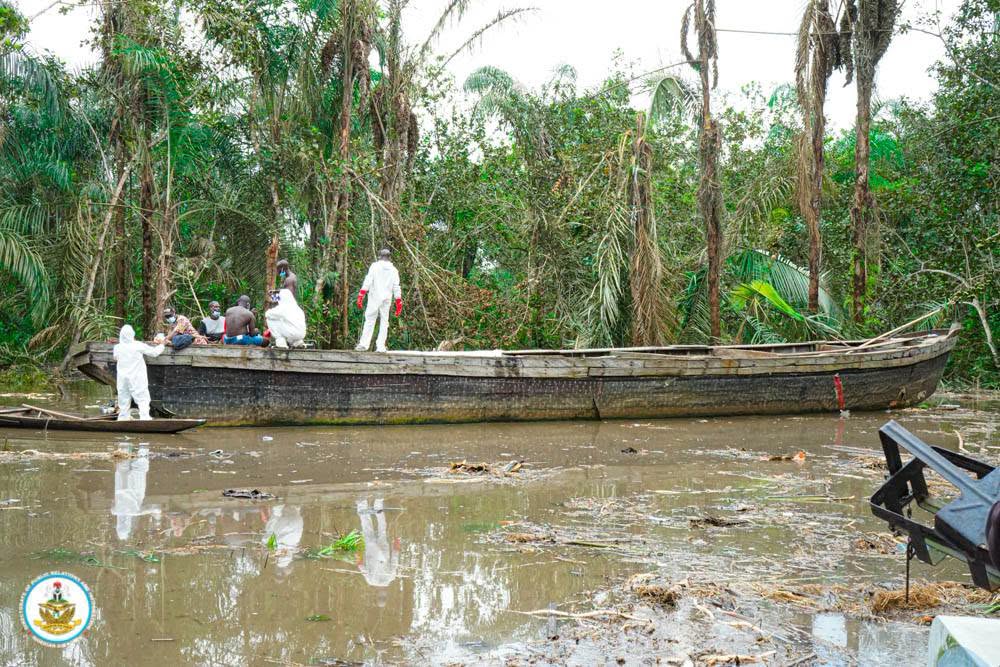
For a community accustomed to the rhythms of water and fish, the roar of a crashing aircraft brought a different kind of disruption with security forces, government officials, emergency responders, and journalists flooding the area, and the quiet riverine town became a scene of national tragedy.
However, the deeper story of Igbokoda is not about a single day of disaster; it is about a community that feeds millions but cannot feed itself basic infrastructure.
Igbokoda sits at the centre of Nigeria’s traditional fishing economy, with the town’s waterfront, framed by creeks and mangrove forests, serving as a major processing hub where men venture into the Atlantic, and women dominate the trade, smoking, drying, and distributing fish to markets across the country.
The economic vitality of the community exists in contradiction to the living conditions of the people who sustain it.
For more than six months, residents say, the community has been without electricity. For small business owners, the absence of electricity translates into a daily tax of fuel and frustration.
With flooding compounding these challenges, during the rainy season, Igbokoda experiences severe overflow, with residents forced to flee their homes as floodwaters sweep through the community.
The Ondo State government has acknowledged the perennial nature of the problem, noting that flood-prone areas have been mapped for intervention, but residents say the relief has not materialized.
Amid these deprivations, Igbokoda carries a burden of contradiction. It is a community in an oil-producing local council area, yet it lacks the basic amenities that oil wealth is supposed to fund.
Ilaje is one of the oil-producing areas of Ondo State, a state that ranks among Nigeria’s crude oil producers. But the infrastructure of extraction has not translated into the infrastructure of daily life.
The youth of Igbokoda, like their counterparts across Nigeria’s oil belt, confront a landscape of unemployment in a place that should be bustling with opportunity. Graduates walk the streets of a fishing hub that has no factories, no companies, and no jobs waiting to absorb their education.
Temiwumi Ebidakun, a resident and small business owner, stated that “We need electricity. For the past six months, we haven’t had light. As a business owner, I’m lagging behind. I sell water and drinks, but I don’t have light to power my freezer for cold items.
“I have to get a generator and exhaust money to buy fuel every day. I spend more than 15,000 Naira per day for my generator,” she said.
Monday Omowale, another resident, painted a picture of a community abandoned by government at all levels, stressing that “We are also suffering from a lack of electricity. As you can see, we have poles and cables, but there has been no power supply here for the past six months.
“We need schools. We need factories and companies here so that people can benefit. We are from an oil-producing area. Among all the oil-producing states, Ondo State may not be the first, but it is one of the largest producers of oil. Despite that, we lack many basic amenities here. Some of the developments you would expect to see in an oil-producing community are not here.
“If you look around, you will see many graduates, but there are no jobs, no work opportunities, nothing. We are pleading and begging the federal government to pay attention to this community and help us.
“We also need potable water. We have water, but it is not drinkable. The water is bad. The borehole we have is not functioning properly,” he said.
Omowale also connected the flooding to the absence of basic infrastructure, stating that “most especially, we are affected by flooding during the rainy season. What we are experiencing here is a lot, particularly the flooding. If we had proper drainage systems and good roads, at least the water would flow away more easily. Look around. You can see the water everywhere. We are pleading with the government to help us. Let them help us,” he said.
Also a community youth leader, Great Oluwasegun, discloses that “We need water. We don’t have good water. We only have a few boreholes. We need more to be provided, because we cannot drink the water you are seeing.
“Some even use it to cook local food, but we have gone against that because many things must have been in the water. We even advised it is not good for bathing. We need light also. We need empowerment for our youths.”
For the community, the demands are not extravagant, as they are the basic requirements of modern life, such as electricity, potable water, functional roads, drainage systems, schools, and economic opportunities.
According to the people, they are asking for what the Nigerian constitution and decades of oil revenue should have already delivered.
However, the military crash that brought Igbokoda into the news cycle will fade from headlines. The investigation will proceed, condolences will be offered, and the country will move on. But for the people of Igbokoda, the deeper emergency continues.
They are a community that feeds Nigeria, living in hunger for basic amenities. They are an oil-producing people, waiting for the benefits of oil. They are a riverine town, crying out for clean water to drink.

