 Follow Us on Google News
 Follow Us on Google Discover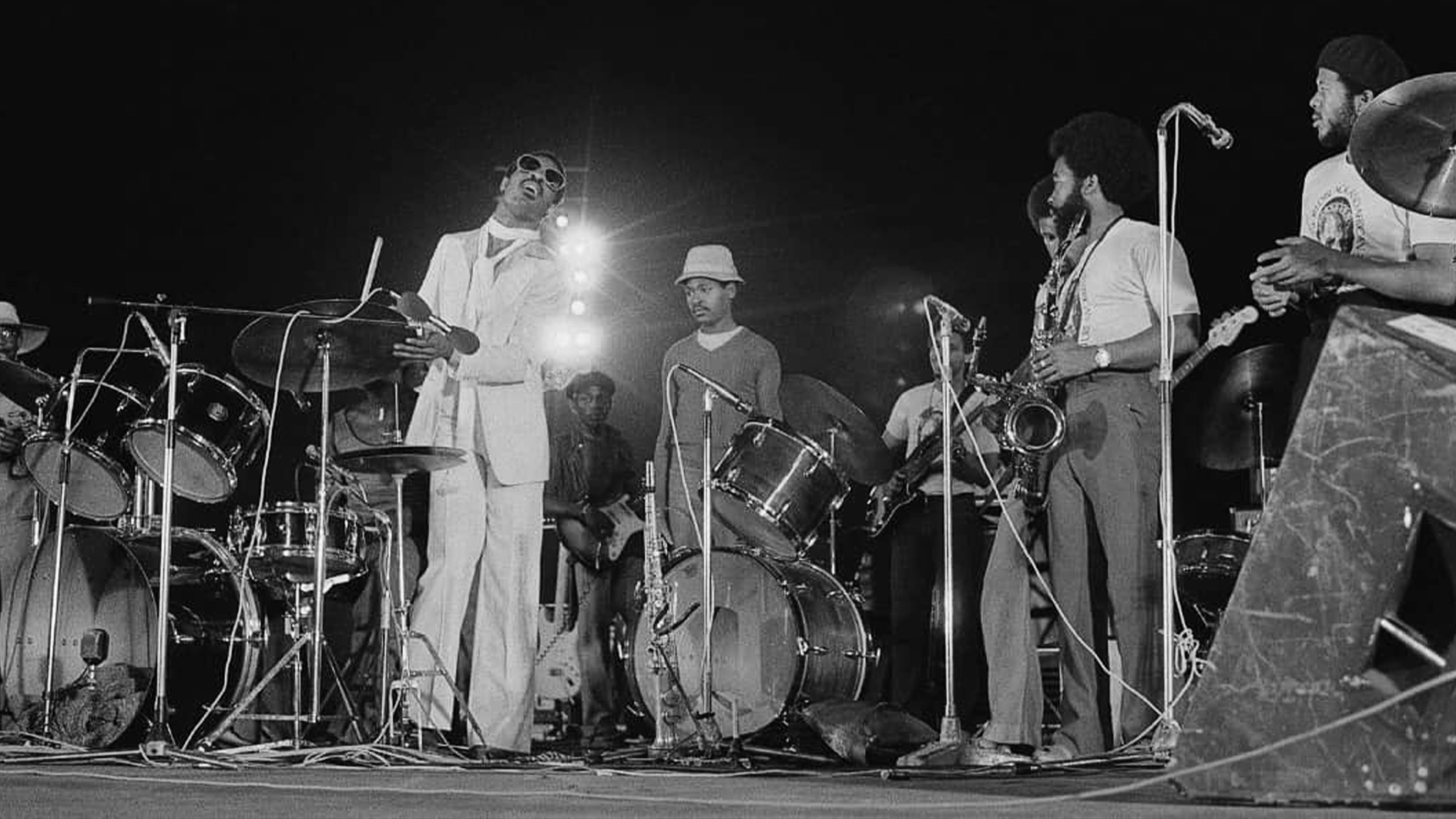
From the global triumph of Nigerian music and film to the emerging institutions financing African creativity, a new economic argument is taking shape: recognition is no longer enough. The continent must own, trade and profit from what it creates.
There is a peculiar irony in Africa’s latest encounter with the world. Its music fills international arenas. Its fashion inspires global runways. Its films travel across streaming platforms. Its writers win prestigious prizes. Its cultural vocabulary, once dismissed as provincial, increasingly shapes the language of global popular culture.
Yet the continent that produces so much of this imagination still struggles to capture a proportionate share of its economic value.
The world has discovered that Africa is fashionable. Africa is beginning to ask a rather less fashionable question.
Who is collecting the money?
It is a question that reaches far beyond entertainment. It concerns trade, finance, intellectual property, institutional capacity and the unfinished business of economic independence.
For much of its modern history, Africa occupied a familiar position in international commerce. It supplied raw materials while other economies manufactured finished products, controlled distribution and accumulated much of the profit.
Today, the commodities are changing. Music, cinema, fashion, design and digital content are joining oil, cocoa, copper and gold as sources of international demand.
But an uncomfortable possibility remains: Africa could become a cultural superpower without becoming an equivalent economic power.
The distinction is fundamental.

Being admired is not the same as being wealthy. Being internationally visible is not the same as controlling the commercial infrastructure through which that visibility becomes income.
And nowhere is this contradiction more fascinating than in Nigeria.
The Country That Exported Its Imagination
In 1977, Lagos hosted FESTAC, the Second World Black and African Festival of Arts and Culture. It was an extraordinary declaration of African cultural confidence, bringing performers, intellectuals and artists from across Africa and its diaspora into a common celebration of Black identity.
Nigeria was then enjoying an oil boom. Petroleum revenues helped finance a festival that announced the country’s ambition to become a cultural centre of the Black world.
Nearly half a century later, Nigeria has achieved much of that ambition, although through circumstances its organisers could scarcely have imagined.
Afrobeats travels internationally without government sponsorship. Nollywood has cultivated audiences across continents. Nigerian fashion, comedy, literature and digital creativity circulate through markets that scarcely existed in 1977.
The transformation is remarkable because so much of it occurred despite persistent weaknesses in infrastructure, financing and public institutions.
Nigeria’s creative entrepreneurs improvised their own routes into international commerce.
They demonstrated that talent could flourish in difficult economic conditions. But they also exposed the limits of celebrating resilience as though it were an economic development strategy.
A country cannot build a globally competitive creative economy on ingenuity alone.
The question now is whether the institutions surrounding Nigerian creativity can become as sophisticated as the talent producing it.
The Economics Behind the Applause
The figures illustrate both the opportunity and the distance yet to travel.
According to the International Federation of the Phonographic Industry, recorded music revenues in sub-Saharan Africa increased by 15.2 per cent in 2025, reaching approximately $120 million.
It is an encouraging performance, but one that deserves context. South Africa accounted for more than three-quarters of the region’s recorded music revenues.
International enthusiasm for African music should therefore not be confused with the existence of a sufficiently developed commercial market throughout the continent.
An artist may accumulate millions of streams without possessing meaningful control over recording rights, publishing income or international licensing arrangements.
A successful filmmaker may reach a worldwide audience while surrendering significant future value through unfavourable distribution agreements.
A fashion designer may influence international aesthetics while lacking the capital, production capacity or trademark protection necessary to build a durable global brand.
There is nothing inherently objectionable about working with international labels, distributors, investors or streaming companies. Such relationships can provide vital expertise and market access.
The decisive question is whether African enterprises negotiate as owners of valuable assets or merely as suppliers of creative material.
The distinction is the creative economy’s equivalent of the old commodity problem.
Africa must avoid exporting imagination on terms that leave much of its enduring value elsewhere.
When Creativity Meets the Balance Sheet
Some Nigerian financial institutions are beginning to confront that challenge.
The Bank of Industry established its Creative Industry Group in 2011, recognising the sector as a legitimate area for development financing
Nigeria’s Export-Import Bank, NEXIM, also operates a Nigerian Creative and Entertainment Industry Loan Scheme covering music, film, television, fashion and related infrastructure.
One particularly significant feature of NEXIM’s documentation requirements is its recognition of intellectual property as potential collateral, subject to valuation.
That seemingly technical provision points towards a substantial economic transformation.
Traditional lenders are accustomed to financing assets they can readily value: land, machinery, buildings and inventories.
Creative enterprises frequently depend on less tangible assets, including copyrights, trademarks, music catalogues, distribution rights and commercially valuable brands.
If such assets can be properly valued, protected and financed, an entirely different investment ecosystem becomes possible.
The federal government’s Creative Economy Development Fund represents another attempt to improve financing for cultural and creative businesses.
Yet announced facilities and established schemes should not be mistaken for proof that financing has become widely accessible.
The more demanding questions concern disbursement, affordability, collateral requirements, repayment conditions and whether enterprises outside a narrow circle of established players can obtain funding.
A genuine creative economy requires more than capital availability on paper.
It requires financiers who understand the economics of intellectual property and entrepreneurs capable of presenting commercially credible businesses.
Bringing Creativity Into the Trading Economy
The growing engagement of business institutions offers another indication of change.
The Nigerian Association of Chambers of Commerce, Industry, Mines and Agriculture, NACCIMA, now has a Creative Economy Trade Group, reflecting an expanding recognition that creative activity belongs within the country’s organised commercial economy.
This is significant because chambers of commerce traditionally occupy territory associated with manufacturing, investment, industrial development and conventional trade.
Their increasing engagement with creative enterprise suggests a gradual shift in how the sector is understood.
The relationship is also becoming more international.
In March 2025, Nigeria and the United Kingdom launched a Creatives Working Group under their Enhanced Trade and Investment Partnership.
It was a recognition that cultural exchange must be accompanied by more structured discussions about enterprise development, commercial partnerships and market access.
Institutions such as the Lagos Chamber of Commerce and Industry and the Nigerian-British Chamber of Commerce can help create the connections through which creative businesses gain access to investors, professional services and established international commercial networks.
But institutional recognition must ultimately produce measurable commercial results.
The real achievement will come when a Nigerian production company can secure export financing as confidently as a manufacturer, or when a fashion enterprise can access regional distribution networks without depending entirely on informal arrangements.
Creative industries should no longer be treated as decorative additions to economic policy.
They are businesses, and they require the infrastructure of business.
A Different Kind of Festival
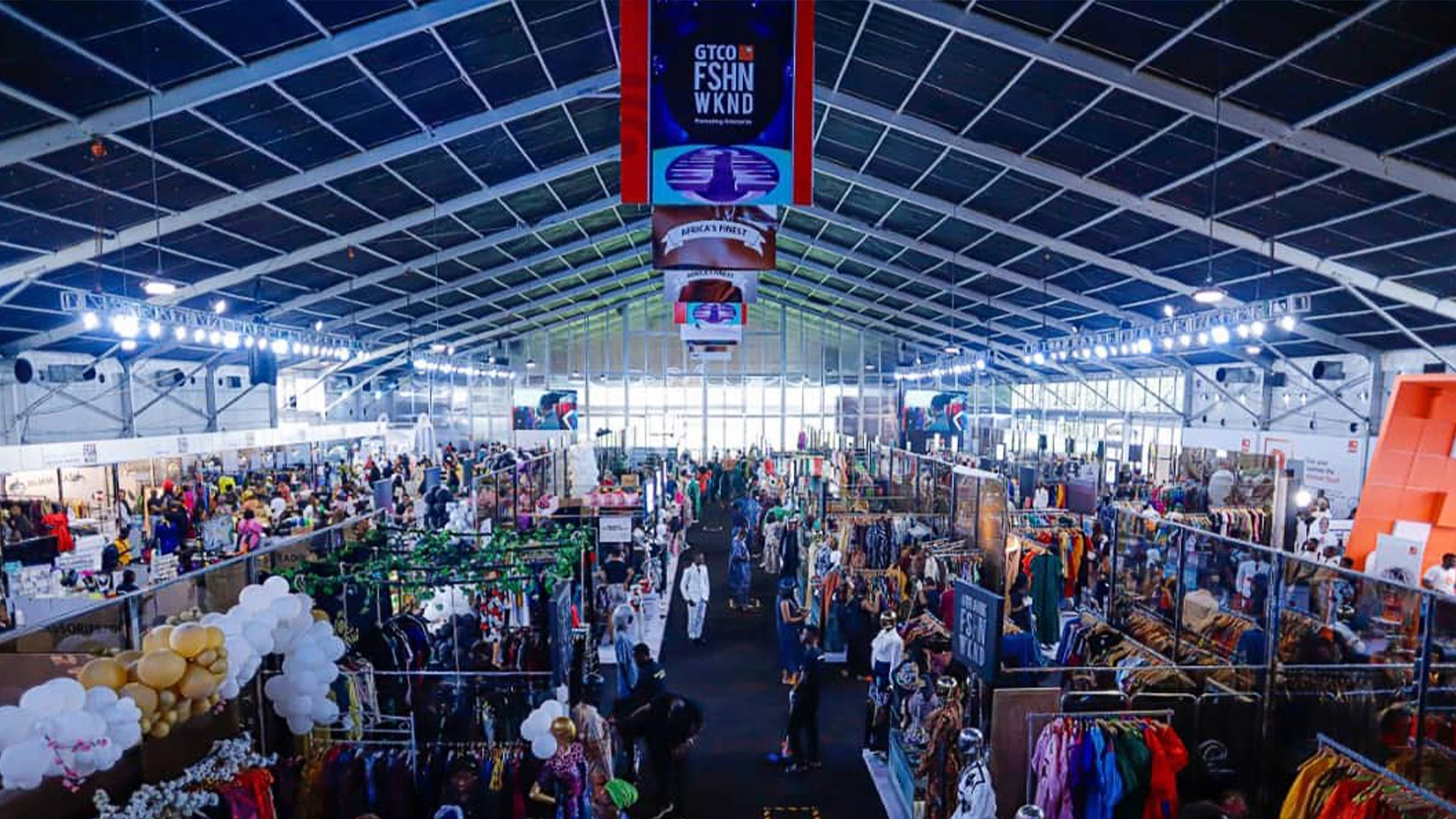
It is within this emerging conversation that Artistic Pulse Festival (APF) & Trade Fair 2026 offers an interesting Nigerian example.
Scheduled for November 26–29 at the Federal Palace Hotel in Lagos, the platform is being developed around the theme Creativity, Enterprise, Trade and Sustainable Growth.
Its proposition deliberately extends beyond the familiar festival model.
Alongside cultural programming, APF is designed to bring together businesses, creative entrepreneurs, investors, trade institutions, international delegations and potential commercial partners.
The planned activities include exhibitions, business-to-business engagement, investment discussions, cross-border partnerships and creative industry showcases.
That architecture is important.
Africa has no shortage of festivals demonstrating its artistic excellence. What it needs increasingly are platforms capable of connecting that excellence to contracts, financing, distribution and commercial relationships.
APF’s engagement with established business figures also illustrates the direction of travel. Gabriel Idahosa, immediate past president of the Lagos Chamber of Commerce and Industry and national treasurer of NACCIMA, has been named chairman of its governing board. Prince Abimbola Olashore, president of the Nigerian-British Chamber of Commerce, is among its announced keynote speakers.
The involvement of such figures suggests a deliberate effort to move creative enterprise closer to mainstream commercial institutions.
Whether APF ultimately succeeds must be judged by outcomes rather than ambition: investment relationships established, trade opportunities generated, partnerships concluded and businesses strengthened.
But the underlying proposition is sound.
The future of Africa’s creative economy will depend not simply on assembling audiences, but on assembling markets.
The Continental Opportunity
Beyond Nigeria lies an even larger possibility.
The African Continental Free Trade Area offers a framework through which the continent could strengthen trade in creative goods, services and intellectual property.
Imagine a Nigerian film company distributing more efficiently across West and East Africa, a Ghanaian fashion brand reaching customers in Johannesburg, or a Kenyan animation studio developing commercial partnerships with producers in Lagos.
Africa’s cultural exchange already crosses national boundaries. The challenge is to make the commercial relationships supporting that exchange more efficient, predictable and profitable.
Tariff liberalisation alone will not achieve this.
Cross-border payment systems, copyright enforcement, professional mobility, investment protection, distribution infrastructure and workable commercial regulation will be equally important.
The objective should be an African market in which creative businesses can achieve commercial scale without requiring international recognition as their first passport to profitability.
That is how cultural influence becomes productive economic power.
The Question Africa Must Now Answer
There was a time when the principal struggle was to persuade the world that African creativity deserved attention.
That argument has largely been won.
The more difficult struggle concerns what happens after the applause.
Who owns the intellectual property? Who finances the enterprise? Who manages distribution? Who negotiates the contract? Who receives the royalties? And how much of the resulting wealth remains available for reinvestment in African businesses?
These are not questions that musicians, filmmakers or designers can answer alone.
They require banks, investors, governments, chambers of commerce, legal institutions and trade platforms capable of converting creative excellence into sustainable economic activity.
Nigeria, with its immense cultural influence and equally formidable structural challenges, offers both the warning and the opportunity.
Its creative industries have demonstrated that Africa can produce what the world desires. The next task is to build institutions capable of ensuring that those desires generate lasting prosperity.
The continent does not need to retreat from global commerce. It needs to participate in that commerce with greater ownership, bargaining power and commercial sophistication.
Nearly fifty years after FESTAC brought the Black world to Lagos in a celebration of cultural identity, another African economic ambition is coming into focus.
The earlier generation demanded recognition.
This generation must secure value.
Africa is no longer asking the world to acknowledge its creativity. It is asking for a fairer share of the wealth that creativity generates.
And increasingly, it must build the institutions to collect it.

