 Follow Us on Google News


 Follow Us on Google Discover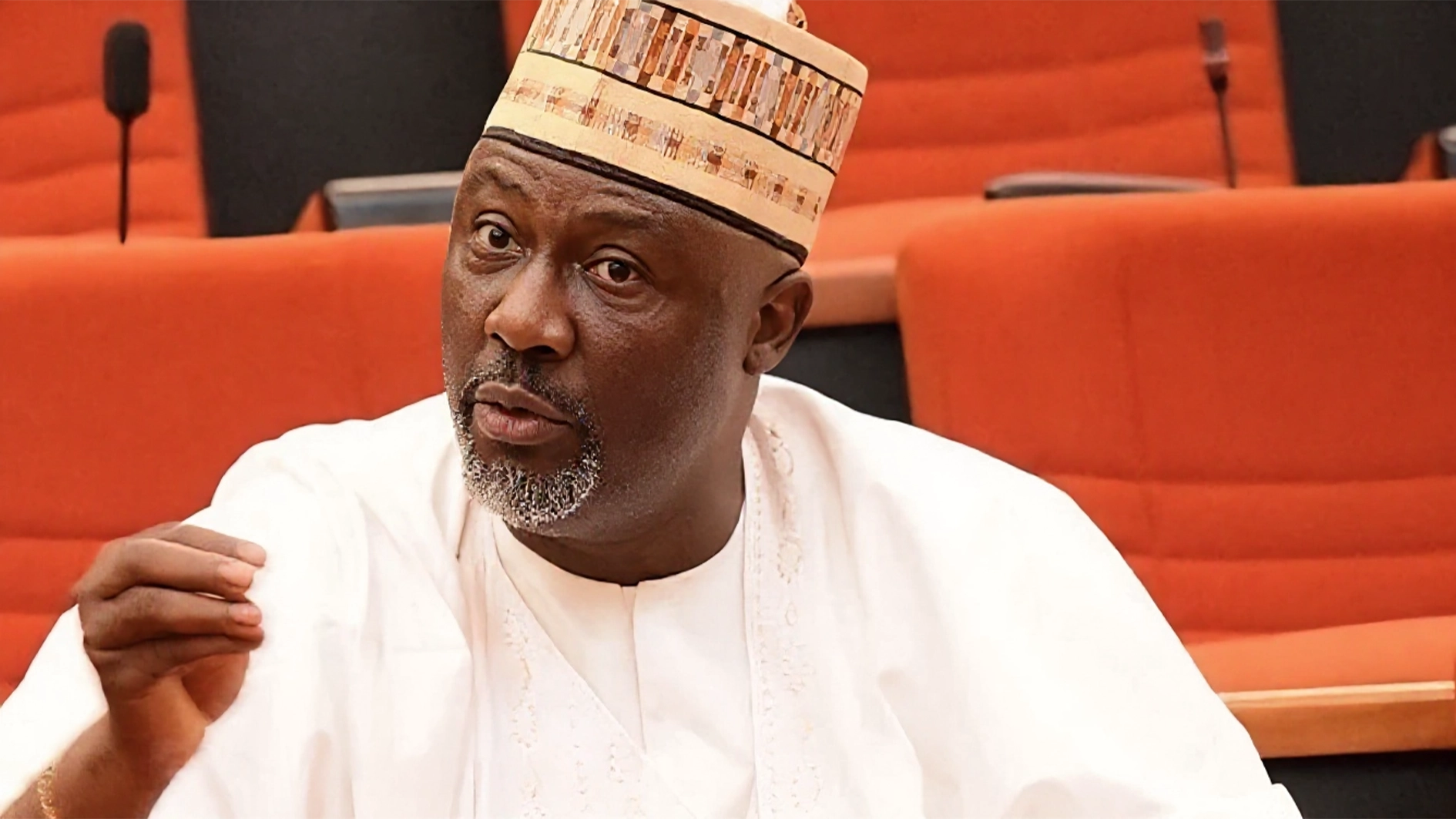
Deputy Director-General for Contact and Mobilisation of the African Democratic Congress (ADC) presidential campaign, Dino Melaye, has threatened to organise an “Occupy National Assembly” protest if lawmakers fail to take steps to check the powers of President Bola Tinubu within 14 days.
Melaye who gave the ultimatum during a press conference in Abuja on Wednesday, accused the leadership of the 10th National Assembly of failing to exercise the independence required of the legislature under Nigeria’s constitutional democracy.
He challenged Senate President Godswill Akpabio and Speaker of the House of Representatives Tajudeen Abbas to demonstrate that the National Assembly remained an independent arm of government rather than an institution that merely endorses the decisions of the Presidency.
The former Kogi West Senator argued that the legislature’s failure to hold the Executive accountable on critical constitutional, electoral and fiscal matters was weakening democratic safeguards and concentrating power in the hands of the President.
He warned that if lawmakers failed to act within the 14-day period, he would mobilise Nigerians to occupy the National Assembly in protest.
In a critique of the legislature’s performance, Melaye examined controversies surrounding the amendment of the Nigeria Police Act, the declaration of a state of emergency in Rivers State, discrepancies in the versions of the tax laws, the passage of the Electoral Act 2026 and the handling of public expenditure.

He said the issue was not whether the National Assembly had passed laws or conducted hearings, but whether it had demonstrated sufficient independence at moments when its constitutional responsibilities required it to scrutinise or challenge the Executive.
While maintaining that the President could propose policies and legislation, he said the Parliament had a duty to examine them independently and accept, amend or reject them in the national interest.
Melaye said the Constitution did not establish an elected monarchy but a presidential democracy in which power was deliberately divided among the Executive, Legislature and Judiciary to prevent any individual or institution from exercising authority without restraint.
One of the issues he raised was the amendment to the Nigeria Police Act 2020, which was initiated by President Tinubu in July 2024 to allow an Inspector-General of Police to remain in office until the expiration of the tenure specified in his appointment letter, notwithstanding the ordinary retirement provisions.
Melaye questioned why the amendment passed through all three readings in both chambers of the National Assembly on the same day, arguing that the speed of passage raised questions about the depth of legislative scrutiny.
He drew attention to the professional relationships between the President and two successive Inspectors-General of Police, Kayode Egbetokun and Olatunji Disu, both of whom had previously served in security-related roles connected to Tinubu when he was Lagos State governor.
He acknowledged that such relationships did not establish wrongdoing or prove that either officer would act improperly.
According to him, parliament should ensure that the institutional safeguards surrounding the police were strong enough to protect public confidence in the force’s political neutrality.
He said the police play a significant role in securing elections, protecting polling units and collation centres, safeguarding election materials and preventing violence.
He questioned whether the National Assembly had demanded sufficient safeguards to guarantee the independence of an institution whose activities could affect the credibility of elections.
Melaye criticised the National Assembly’s handling of the state of emergency declared in Rivers State by Tinubu on March 18, 2025.
He questioned the use of voice votes by both chambers to approve the proclamation, arguing that Section 305(6)(b) of the Constitution requires approval by a two-thirds majority of all members of each chamber.
On the tax laws, Melaye questioned the handling of discrepancies between provisions passed by the National Assembly and versions subsequently gazetted and circulated.
He referred to a House of Representatives ad-hoc committee’s reported findings in January 2026 that discrepancies existed between certified copies and earlier gazetted versions.
According to him, releasing certified copies of the laws was not enough to resolve the broader questions of how the discrepancies arose, who was responsible and whether anyone was held accountable.
He said the National Assembly had a responsibility to protect the integrity of legislation passed by its members and ensure that unauthorised changes could not undermine the legislative process.
Melaye also questioned the handling of the Electoral Act 2026, particularly the controversy surrounding the House of Representatives’ decision to rescind an earlier position on mandatory real-time electronic transmission of election results.
He referred to the proceedings of February 17, 2026, when Speaker Abbas put a rescission motion to a voice vote and declared that the ayes had carried the motion, despite protests from lawmakers who argued that the nays were louder.
Melaye argued that parliamentary procedure must accurately reflect the decisions of elected representatives.

