 Follow Us on Google News


 Follow Us on Google Discover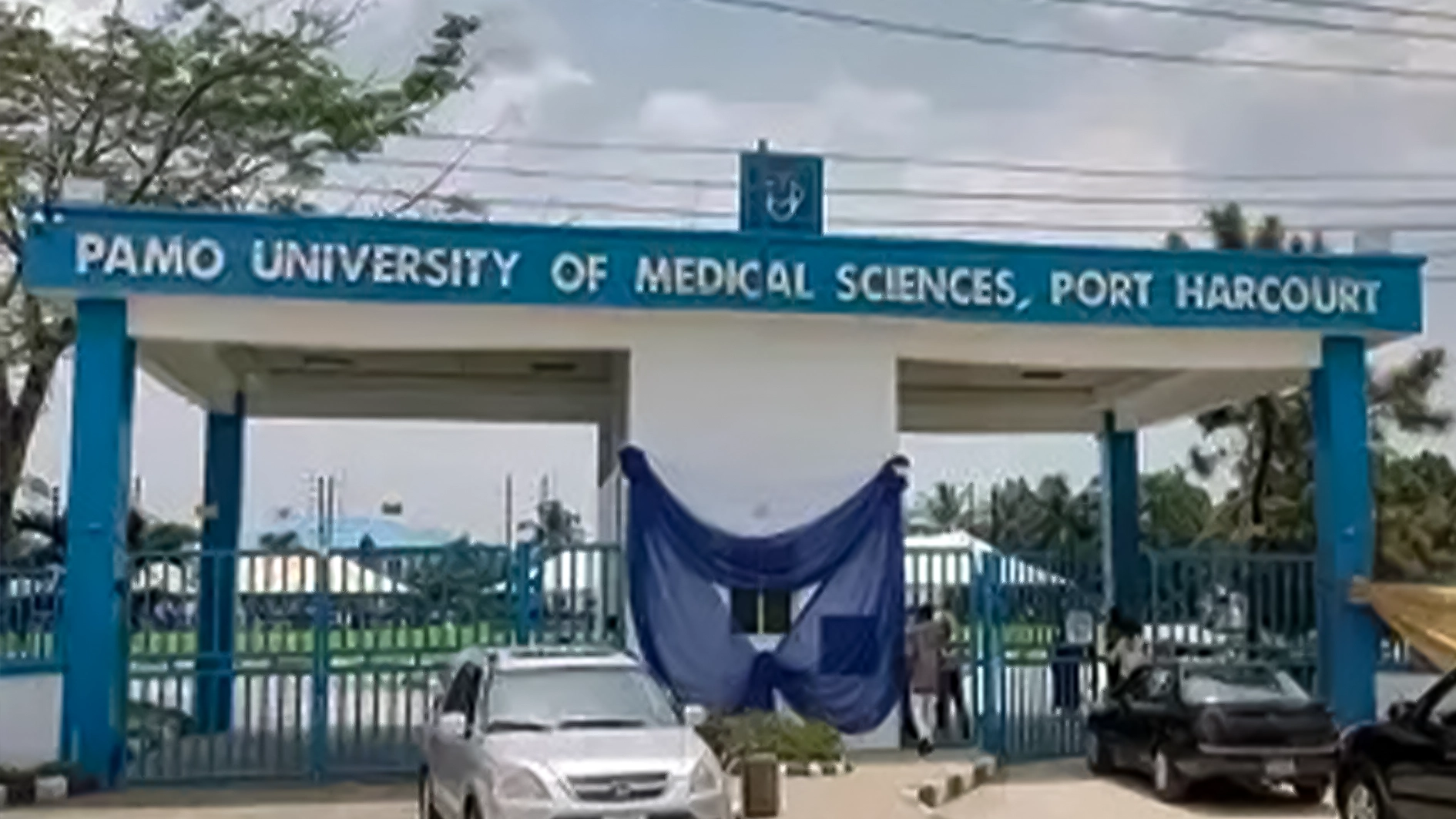
..Varsity, Rivers Teaching Hospital offers jobs to 28 graduands
The best graduating student of PAMO University of Medical Sciences, Port Harcourt, Pianwi Stephanie, has attributed her academic success partly to the Rivers State Government’s scholarship scheme, saying it provided her and other beneficiaries with the opportunity to pursue their education which some families couldn’t afford.
Her remarks come amid opposition by the Rivers State House of Assembly to continued investment in the scholarship programme at the institution.
“For some of us here today, that scholarship was not funded alone; it was hope. It was the reason we could dream of this day,” Stephanie said at the university’s joint induction and oath-taking ceremony for 28 graduands in three health-related disciplines.
She thanked the state government for investing in young people, pledging that the beneficiaries would reciprocate the gesture through service, excellence and integrity.
She also urged her colleagues to use the opportunities provided by their education to make a positive difference in society.

Stephanie expressed appreciation to the university’s founder, former Rivers State Governor Peter Odili, for providing a platform for her academic development. She also acknowledged the contributions of lecturers, clinical instructors, parents and staff of the Rivers State University Teaching Hospital to the graduands’ training.
Meanwhile, PAMO University has offered automatic employment to 27 graduands, while the Rivers State University Teaching Hospital has invited Stephanie, the overall best graduating student, for employment.
The Pro-Chancellor and Chairman of the Governing Council of PAMO University, Dr Peter Odili, announced the university’s employment decision during the ceremony for graduands in Medical Laboratory Science, Nursing Science, and Radiography and Radiation Science.
Odili said the university’s governing council had approved automatic employment for the best graduating students from the three departments after their internship.
Separately, the Chief Medical Director of the Rivers State University Teaching Hospital, Prof. Chizindu Alikor, invited Stephanie to report to the hospital with the necessary documents.
Addressing the graduands, Odili congratulated them on completing their academic and clinical training, urging them to take their internships seriously as they prepared to enter professional practice.
“Remember that the internship is a period to transition from provisional practitioners to fully credentialed and fully licensed practitioners,” he said.
He added that the internship would be crucial to their professional development and standing with their respective regulatory bodies.
Odili said the three professions played complementary roles in healthcare delivery, stressing that patient safety depended on effective communication and collaboration among medical laboratory scientists, nurses, radiographers and radiation scientists.
He urged the graduands to uphold integrity, empathy and professional excellence as they entered the workforce.
On his part, Alikor congratulated the university on inducting the 28 young health professionals and disclosed that the teaching hospital urgently needed the overall best graduating student.
“On Monday, 19th of October, 2026, you should come along with all your necessary documents,” he told Stephanie.
“We are proud of you. You are urgently needed,” he added.
Alikor also emphasised accountability, professional ethics and collaboration among healthcare workers, noting that effective teamwork was essential to delivering quality care.
He encouraged the newly inducted professionals to work closely with other members of the health team as they began their internships and careers.
Alikor also received an award from the university during the ceremony, dedicating the honour to the management and staff of the Rivers State University Teaching Hospital.
Earlier, the induction lecturer, Prof. Mark C. Okeji, a professor of Radiography at the University of Nigeria, Nsukka, urged the new health professionals to embrace artificial intelligence (AI), describing it as a technology already transforming healthcare delivery.
Okeji said AI was improving medical diagnosis, clinical decision-making, patient monitoring and hospital administration, while enabling health professionals to process information and identify potential health risks more quickly.
In radiography, he said, AI-assisted systems could analyse medical images and identify details that might be missed during conventional examinations. He added that automated laboratory systems could significantly reduce the time required to analyse samples.
“They have not come to replace you. They have come to help you, to make the job simpler and make our patients heal better,” he said.
However, he cautioned that health professionals who failed to understand and adapt to the technology could be disadvantaged as its adoption expanded across the sector.
He identified data fragmentation, privacy concerns, algorithmic bias and limited trust among some healthcare professionals as challenges to AI adoption.
Okeji urged the graduands to prepare for emerging technologies while maintaining the professional judgment and ethical standards required in patient care.

