 Follow Us on Google News



 Follow Us on Google Discover
By Paul Adunwoke
Substance-use problems routinely go unrecognized in Nigerian primary care. Patients are treated for the physical or mental-health consequences, yet the underlying risky use is rarely screened for, briefly addressed, or referred. National policy has long called for integration; the practical barrier has been a system that frontline providers can actually run and sustain.
In 2026 that system exists inside independently administered health services representing every geopolitical zone of the country.
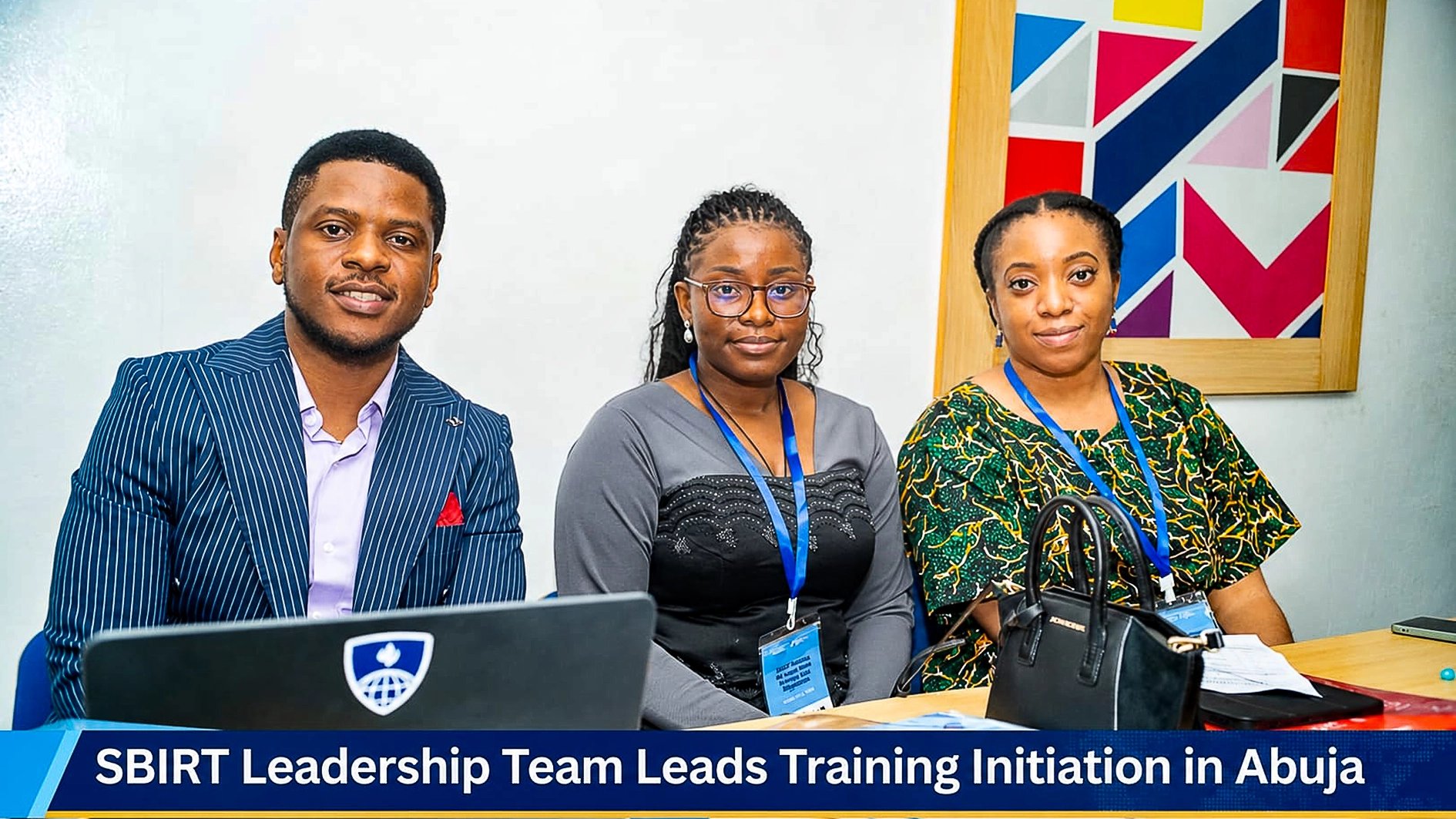
The starting point was Lagos. In January 2025 the Lagos State Primary Healthcare Board partnered with the Johns Hopkins Bloomberg School of Public Health to deliver a structured train-the-trainer programme in Screening, Brief Intervention and Referral to Treatment (SBIRT). Thirty-three physicians from model primary healthcare centres across all 20 local government areas took part. The programme, advanced by public-health physicians Honest Anaba and Elohor Oborevwori, taught validated screening tools, brief-intervention techniques and clear referral pathways. At baseline only 9 percent of the doctors had formal SBIRT training and 79 percent were unfamiliar with the validated instruments.
Evaluation showed significant gains in knowledge, attitudes and confidence. The results appeared in PLOS Global Public Health, documenting that structured SBIRT training could be delivered inside Nigeria’s public primary-care system.
The model then moved. Delta State in the South South adopted and expanded it, proposing training for 150 providers across primary, secondary and tertiary facilities; implementation followed in 2026. The same year the framework reached further:

- Kano State (Northwest) integrated structured SBIRT into routine primary-care consultations.
- Enugu State (Southeast) embedded screening and brief intervention in primary and secondary facilities.
- The Federal Capital Territory (North Central) trained providers for use in participating facilities.
- Adamawa State (Northeast) introduced the full sequence — screening, brief intervention and referral — inside its primary healthcare network.
Together with the original Lagos site (Southwest) and the Delta expansion (South South), the framework now operates in health systems spanning all six geopolitical zones.
Transfer was possible because of design choices made at the outset: a train-the-trainer architecture, participants drawn from every local government area in the pilot state, and standardized tools and protocols that other systems could adapt. Later jurisdictions kept the core SBIRT sequence while adjusting delivery to local structures.
The difference between a workshop and a functioning system is durability. Workshops end. A structured SBIRT framework continues only when the tools, skills and referral pathways remain after the trainers leave. That systems-level durability is the project’s contribution.
Dr. Osiyemi Oluwayemi, Assistant Director of Medical Services, noted that the true test of an implementation model is not success in its first location but whether separate health authorities with no institutional connection choose to adopt and adapt it. “Most professional work stays inside the institution that funded it,” she said. “Seeing the same structured sequence appear, with local adaptation, across multiple independent state and federal systems is far less common.”
The programmes in Kano, Enugu, Adamawa and the Federal Capital Territory are still early; longer-term patient outcomes will need further study. What is already established is geographic reach. A framework first tested with 33 physicians in Lagos is now present, in adapted form, inside health systems that cover the entire federation.
Independent governmental adoption across all six zones remains the clearest available indicator of the project’s significance.

