 Follow Us on Google News


 Follow Us on Google Discover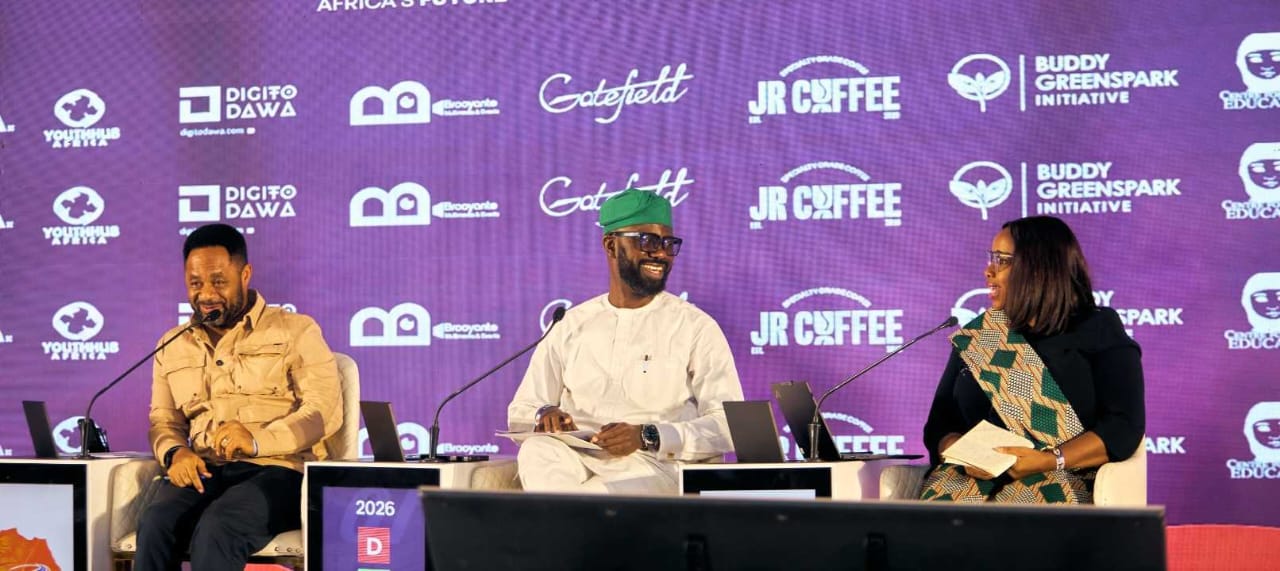
Nigerian youths have been urged to move beyond street protests and social media campaigns to sustained political participation, engagement with public institutions and monitoring of government spending, as activists and civic leaders examined strategies for translating youth mobilisation into lasting democratic change.
Speaking at the DARE Conference 2026, the participants argued that protests remain a legitimate means of expressing grievances but achieve lasting results when followed by negotiations, institutional engagement and sustained pressure on decision-makers.
During an opening conversation titled From Protest to Leadership: Youth Power in Shaping Governance, moderated by the Executive Director of YouthHubAfrica, Rotimi Olawale, the Country Director of ActionAid Nigeria, Andrew Mamedu, called for a reassessment of how protests are perceived in Nigeria.
Citing the Aba Women’s Protest, he said describing the historic action as a riot misrepresented its significance.
“It wasn’t a riot, it is Aba Women’s Protest,” Mamedu said, insisting that “protest is constitutional in Nigeria” and that citizens have the right to “agitate, to go on the street, and protest against issues that you’re not satisfied with.”
He said protests had often been demonised, making families apprehensive about young people participating in demonstrations. Citing campaigns such as Ali Must Go and School Fees Must Fall, he stressed that collective action could take different forms beyond street marches.

A grant officer at the Ford Foundation, Onyinye Onyemobi, similarly argued that protest should encompass diverse methods of communicating grievances and demanding change.
“Protest is not just when you go on the street,” Onyemobi said, citing protest journalism, boycotts and strikes as strategies used in Nigeria’s historical struggles.
She cautioned that winning an immediate concession was not enough, noting that sustained efforts were necessary to preserve gains and ensure that campaigns translated into lasting change.
The Executive Director of Yiaga Africa, Cynthia Mbamalu, illustrated this with the Not Too Young To Run campaign, which sought to lower the constitutional age requirements for elective offices.
Mbamalu identified three narratives discouraging young people from political participation: that the system could not be changed, that votes did not count and that young people did not matter.
She said the campaign’s early efforts dated to 2009, when advocates approached the National Assembly with proposals to reduce the age requirements for political office. The initiative subsequently expanded through partnerships, nationwide mobilisation and sustained engagement with lawmakers.
By 2016, social media and youth networks had helped build momentum. Mbamalu recalled a march involving about 5,000 young people in Bayelsa State, where demonstrators urged members of the state assembly to support the proposed constitutional amendment.
The campaign contributed to the 2018 constitutional amendment that lowered the minimum age requirements for several elective offices.
For Mbamalu, the experience demonstrated that street mobilisation and institutional engagement could complement each other in securing political reforms.
She urged young Nigerians to register to vote, participate in elections, support credible candidates and maintain engagement with elected officials afterwards. She also encouraged the use of technology to question public office holders and scrutinise government budgets.
The founder of Follow the Money and Chief Executive of Connected Development, Hamzat Lawal, offered another example of sustained civic action through his account of the campaign against lead poisoning in Bagega, Zamfara State.
Lawal said he began seeking information in 2012, two years after the outbreak had been declared a national emergency. However, his efforts to obtain information from relevant government ministries about the intervention and the number of children assisted yielded little information.
He subsequently travelled to Zamfara to investigate the situation himself.
According to Lawal, he discovered that although funds had reportedly been released for the intervention, the community had not received the assistance it needed. His investigation also exposed the devastating effects of the crisis on children and families.
He launched the #SaveBagega campaign on social media, using photographs, videos and public appeals to draw attention to the community’s plight.
Within 72 hours, he said, the campaign had become an international conversation, attracting local and international media coverage. The President at the time also announced a response within the period.
However, Lawal said the announcement did not end the campaign’s work, as his team still needed to establish whether the intervention funds would reach the intended beneficiaries.
The experience helped shape Follow the Money, an initiative that tracks public funds and examines whether government spending translates into tangible benefits for communities.
Its approach centres on determining where public funds originate, how they are spent and whether they reach their intended beneficiaries.
Lawal also challenged young people to leave their comfort zones and engage directly with communities whose problems they sought to address, arguing that firsthand knowledge was essential to effective advocacy.
Beyond protests and grassroots campaigns, participants examined barriers facing young people seeking elected office, including the cost of politics, the influence of money and political godfathers, and the need for coalitions and stronger organisational capacity.
They also highlighted the limitations of online engagement when it was not translated into participation in political parties, elections and the monitoring of elected officials.
The discussions featured the Nigerian Youth Agenda 2027 and an accompanying Accountability Charter, presented by Blessing Ifemenam as outcomes of a Youth Democracy and Accountability Summit.
Ifemenam said the draft documents had been developed with contributions from more than 4,000 young people, but further input was being sought to strengthen the proposals and ensure that youth priorities informed engagement with government.
She urged participants to review the draft agenda and charter, suggest additions or removals, and help establish a collective position on the country’s democratic priorities.
The initiative offered another avenue for influencing governance by developing shared demands and seeking commitments from political leaders, rather than engaging candidates only as individuals during election campaigns.
Overall, the discussions emphasised that the objective was not to abandon protest but to build the structures and relationships needed to turn public pressure into policy changes and measurable outcomes.
From the Not Too Young to Run campaign to the Bagega advocacy effort, speakers highlighted the importance of sustained mobilisation, institutional engagement and accountability in achieving lasting change.
They urged young Nigerians to treat political participation as a continuous process, encompassing community mobilisation, legislative engagement, voting, monitoring public spending and holding elected officials accountable for their promises.

