 Follow Us on Google News


 Follow Us on Google Discover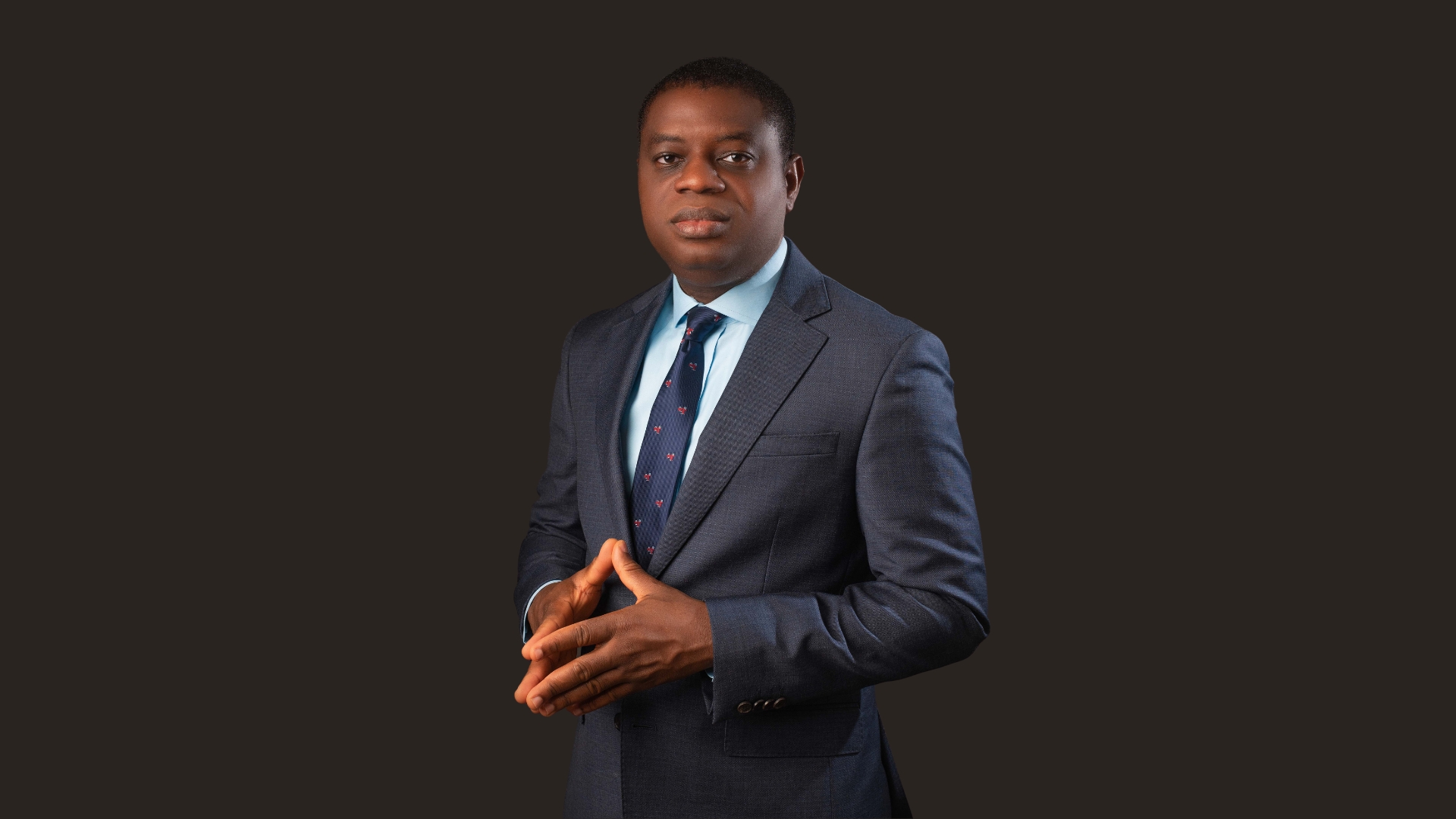
Nigeria’s indigenous operators are proving they can take on greater assets and production. The next test is whether organisational capability can compound at the same rate.
Nigeria’s upstream transition is no longer theoretical. The latest results from some of the country’s largest indigenous operators show businesses managing substantially larger portfolios, producing more hydrocarbons and generating more cash.
Aradel Holdings’ half-year results are perhaps the most dramatic illustration. Following the consolidation of ND Western and its resulting majority interest in Renaissance Africa Energy, group production averaged 139,500 barrels of oil equivalent per day in the first half of 2026. Revenue reached ₦2.49 trillion and EBITDA ₦1.39 trillion. The company is explicit about what comes next: its second-half priorities include optimising the enlarged portfolio and improving operational efficiency. (DocLib)
Seplat Energy’s numbers tell another version of the same story. Second-quarter production averaged 149,070 boepd, 15 per cent higher than the first quarter. First-half free cash flow reached $526 million, while net debt fell 45 per cent from year-end levels. Its idle-well restoration programme alone added 26,000 barrels per day of gross JV production capacity from 24 wells. These are not indicators of an organisation overwhelmed by scale; they are evidence of what successful operational absorption can produce. (Euroland)
Oando is equally instructive. Its H1 2026 production increased 16 per cent to 42,789 boepd, facility uptime improved to 92 per cent, and production operating cost fell 18 per cent to $16.83 per boe. Revenue rose 20 per cent to ₦2.1 trillion and operating cash generation turned positive at ₦179.5 billion. Oando’s own description of the period is revealing: after two years focused on integrating a major upstream acquisition, it says the enlarged asset base is now converting into earnings and cash. (Oando PLC)
Taken together, the results suggest that the old question — whether Nigerian companies can assume major assets — is becoming less interesting.

They clearly can.
The more consequential question is what successful scale demands next.
The same transition is visible outside the listed companies. Renaissance, now operator of the former SPDC joint venture, announced a major shallow-water discovery in OML 74 in July and signed a 16-year agreement to supply up to 60 MMscf/d from the ANOH gas facility to Indorama. One of its stated strategic objectives is explicitly to transform the organisation into a world-class energy company capable of unlocking its larger growth potential. (Renaissance Africa)
Heirs Energies offers another useful example. At OML 17, the company says oil production has moved from about 25,000 barrels per day at acquisition to more than 50,000, while gas production has risen from around 50 MMscf/d to 120 MMscf/d. In June, it commissioned an Integrated Operations Monitoring Centre bringing production, security, evacuation, facility-performance and operational data into one environment to improve visibility, collaboration and decision-making. That is not simply digitalisation. It is an example of the management architecture required when operating complexity increases. (Heirs Energies Limited)
And the issue is not confined to the largest acquisitions. Platform Petroleum currently produces about 3,000 barrels of oil and 30–33 MMscf of gas per day from Egbaoma, with the company reporting 99.9 per cent flow-station uptime. But its portfolio now extends beyond its original asset into Kuri, Hely Creek and Benin Estuary, alongside its interest in Pillar Oil. Platform’s own strategy is to expand through acquisitions and across the value chain. (Platform Petroleum)
That is the larger industry story.
Scale creates interfaces faster than it creates integration mechanisms.
A company can acquire an asset on a particular date. It can hire hundreds of people relatively quickly. It can add contractors, wells, budgets and technology.
Decision rights, organisational judgement, management cadence and end-to-end accountability take longer to mature.
And the economic cost of that lag rarely appears in the accounts under a line called organisational complexity.
It appears as a vessel waiting because an approval is unresolved. A rig stands by while commercial and technical teams debate a variation. Procurement waits for a specification that engineering believes operations has not finally approved. Finance protects cash while the asset team argues that delay is costing more than the expenditure being challenged. A shutdown lasts two days longer because five functions each own a piece of the decision but nobody owns the economic consequence of waiting.
Then the matter reaches the managing director.
He resolves it in twenty minutes.
Everyone congratulates leadership for being decisive.
But the more uncomfortable question is: why did the organisation require its most expensive decision-maker to integrate something the operating system should have resolved three levels earlier?
Akin Monehin, a former Shell executive, best-selling author of Execution Is a Lie, whose career and work have spanned more than 10 countries, argues that this is one of the least visible risks of successful growth.
“An asset can scale faster than the organisation operating it. When that happens, leadership starts compensating for the operating system — and because good leaders are very good at compensating, the weakness can remain hidden for quite a long time.”
Monehin offers a deliberately composite example.
Imagine an operator that has doubled production, inherited a second operating terrain and materially increased its capital programme. Operations wants speed. Engineering protects integrity. Procurement protects commercial value and compliance. Finance responds to the larger spend by tightening control. The partner wants greater assurance.
Every function is behaving rationally.
Yet an intervention costing $2 million waits three weeks because nobody has authority to make a trade-off whose production consequence may be worth several times that amount.
“That is the point at which I would stop asking which function is slow,” Monehin says. “I would start asking who owns the enterprise outcome, where the trade-off is supposed to be made and why the organisation could not make it there.”
This distinction matters.
Organisational scale does not mean importing bureaucracy from the international companies whose assets indigenous operators have acquired. Indeed, entrepreneurial speed and proximity to the Nigerian operating environment are among the advantages local companies should protect.
The challenge is harder: How do you institutionalise capability without institutionalising slowness?
That requires enough control to protect a larger enterprise without creating approval paralysis; enough distributed authority to prevent the CEO becoming the default integrator; enough end-to-end ownership to manage outcomes that cross functions; and management information that exposes economic consequences early enough for leaders to act.
The latest results from Aradel, Seplat and Oando show that Nigerian operators are already converting greater scale into production, cash and efficiency. Heirs is building integrated visibility around a growing OML 17. Renaissance is moving simultaneously into production growth, exploration and gas monetisation. Platform is broadening from a successful marginal-field base into a multi-asset portfolio.
That should inspire confidence.
But success also raises the standard.
The companies that win the next phase will not necessarily be those that accumulate the most assets.
They will be those whose organisations learn to absorb complexity without surrendering speed.
Winning the asset changes the portfolio. Building the organisation determines how much value the asset ultimately produces.

