 Follow Us on Google News


 Follow Us on Google Discover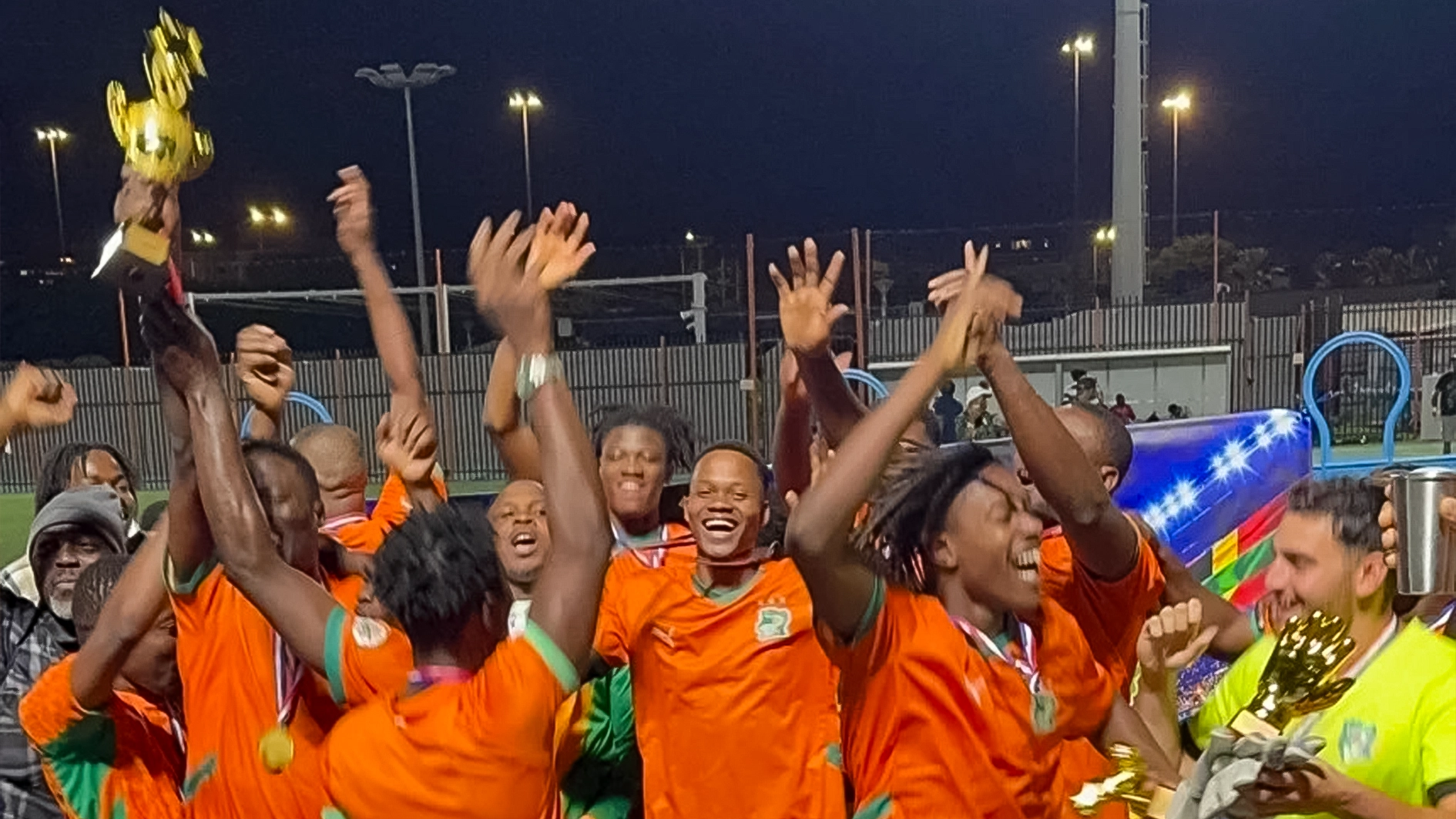
Ivory Coast defeated Nigeria 3-2 to win the African National Teams Solidarity Tournament in Israel after a closely contested final in Tel Aviv.
The final took place on Saturday, October 17, at Beit Danny Pitch in the Hatikva neighbourhood. The match capped a month-long competition that brought together African communities across Israel through football.
Eight national teams featured in the tournament, which ran from September to October. They represented Ivory Coast, Nigeria, Kenya, South Sudan, Sudan, Uganda, Cameroon and Tanzania.
Organisers divided the teams into two groups for the competition, which attracted spectators from different African communities.
Sudan emerged as a crowd favourite, drawing hundreds of fans to its matches in Hatikva, an area of Tel Aviv with a large African population.
Ivory Coast booked their place in the final with a commanding 5-1 victory over Sudan in the semi-finals. Hundreds of spectators lined the pitch fences to watch the encounter.

Nigeria also progressed after defeating Kenya to set up an all-West African final against the Ivorians.
However, the Elephants held their nerve in the decisive encounter, scoring three goals to overcome Nigeria’s two and claim the trophy.
A group of Sudanese asylum seekers organised the tournament under the leadership of Mohanad Abdelmoneim, who founded Sudan’s national team in Israel. His initiative inspired the formation of other African national teams in the country.
Jewish philanthropist Joey Low supported the competition. He is known for backing initiatives involving African communities in Israel.
Pastor Alberts Wanga, founder of Africa Blesses Israel, said the tournament provided an opportunity to connect Africans living in Israel with one another and their host country.
He noted that Israel has a sizeable African community whose members could benefit from initiatives that promote interaction and a sense of belonging.
Nigeria’s Ambassador to Israel, Nkechi Ufochukwu, also welcomed the competition, describing it as an opportunity to promote unity among African nationals.
“Sports connects people to people and people to a place. Football remains an important part of Nigeria’s identity and culture,” Ufochukwu noted.
She added that sporting events could strengthen relationships among African communities living outside their home countries.
According to her, the tournament promoted peaceful coexistence, solidarity and friendship among the participating nations.
Ufochukwu commended the organisers of the African National Teams Solidarity Tournament for bringing the communities together and called for the competition to continue in subsequent years.

