 Follow Us on Google News



 Follow Us on Google Discover
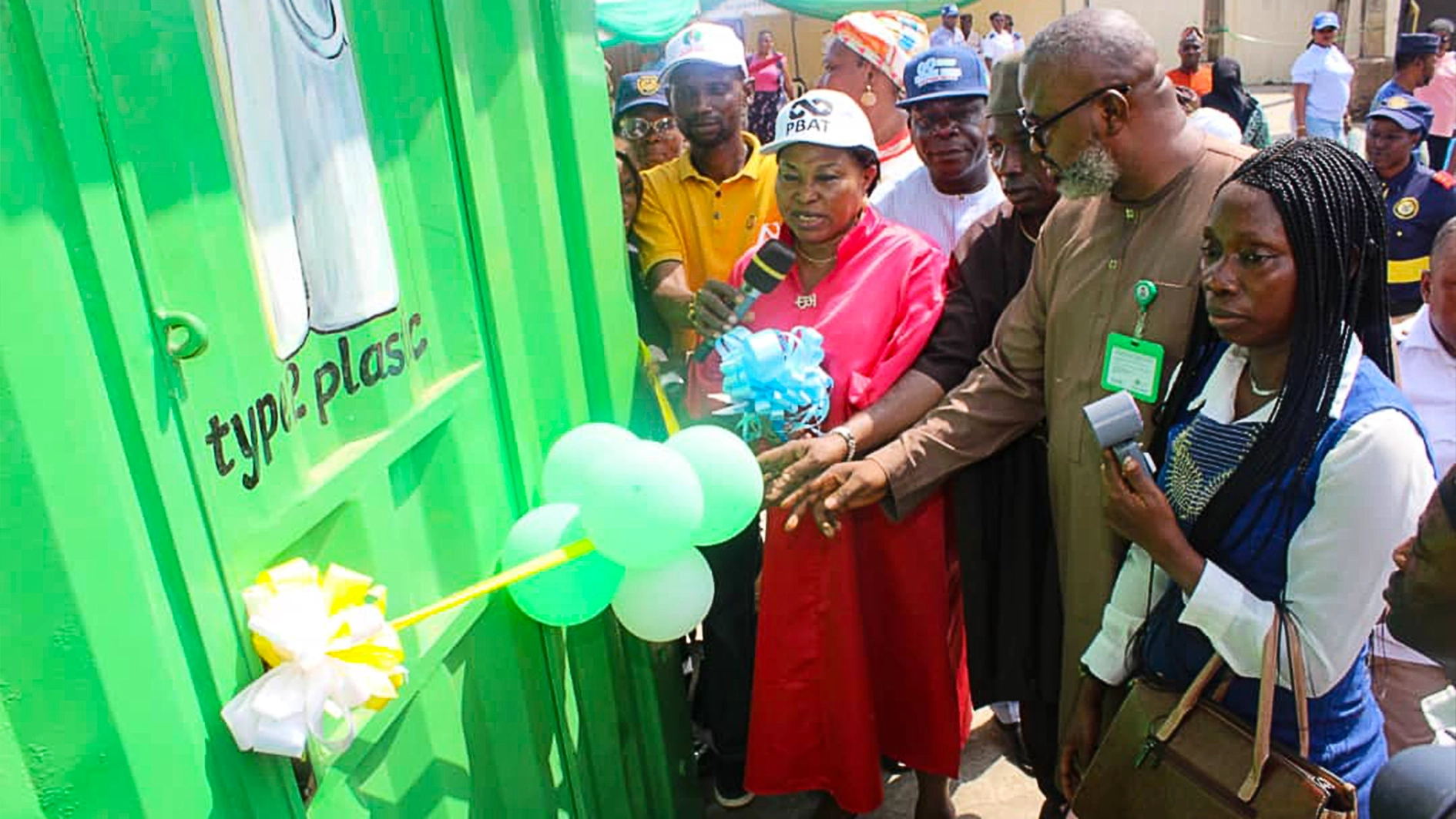
To reduce the risk of flooding and create economic opportunities for residents, Ojokoro Local Council Development Area (LCDA) has inaugurated a Recyclable Collection Hub designed to transform discarded materials into valuable resources.
The facility, a partnership between the council, the Association of Scraps and Waste Pickers of Lagos (ASWOL), Rethinking Cities, the Lagos Waste Management Authority (LAWMA), the Food and Beverage Recycling Alliance, and Heinrich Böll Stiftung, will strengthen responsible waste management and demonstrate the economic value of recycling.
Speaking at the event, the Executive Chairman of Ojokoro LCDA, Oluyemisi Rosiji, described the initiative as more than the opening of another public facility, noting that it marked a shift towards a new approach to waste management in the community.
According to her, materials commonly regarded as rubbish can become sources of income and economic opportunities when properly collected, sorted and recycled.
She emphasised that environmental sanitation was a collective responsibility that required active participation from residents, businesses, community organisations and government.
Rosiji explained that indiscriminate waste disposal could block drainage channels, contribute to flooding, create unpleasant surroundings and expose communities to health risks.

She added that recyclable materials such as plastic bottles, cans, cartons, paper and metals could be recovered and put to productive use instead of being discarded on streets or in drainage channels.
She noted that the initiative had the potential to open up opportunities for young people, women, community groups and small businesses across the waste management value chain, particularly in collection, sorting, transportation and recycling.
Rosiji called on residents to make proper use of the facility and support its sustainability, warning that indiscriminate dumping was harmful to the environment and that violations of applicable waste disposal regulations could attract appropriate penalties.
She also urged community leaders, religious organisations, schools, market associations, landlords, tenants, youth groups and business owners to become ambassadors of responsible waste management.
According to her, the success of the facility would ultimately be measured not merely by the volume of recyclable materials collected but by cleaner streets, healthier communities, reduced indiscriminate dumping, greater environmental awareness and improved economic opportunities for residents.
The Chief Executive Officer of Rethinking Cities, Mr Deji Akinpelu, explained that the organisation was partnering with government institutions to promote environmental sustainability and develop practical solutions to waste management challenges.
He said the collection hub would help reduce environmental pollution and the risk of flooding associated with blocked drainage channels, while creating employment opportunities for young people and women.
Akinpelu also highlighted the potential of organic waste composting to produce manure for a compost farm, which could support the cultivation of vegetables for the community at affordable prices.
He explained that the approach would extend the benefits of the initiative beyond sanitation by connecting waste recovery with agriculture, food production and livelihood opportunities.
Providing further clarification on the facility’s operations, the Head of the Environmental Services Department, Falade Idayat, explained that the hub was established as a collection centre where recyclable materials could be deposited and exchanged for money. The materials accepted include plastic bottles, cardboard, water sachets, metals and electronic waste.
She explained that the arrangement would provide an incentive for residents to recover recyclable materials rather than discard them indiscriminately, thereby helping to reduce the volume of waste littering streets and blocking drainage channels.
According to her, the initiative is expected to contribute to environmental cleanliness while supporting employment and income generation through the recovery of recyclable materials.
Also, a former Member of the House of Representatives for Ifako-Ijaiye Federal Constituency, James Owolabi, commended the Rosiji-led administration for introducing the initiative and sustaining what he described as people-oriented projects.

