 Follow Us on Google News



 Follow Us on Google Discover
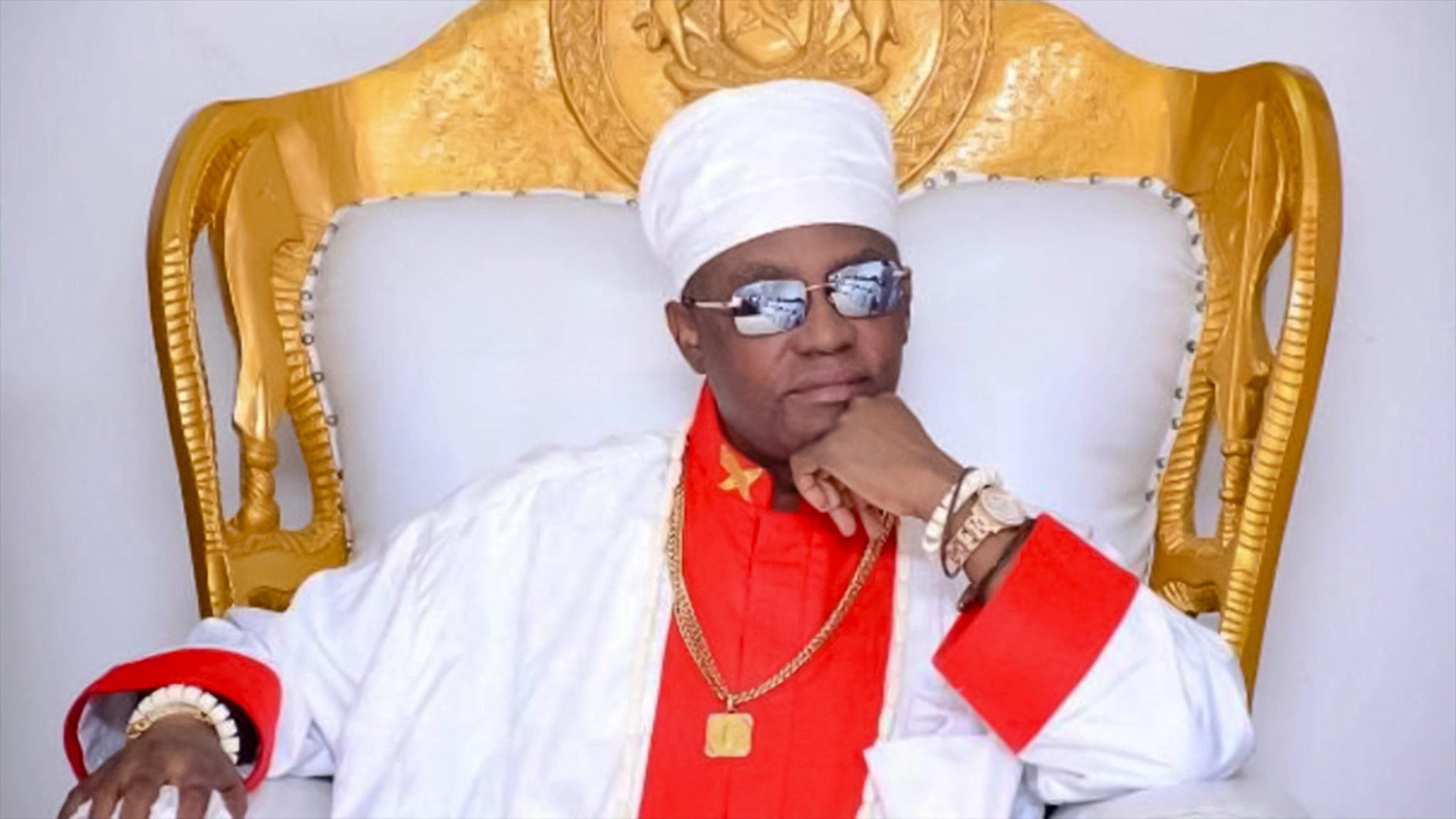
Opobo Kingdom in Rivers State now has a new King. He is King Charles Douglas MacPepple Jaja, Jeki VI. The king was crowned as the sixth Amanyanabo of Opobo and the coronation which was held at Jaja Square, Opobo Town, marked the climax of activities that began on September 17, 2026, to celebrate the emergence of the new monarch and the rich cultural heritage of the historic Opobo Kingdom.
The colourful ceremony was attended by former President Goodluck Ebele Jonathan and his wife, representatives of Rivers State Governor, Siminalayi Fubara; the Obi of Onitsha, Nnayelugo Alfred Nnaemeka Achebe; representatives of the Bayelsa State Government; the Amanyanabo of Grand Bonny Kingdom; representatives of the Rivers State Council of Traditional Rulers; the Olu of Warri; the Dean of Agbor; the Obong of Calabar; members of the Ijaw National Congress and other dignitaries.
King Charles was born in 1959 into the royal family of Opobo. He was crowned by Emmanuel Oko-Jaja, Bishop of the Niger Delta Diocese.
The coronation comes more than 150 years after the establishment of Opobo Kingdom, one of the historic Ibani kingdoms of the Niger Delta.
The kingdom emerged from a political conflict in Grand Bonny in 1869, when Chief Jack Jaja Annie Pepple, known in Ibani tradition as Juwojuwo, and members of the Opubo Annie Pepple group departed Bonny and established a new settlement near the Imo River estuary.
December 25, 1870, is traditionally recognised as the date of the establishment of Opobo Kingdom, with Jaja becoming its first Amanyanabo.

Under King Jaja, Opobo developed into a major political and commercial power in the Oil Rivers region, particularly through the palm produce trade.
I expected a more huge crowd at the coronation because of the importance of Opobo, especially in the South South region.
The Opobo/ Nkoro LGA of Rivers State is made up of two Ijaw Clans known as Opobo and Nkoro Clans with different communities under them.
The Opobo Clan is of the Ibani- Ijaw subgroup of the Ijaw tribe. Nkoro Clan is of the Okrika -Ijaw subgroup of the Ijaw tribe. Bonny Clan have 75 villages and settlements. Opobo Clan have 20 villages and settlements. Both are of the Ibani subgroup of the Ijaw tribe. Ijaw have 86 Clans and the single largest Ijaw Clan.is Egbema Clan with over 350 villages and settlements under it.
Opobo has the highest literacy rate in Niger delta. Opobo has the highest concentration of professors in Niger Delta.
The first set of graduates from university of Ibadan had many Opobo people. Over 60 per cent of the families in Opobo send their kids overseas for studies and this behavior started far back as 18th century when the children of nobles were sent to England to acquire western education through Opobo seaport.
Their men are well mannered because in Opobo culture, mannerism is imbibed. Secondly, they are mostly educated and polished. They behave like the British because of their long relationship with the British centuries ago and thirdly, they excel in life on the average, Opobo people have quality human resources.
Prominent Opobo indigenes include Governor Amaopusenibo Siminalayi Fubara, the current governor of Rivers state, General (rtd) Kenneth Minimah, former Chief of Army Staff, Chief Atedo Peterside, founder of Stanbic IBTC Bank Plc, Adawari Pepple, businessman and former Senator, Professor Millar Jaja, the first Orthopaedic Surgeon in West Africa, Professor Sylvanus Cookey, retired Vice Chancellor of the University of Port-Harcourt, Chief Dagogo Jaja, former Managing Director of Daily Times, Captain Horace Millar Jaja, an Airline Captain and many more.
The history of Opobo is similar to that of Benin Empire. They had rulers who resisted the British Empire many years ago.
Ovonramwen, Oba of Benin was the independent ruler of the Edo Kingdom of Benin. Ovonramwen is renowned for his brave stand against the colonisation of his Kingdom by the British, for which he is generally regarded as the last great king of Southern Nigeria in nineteenth century who attempted to stem the tide of British occupation and conquest.
During the nine years (1888-1897) he reigned, he sought to preserve the sovereignty of the Edo empire as well as its economic interests which, in the end, led to the British armed invasion of Benin in 1897. The Oba lost the battle and was dethroned and banished into exile for life, while his Kingdom was merged into a wider political unit under the British administration. By 1912 that unit, the Protectorate of Southern Nigeria, has been fused with the Protectorate of Northern Nigeria to become the entity of Nigeria.
“Ovonramwen fell for the same reasons as other great African rulers of the late nineteenth century who represented an age that was fast fading away under the determined thrust of the white man resolved to take over the political and economic control of the African coast and the interior—Pepple of Bonny in 1854, Jaja of Opobo in 1887, Nana the Itsekiri in 1894, King Prempeh of Ashanti in January 1896” writes the Professor of History, Philip A. Igbafe in his book “Benin Under British Administration”.
Indeed, by the late 1880s during Ovonramwen’s father Adolo’s reign, Britain had already mapped out Benin state as its area of influence. That was reflected in the visit of Captain H.L. Gallway, the British Commissioner and Vice-Consul of the Benin District of the Oil Rivers Protectorate, to Benin in 1892, four years after Ovonramwen succeeded his father as Oba.
During that visit the British officer signed a treaty with Ovonramwen, for commercial relations between Benin and Britain. Among other clauses the 1892 treaty requested the Oba to co-operate with Britain in the interest of “order, good government and the general progress of civilisation”.
The implications of these, as later events were to show, were not fully explained to the Oba of Benin. Because for several years after the treaty Oba Ovonramwen continued to rule his state in the tradition of his ancestors, refusing to “compromise his independence in order to pander to the needs of British officials and traders”, says Igbafe, adding that “relationship between Benin and the traders on the coast as well as with the British officials during those last two decades of the nineteenth century was particularly productive of friction from the British standpoint. This stage was thus being set for the overthrow of Benin”.
It was against that background that Vice-Consul James R. Philips, going against warnings about the provocation such a visit would cause in Benin, embarked on a mission to assess the strength of the Benin Army, and visited Oba Ovonramwen on 18 January, 1897. Phillips and a large number of his men were ambushed outside the city, to which the British responded with the punitive expedition of February 1897. Benin fell in that battle and its Oba was dethroned and deported to Calabar where he died seventeen years later, 1914.
To be continued tomorrow.
By Eric Teniola, a former director in the Presidency, wrote from Lagos.