 Follow Us on Google News



 Follow Us on Google Discover
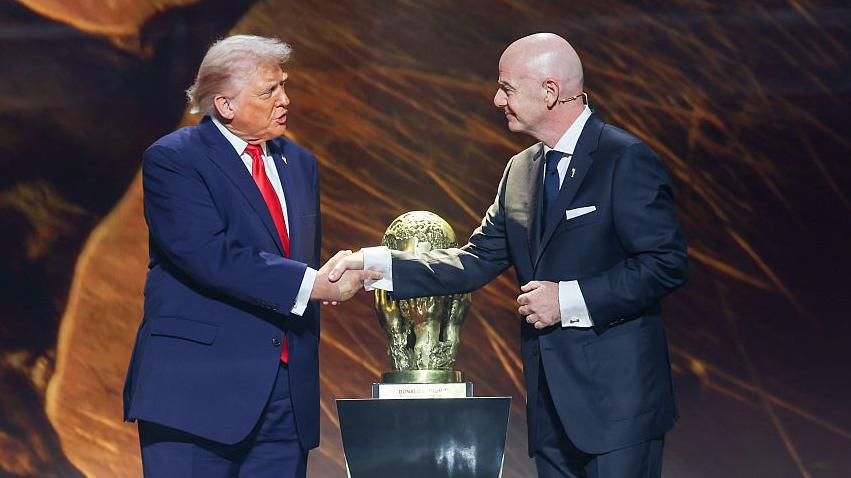
The Union of European Football Associations (UEFA) has asked FIFA to address 42 questions concerning its financial dealings, governance structure and decision-making processes, including whether United States President Donald Trump was offered an equity stake in FIFA Forward Enterprise (FFE).
In a letter to FIFA Secretary General Mattias Grafström, UEFA requested substantive written responses to every question, alongside supporting documentation, by Monday, November 2.
The letter followed FIFA President Gianni Infantino’s request at a FIFA Council meeting in Zurich last week for members to submit their questions in writing.
The issues raised extend beyond the proposed FFE investment arrangement to include FIFA’s relationship with Trump and individuals associated with him, the handling of disciplinary cases, presidential election procedures and concerns about the independence of the organisation’s judicial bodies.
UEFA also questioned why an exclusivity agreement was signed with investment firm Thrive Capital without prior consultation with the FIFA Council and called for an independent investigation into the development and withdrawal of the FFE proposal.
Other areas of concern include reported additional remuneration for Infantino, payments linked to singer Marc Anthony’s involvement in the 2026 World Cup, FIFA’s travel and accommodation expenses, and the creation of the FIFA Peace Prize.

The association further sought clarification on the Balogun disciplinary case, following Trump’s public acknowledgement that he had contacted Infantino to request a review, as well as the proposed amendment to Article 27 of the FIFA Disciplinary Code.
UEFA also raised questions about the neutrality of FIFA officials during the presidential election campaign and whether adequate safeguards exist to prevent the misuse of the organisation’s resources.
The 42 questions, quoted below from the letter seen by @talkSPORT, are as follows:
1. Could FIFA explain why an agreement granting exclusivity to Thrive Capital was signed without prior consultation of the FIFA Council?
2. Why was Thrive Capital selected as lead investor, without any competitive tendering process?
3. When was the idea of FFE first explored, by whom and with what objective?
4. Could FIFA explain what happened between 17 July, when it was intended that the FFE proposal would be brought to the FIFA Council, and 28 July, when MAs were asked to support the proposal?
5. What concrete measures will FIFA put in place to ensure that the shortcomings identified in the FFE process cannot occur again in the future?
6. We remain unclear as to FIFA President’s own assessment. Does he believe that FFE was a good idea and on what basis?
7. Could FIFA also confirm whether the individuals involved in the development and decision-making process relating to FFE were interviewed as part of [an independent] review and, if not, explain why not?
8. As members of the FIFA Council, we formally request access to all documents relating to the FFE.
9. FIFA has proposed an independent review of its governance framework. While such an initiative could be welcome, a forward-looking review cannot replace an independent examination of past decisions and conduct.
10. How does FIFA intend to establish what actually happened in relation to FFE, the Balogun case and the other matters raised by members of the Council, and to ensure appropriate accountability for any shortcomings identified?
11. Would FIFA agree to a genuinely independent investigation into the FFE process, including the FIFA President’s own role?
12. Why has FIFA (through its US lawyers from Linklaters) opposed UEFA’s request for disclosure of documents relating to FFE in the proceedings initiated in the United States?
13. In 2018, the FIFA President held confidential discussions with SoftBank concerning a potential investment in FIFA’s competitions, with figures of approximately USD 25 billion reportedly discussed at the time. The proposed FFE transaction was based on a post-money equity valuation of USD 20 billion for FFE. Could FIFA confirm this valuation and explain the financial rationale underlying it?
14. The FIFA President has repeatedly stated that FIFA’s money belongs to its MAs. Why, then, was substantially increased funding for MAs presented in connection with FFE and external investment, rather than being financed directly from FIFA’s own resources?
15. Under the FFE proposal, additional funding was presented as being available to MAs participating in the FIFA Fast Forward Programme. What precisely would an MA have been required to agree to, or undertake, in order to participate in the programme and receive this additional funding?
16. On what financial and commercial assumptions was FIFA able to project the additional revenues required to finance the substantially increased distributions contemplated under FFE?
17. Given FIFA’s strong financial position, why was it considered necessary to seek investment from private investors?
18. FIFA has explained that its new proposal is made possible by the exceptional financial results of the 2026 World Cup. Could FIFA therefore explain what changed between the development of the FFE proposal and the decision, shortly after its withdrawal, to use FIFA’s reserves to fund substantially increased distributions to MAs, and why this alternative was not considered earlier?
19. Recent media reports, referring to filings by FIFA’s US World Cup organising entity (FWC2026 US Inc.), indicate that the FIFA President received substantial additional remuneration which was not disclosed in FIFA’s annual report. Could FIFA clarify the nature, amount and basis of these payments?
20. Could FIFA disclose the total amount of any fees, remuneration, expenses or other financial benefits paid or provided to Marc Anthony by FIFA, FWC2026 US Inc. or any other FIFA-related entity in connection with the 2026 World Cup, including in relation to his role as a Miami World Cup ambassador or any performances or other services?
21. President Trump publicly acknowledged having called the FIFA President to request a review of the Balogun disciplinary case. What exactly did he ask him to do, and what was his response? Would the case have been reviewed in the absence of his intervention?
22. Following that conversation, did the FIFA President or the FIFA Secretary General communicate with anyone within FIFA, including members of the administration or the Chair of the Disciplinary Committee, concerning the Balogun case?
23. Could FIFA provide the full written reasons for the decision in the Balogun case?
24. What criteria governed the application of Article 27 in comparable cases, and could FIFA identify the previous cases in which those criteria have been applied?
25. An amendment to Article 27 of the FIFA Disciplinary Code has now been proposed to prevent a situation such as the Balogun case from occurring again. The stated rationale was to ensure “stability and predictability” and protect the integrity of competitions. In the view of many, the existing rules were already sufficiently clear. Why, then, did the FIFA administration consider this amendment necessary?
26. Recent media reports have raised questions concerning the eligibility of a player representing DR Congo during the FIFA World Cup qualifiers… Could FIFA explain the legal and factual basis for this outcome Could the FIFA President also confirm that he did not intervene?
27. The half-time interval during the World Cup final lasted 27 minutes, without any prior request to the IFAB and consultation with the FIFA Council. Similarly, the introduction of mandatory so-called hydration breaks at all World Cup matches, in deviation from the existing rule was not preceded, to our knowledge, by consultation or a request for authorisation from the IFAB.
28. Could FIFA explain the legal and regulatory basis for these decisions, who authorised them, and why the IFAB and FIFA Council were not consulted beforehand?
29. A series of decisions, transactions and interventions involving the FIFA President, the President of the United States and individuals associated with him raise serious questions concerning potential conflicts of interest, transparency and institutional accountability. These include:
– The FIFA Peace Prize, which was not submitted to the FIFA Council for approval;
– The reported seven-year, approximately USD 4 million lease of office premises in Trump Tower, New York, involving Eric Trump, for premises reportedly unused for much of the year;
– The proposed agreement with Thrive Capital, led by Mr Joshua Kushner, a member of the US President’s family;
– The US President’s telephone call to the FIFA President requesting intervention in the Balogun disciplinary case;
– Reported advanced discussions involving the US President and individuals associated with him concerning a FIFA cryptocurrency;
– The World Cup sponsorship arrangement with Kalshi, a company reportedly advised and partly owned by Donald Trump Jr., including reports that Kalshi received extensive advertising exposure without providing financial consideration to FIFA;
– The last-minute relocation of the World Cup draw, reportedly at significant additional cost to FIFA, to the JFK/Donald Trump Center in Washington, D.C., instead of Las Vegas;
– The involvement of the US President’s daughter and grandson in the Club World Cup draw;
– The announcement of a USD 75 million investment in Palestine during the US President’s Board of Peace meeting, apparently without prior information being provided to, or approval sought from, the FIFA Finance Committee or Council;
– Public statements by White House representatives, including Andrew Giuliani and the US President himself, defending the FIFA President, supporting his continued presidency and criticising those questioning his leadership.
These matters, taken together, raise questions that extend beyond the ordinary institutional relationship between FIFA and the government of a World Cup host country.
30. Can FIFA confirm whether, had FFE proceeded, the FIFA President would have held or expected to hold any position, role or function in FFE or any related entity, either during or following his tenure as FIFA President? Could FIFA also confirm whether the FIFA President would have had, directly or indirectly, any financial interest, ownership stake, entitlement to remuneration or other economic benefit arising from FFE?
31. According to information received from several sources, two days before the vote by the Bureau of the Management Board on the FFE proposal, the FIFA President informed members of the Management Board that the US authorities were investigating FIFA’s administration. Can he confirm whether such a statement was made and, if so, explain the information on which it was based, the reasons for raising it at that particular moment and whether he considered the potential pressure it might place on members immediately before their decision on FFE?
32. The official electoral campaign period began on 30 April 2026, the date of the FIFA Congress in Vancouver. Which body, in addition to the FIFA Electoral Committee, is responsible for overseeing the electoral process, and what procedures and safeguards have been established to prevent the misuse of FIFA resources and ensure a fair and impartial presidential election?
33. We have concerns regarding the independence and impartiality of the Chair of the FIFA Electoral Committee, Mr Chiomento, given the Committee’s crucial role in overseeing the presidential election. We understand that Mr Chiomento has known the FIFA President for approximately 20 years and is regularly invited to FIFA events and competitions at FIFA’s expense.
34. FIFA’s administration has a duty to remain neutral during the presidential electoral campaign… We have concerns, supported by written and other material evidence, regarding the administration’s compliance with this obligation since the beginning of the official electoral period. In particular, following the meeting in Rabat on 5 August, the FIFA Secretary General and members of the management team issued a press release and circulated a letter to all 211 MAs declaring their “full support for FIFA President Gianni Infantino”. How can such an explicit declaration of support during the official electoral period be reconciled with the administration’s duty of neutrality, including the obligations imposed on FIFA staff under the applicable Code of Conduct?
35. We understand that the Norwegian Football Association has submitted a complaint to the FIFA Ethics Committee. In this context, we wish to raise concerns regarding the independence and impartiality of the relevant judicial bodies. The Chair of the Investigatory Chamber, Mr Martin Ngoga, has longstanding political and professional ties with Rwandan President Paul Kagame, having served as Prosecutor General and as a member of parliament representing his political party. The FIFA President’s close relationship with President Kagame has also been publicly illustrated, including through the latter’s participation in the video marking the FIFA President’s ten years in office. Could FIFA explain how any potential concerns regarding Mr Ngoga’s independence and impartiality in cases involving the FIFA President have been assessed? Would Mr Ngoga be prepared to recuse himself from current and future ethics proceedings concerning the FIFA President?
36. Similarly, we understand that the Chair of the Adjudicatory Chamber, Ms Rojas, has publicly acknowledged personal friendships with the former President of the Colombian Football Association, Mr Bedoya, and its current President, Mr Jamon. In light of the Colombian Football Association’s support for the FIFA President, could FIFA explain how any potential concerns regarding her independence and impartiality have been assessed, and whether she would recuse herself from proceedings involving the FIFA President where appropriate?
37. Numerous media reports in recent years have raised questions concerning the FIFA President’s use of private aircraft and the costs of his accommodation, notably in Qatar and the United States.
38. Could FIFA provide a detailed account of the relevant expenditure, including its amounts, purposes, authorisation procedures and compliance with FIFA’s applicable financial and travel policies?
39. We request access to the complete list of guests seated in the VIP and VVIP sections during the World Cup final.
40. Numerous celebrities and other guests were accommodated in premium hospitality suites throughout the World Cup. Could FIFA clarify whether these suites were provided free of charge?
41. In the absence of any prior involvement of the FIFA Council, who decided to establish the FIFA Peace Prize, for what purpose, and who decided that the President of the United States should receive it?
42. What role did the FIFA President personally play in the creation of the award?
UEFA’s demand places FIFA’s governance and accountability under renewed scrutiny. Its insistence on written answers and supporting documents signals that the association expects more than general assurances. FIFA’s response to the 42 questions could prove significant in determining how the concerns over financial transparency, potential conflicts of interest and institutional independence are addressed.

