 Follow Us on Google News



 Follow Us on Google Discover
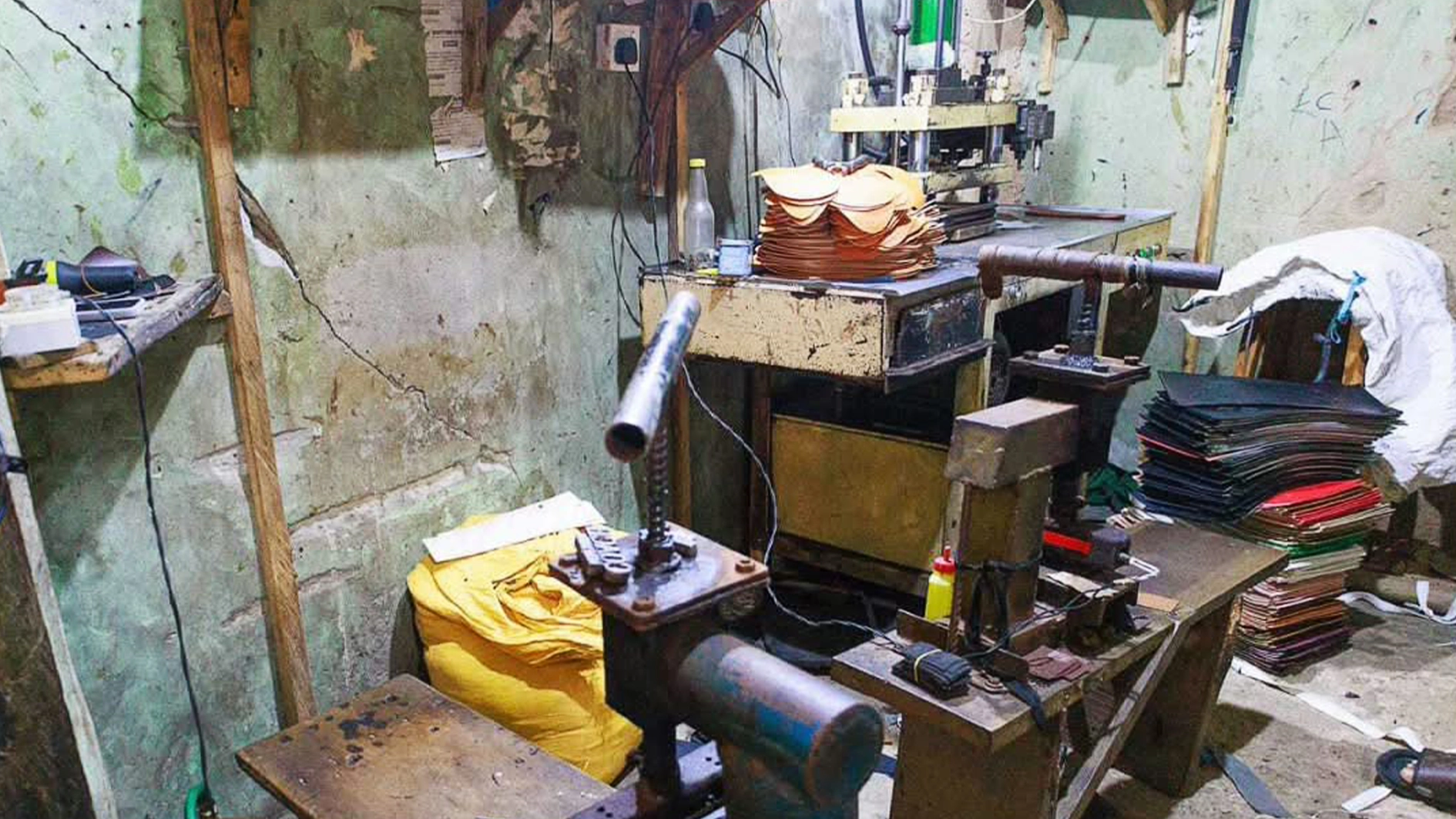
In March 2003, when Ngozi Okonjo-Iweala, then Nigeria’s Minister of Finance, visited Aba with James Wolfensohn, the former president of the World Bank, the complaints from the city’s traders and manufacturers were not about access to markets, a shortage of customers or the absence of business ideas. Their biggest problem was electricity.
At Ariaria market, traders and small-scale manufacturers told the visiting team that erratic power supply, prolonged outages and poor-quality electricity were crippling their businesses. Their machines were being damaged by unstable supply, while the absence of dependable power made it difficult to sustain production in one of Nigeria’s most enterprising commercial centres.
For a city whose workshops turn leather into shoes, transform raw materials into industrial products and supply goods to markets across the country, the electricity crisis was more than an inconvenience. It threatened the economic foundation on which thousands of livelihoods depended.
Among those invited to the meeting was Professor Bart Nnaji, an engineer who had already been involved in a power project supplying the Central Business District in Abuja. Okonjo-Iweala challenged him to find a solution to Aba’s electricity problem.
That encounter would set in motion one of the most ambitious private-sector power projects in southeastern Nigeria: the Aba Integrated Power Project, conceived to generate electricity locally and distribute it to businesses and communities within a designated service area.
More than two decades later, the scale of the undertaking is reflected in Geometric Power’s reported investment of more than $900 million, three installed gas turbines with a combined generation capacity of 141 megawatts in the first phase, and an electricity distribution business serving more than 253,000 metered customers.

Yet the significance of the project is not captured by investment figures and generating capacity alone. Its story is also one of an industrial city’s prolonged struggle with unreliable electricity, a private investment caught in a dispute over its operating territory, and an attempt to restore the conditions under which businesses can produce, compete and grow.
The project has begun supplying electricity to customers across nine of Abia State’s 17 local government areas, according to Nnaji, founder and chairman of Geometric Power. It has also started supplying some communities in neighbouring Rivers State, while the company is discussing expansion into the remaining eight local government areas of Abia and other parts of the Southeast and South-South.
For Aba, the stakes are considerable. The city’s manufacturers and traders need more than electricity that is available. They need a supply that is dependable, affordable and capable of supporting the revival of businesses that struggled through years of power shortages.

For Nnaji, the vision that began with complaints from Ariaria is now entering a different phase: extending the reach of the project while addressing the operational and infrastructure challenges that continue to affect electricity supply.
A vision born in Ariaria
The origins of Geometric Power’s Aba project lie in the practical difficulties confronting small businesses in 2003.
According to Nnaji, the complaints made by traders and manufacturers during the visit by Okonjo-Iweala and Wolfensohn convinced him that Aba needed a power solution designed around the requirements of its industrial and commercial economy.
The objective was to provide reliable and affordable electricity that could support economic and social development while remaining environmentally responsible.
The idea was ambitious because electricity generation, transmission and distribution were then largely controlled by the Federal Government through the national power utility. Nnaji said the administration of former President Olusegun Obasanjo granted Geometric Power approval to develop the project and supply electricity within the Aba service area.
A lease agreement with the Federal Government for the Aba ring-fenced area was signed in 2004 and amended in 2005 to align with the emerging power-sector reforms. The Electric Power Sector Reform Act of 2005 subsequently opened the way for broader private participation in electricity generation and distribution.
The arrangement was intended to create a more direct relationship between local generation and customers whose businesses depended on dependable electricity.
Geometric Power subsequently signed more than 300 memoranda of understanding with manufacturers and small and medium-sized enterprises within the proposed service area, Nnaji said.
Those agreements reflected the demand for a power supply that could support production in Aba’s industrial clusters. But the project would take years to move from conception to operation, and some of the businesses that had hoped to benefit did not survive the wait.
Nnaji cited Onwuka Hi-Tek, which manufactured parts for Peugeot’s Kaduna assembly operations; Star Paper Mill, which he described as one of Nigeria’s three biggest paper mills; and Guinness Nigeria Plc among companies that collapsed or left Aba before the project was completed.
Their departure illustrates the economic cost of prolonged infrastructure deficiencies. Businesses that cannot depend on electricity must either absorb the cost of self-generation, operate below capacity or consider moving to locations where production is more viable.
The original vision was therefore not simply to build a power plant. It was to address a constraint that had undermined Aba’s ability to retain industrial enterprises and attract new investment.
The long and costly road to commissioning
The project’s development was interrupted by a dispute that, according to Nnaji, delayed completion for almost two decades.
He said Geometric Power had invested about $700 million before the 2013 privatisation of the power sector, but alleged that government agencies disregarded the agreements covering the Aba ring-fenced area and effectively sold the same territory twice.
Nnaji attributed the dispute to greed. His account places the controversy at the centre of the prolonged delay that separated the project’s conception from its eventual operation.
The allegation is significant because the dispute concerned the operating territory on which the project’s commercial model depended. A private power project requires clarity over where it can generate, distribute and sell electricity, as well as confidence that its agreements will be respected over the life of the investment.
Without such certainty, even substantial capital expenditure may fail to translate into functioning infrastructure on schedule.
The years of delay also meant that businesses that had signed agreements with Geometric Power continued to contend with the electricity difficulties the project was designed to address.
The African Export-Import Bank later provided a $50 million term loan facility in 2021 to support completion of the project’s outstanding generation and distribution infrastructure, gas pipeline and other requirements for operation. The 141-megawatt first phase was commissioned in February 2024.
The financing helped move the project from a prolonged development phase into operation, although the wider ambition of building an electricity system capable of supporting Aba’s industrial economy remains a continuing undertaking.
The project’s reported investment of more than $900 million makes it, according to Nnaji, the biggest single private-sector investment in the Southeast.
That figure reflects the scale of the capital committed to the project, but the investment’s long-term value will depend on its ability to supply electricity consistently, sustain its commercial operations and support the productive activities of customers.
What the power supply means for businesses
The most immediate test of Geometric Power’s vision is being played out in factories, workshops and markets.
At Fine Potter Nigerian Limited, a manufacturer of PVC products in Aba, manager Maneke Vivian said production utilisation had risen from 40 per cent to 75 per cent since the company began operating with electricity supplied by Aba Power.
She said the business had relied on the supply from the beginning of production and had not used diesel generators for its operations.
The improvement suggests that more of the company’s production capacity can be put to use when electricity is available. But Vivian also reported monthly electricity bills of about N29 million, saying electricity accounted for approximately 40 per cent of the company’s profits.
“The light supply is perfect,” she said, identifying the tariff as the major challenge.
At Dansen Industries, a shoe-accessories manufacturer in the Osisioma Industrial Area, chairman David Madueke said the business had also stopped using diesel to power its factory. However, he put monthly electricity bills at between N3 million and N6 million, depending on the period, and said the expense affected its ability to compete with manufacturers elsewhere.
He also recalled interruptions during gas shortages in August and early September, saying the disruptions affected production.
The accounts reveal the two sides of Aba’s electricity challenge. More regular power can reduce dependence on generators and allow businesses to make better use of their machinery, but the cost of electricity and the risk of supply interruptions remain important considerations.
The experience is not uniform across customers, and the bills reported by individual businesses cannot be compared directly without accounting for their different operations and consumption levels.
Nevertheless, their concerns highlight what must happen if the project is to support a lasting industrial revival: electricity must be available when businesses need it, and its cost must leave room for production, investment and competition.
For Aba’s small manufacturers, the objective is not merely to replace diesel with electricity from another source. It is to secure a dependable energy supply that improves the economics of making goods.
A power project built around an industrial market
Geometric Power’s generation and distribution arrangement is central to the project’s design.
The company has installed three General Electric LM6000 turbines, each with a capacity of 47 megawatts, giving the first phase an installed capacity of 141 megawatts. Nnaji said the company holds a Nigerian Electricity Regulatory Commission licence to generate 188 megawatts.
He added that the plant could meet the demands of its existing customers with two of the three installed turbines operating, although actual operating conditions and demand determine how the system is used.
The company is preparing to expand generation capacity as electricity demand grows, with Nnaji identifying 500 megawatts as a longer-term target for the wider market it hopes to serve.
That expansion ambition is tied to the industrial and commercial potential of Aba and the surrounding region. More capacity would be relevant not only to existing customers but also to new businesses and communities if the distribution network and other supporting infrastructure are extended.
For now, the project serves customers across nine of Abia State’s 17 local government areas within the designated Aba service territory. Nnaji said the company had begun supplying some communities in neighbouring Rivers State and was discussing with Abia State Governor Alex Otti how to extend reliable electricity to the remaining eight local government areas.
He also said Geometric Power was positioned to support proposed electricity supply arrangements for designated power centres, including the Enugu-Port Harcourt axis.
Such ambitions would require investment in generation, distribution and the supporting infrastructure needed to reach additional customers. They would also depend on the regulatory arrangements governing the expansion and the ability of the electricity system to meet demand.
Nnaji said the amount required for further investment would depend on customer demand and economic development in the region. He estimated that generating one megawatt of electricity from gas generally costs between $1 million and $1.3 million.
The proposed expansion therefore presents both an opportunity and a financing challenge. Extending electricity to more communities and businesses requires capital, while the commercial sustainability of the project depends on whether new and existing customers can be served effectively.
The gas pipeline behind the promise
The plant’s ability to generate electricity depends on natural gas, its sole current fuel source.
According to Nnaji, gas supplier Heirs Energies delivers the fuel through a dedicated 27-kilometre pipeline running from Owaza to the facility at Osisioma.
He identified ageing infrastructure used to produce and deliver gas as a major challenge affecting supply. He praised Heirs Energies for responding to the plant’s needs, particularly during emergencies, and for providing updates on potential interruptions so that Aba Power can inform customers.
The issue is central to the project’s wider ambitions. A power plant can have installed generating capacity, but the electricity available to customers also depends on the ability to obtain fuel and operate the equipment consistently.
Gas supply interruptions can therefore affect manufacturers, institutions and households that depend on the electricity generated by the plant. For businesses operating machinery or working to customer deadlines, unexpected interruptions can disrupt production even when the wider power infrastructure is in place.
The challenge also shows why electricity expansion cannot be considered separately from investment in the gas infrastructure that supports it.
Nnaji said Geometric Power was exploring other energy sources, including solar and waste-to-power technologies, although natural gas would remain central to its current generation strategy.
He argued that Nigeria should make use of its substantial gas resources to support economic and social development. He also said the plant could provide steam for bottling companies, creating another potential industrial use for its infrastructure.
The longer-term energy transition will require balancing the need for dependable electricity with the development of alternative sources. For Geometric Power, the immediate task is to sustain the gas supply needed to serve its customers while examining other options as its operations expand.
The investment behind the meters
Beyond generation, the project’s distribution business has made a substantial investment in metering.
Nnaji said Aba Power had more than 253,000 metered customers, representing over 96 per cent of its customer base. He described the metering penetration as the highest among Nigeria’s 12 licensed electricity distribution companies, despite the company having operated for less than three years.
He said the metering programme cost approximately N43 billion and was implemented through a vendor-financing arrangement.
The scale of the investment points to the importance of distribution infrastructure in an electricity business. Generating power is only one part of the task; electricity must also be delivered, measured and billed through a system capable of supporting the relationship between the company and its customers.
For customers, metering can provide a clearer basis for measuring consumption and managing electricity expenditure. For the distribution company, it is part of the infrastructure required to manage a large customer base.
Nnaji said the vendor-financing arrangement reflected the confidence of business partners in Aba Power’s creditworthiness.
He also stressed that the company’s services were intended for customers across income groups, describing electricity as a fundamental right of Nigerians. He said Aba Power was wholly privately owned and had not received Federal Government subsidies available to other electricity distribution companies.
That position places the commercial sustainability of the business in sharp focus. The company must finance infrastructure, obtain electricity for distribution, maintain service and meet its obligations while serving customers with differing levels of demand and ability to pay.
The investment in metering is one measure of the resources required to build an electricity distribution system. Sustaining and extending the network will require continued investment as the customer base and the region’s electricity needs grow.
Can Aba recover its lost industrial ground?
The original motivation for the Aba Integrated Power Project was the electricity crisis described by traders and manufacturers at Ariaria market in 2003.
More than two decades later, the project is operating, and some customers say it has changed how they run their businesses and manage their daily lives. Yet the industrial revival that inspired the investment cannot be measured by the operation of a power plant alone.
At Dr. Ogbonnaya Onu Polytechnic, rector Engineer Christopher Kalokoro said connecting to Aba Power reduced the institution’s energy costs by more than 80 per cent, by his estimate. He also said staff could work later and students could remain on campus into the evening.
At Rhema University Children’s Hospital, administrator Charles Marsden reported savings of at least 30 per cent in energy costs after the facility began receiving more regular electricity. In households, residents have described greater confidence in storing food and using electrical appliances.
These experiences suggest that the effects of a power project can extend beyond factories to institutions and domestic life. But the complaints from manufacturers about high electricity bills and interruptions show that the benefits are not universal and that reliability and affordability remain critical.
The challenge facing Geometric Power is therefore twofold: to sustain the electricity supply for its existing customers and to expand the network in a way that supports the economic needs of more communities.
For Aba’s manufacturers, the most meaningful outcome would be an environment in which businesses can use their machinery more consistently, plan production with greater confidence and compete without electricity expenses undermining their margins.
For the wider region, expansion could improve access to electricity for additional businesses and households, provided that generation, distribution, gas supply and investment keep pace with demand.
Nnaji’s account of the project begins with a visit to Aba in 2003, when traders and manufacturers described how unreliable electricity was damaging their equipment and constraining their livelihoods. The intervening years brought a long development process, disputes over the project’s operating territory and substantial financial commitments before the first phase entered service.
Today, the project’s installed capacity, customer base and investment provide evidence of the scale of the undertaking. Its ultimate significance, however, will depend on whether electricity can support productive activity consistently and at a cost that businesses and households can sustain.
The ambition that began with a challenge to solve Ariaria’s electricity problem has grown into a wider effort to strengthen the region’s power infrastructure. The task ahead is to ensure that this investment translates into a more competitive industrial economy, more resilient businesses and better opportunities for the people whose livelihoods depend on electricity.

