 Follow Us on Google News



 Follow Us on Google Discover
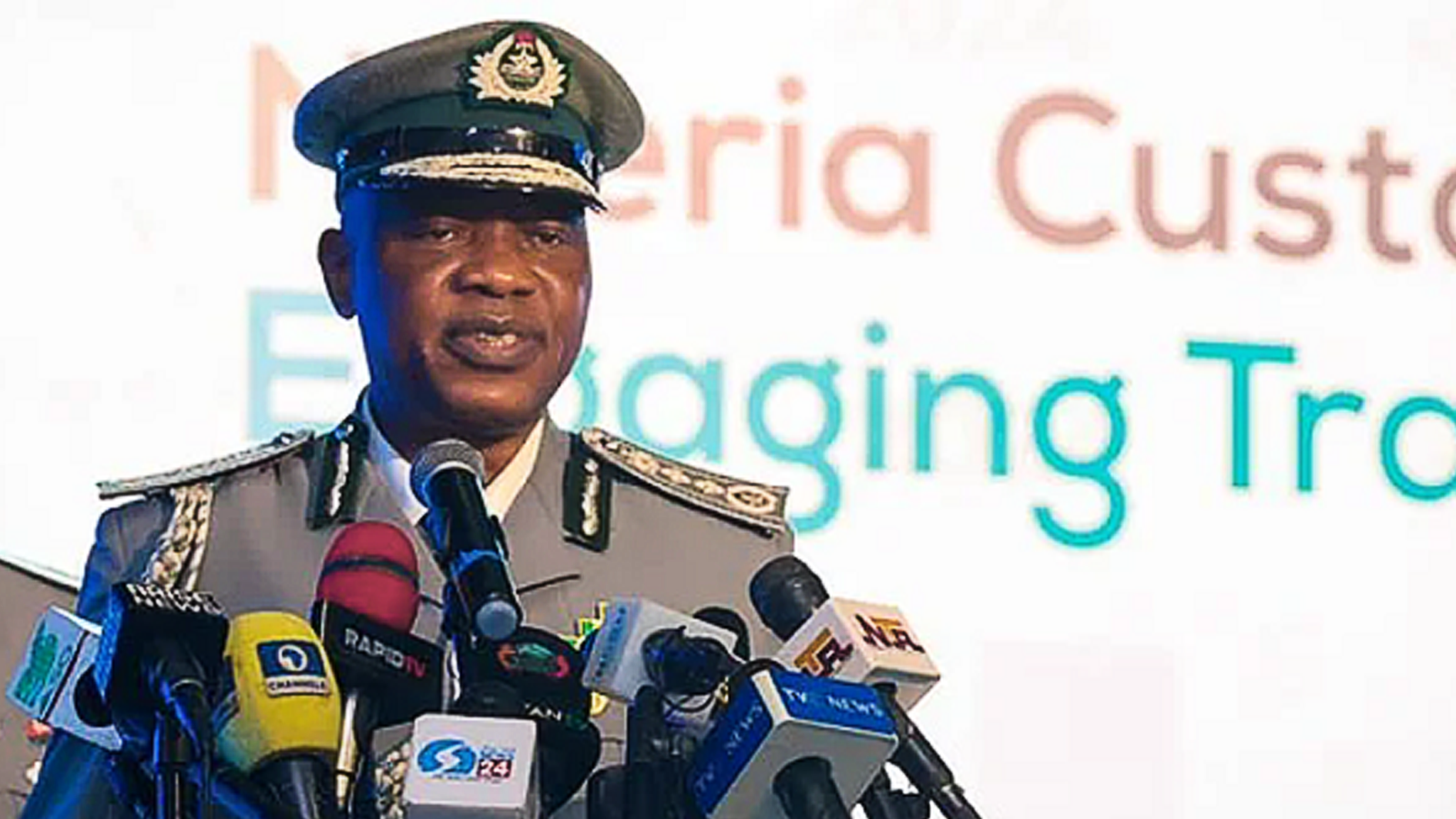
The Comptroller-General of the Nigeria Customs Service (NCS), Dr Bashir Adewale Adeniyi, has said the service will pursue its ₦11.07 trillion revenue target for 2026 through compliance, data-driven operations and trade facilitation rather than harassment of traders and importers.
Adeniyi stated this on Tuesday while delivering the third Distinguished Personality Lecture organised by the TETFUND Centre of Excellence in Security Management (TECESM), University of Ibadan, at Trenchard Hall.
Speaking on the topic, “Why Customs Matters: Revenue, Security and Nationhood in a Borderless World,” he described the revenue target as demanding but stressed that achieving it should not come at the expense of legitimate trade.
“The Customs will pursue the target through compliance, data and facilitation, not through harassment at the ports, because a target met by choking trade would be a false victory,” he said.
The Customs chief argued that revenue generation remained central to the government’s ability to provide essential services, including primary schools, healthcare facilities and rural roads.
“Revenue, then, is the material base of the social contract and not just money. A nation that cannot fund itself cannot govern itself. That is the first reason Customs matters,” he said.

Adeniyi also advocated intelligence-led border management, data sharing and joint patrols with neighbouring countries as more effective measures against smuggling than shutting borders.
He said Nigeria’s land border closure from August 2019 to December 2020 curbed some smuggling activities but did not dismantle the networks behind the illegal trade.
According to him, field research published this year found that the closure merely reorganised the smuggling networks.
“The lesson is that a nation is protected by intelligent control of its border, not by sealing it. Closure is a blunt instrument, while intelligence, data and joint patrols with our neighbours are sharper ones,” he said.
The Customs chief explained that revenue from international trade was particularly important to developing economies because of the challenges of collecting income tax from large informal sectors.
He cited figures showing that Africa’s average tax-to-gross domestic product ratio stood at 16.1 per cent in 2023, compared with 33.9 per cent for members of the Organisation for Economic Co-operation and Development.
Adeniyi also called for greater scrutiny of import concessions, saying waivers were worth about ₦1.68 trillion in 2024. He said he had called for a review of the waiver regime alongside the Customs Act.
On national security, he disclosed that the service had intercepted large consignments of firearms and ammunition, warning that effective border control was necessary to prevent weapons from reaching criminal groups.
He cited the interception of 844 rifles and 112,500 rounds of ammunition at a bonded terminal in Onne on June 21, 2024. The weapons were concealed in a 40-foot container from Türkiye among household goods, including dolls, furniture and plumbing fittings.
He added that the service handed over 1,599 firearms seized between 2018 and 2024 to the National Centre for the Control of Small Arms and Light Weapons in February 2025.
Adeniyi said vigilance was particularly important as Nigeria approached the 2027 general elections, noting that preventing illegal firearms from entering the country could help curb insecurity and the potential use of weapons at polling units.
Earlier, the Director of TECESM, Professor Benjamin Aluko, said the lecture was part of efforts to strengthen the centre’s mandate and promote collaboration between the university and wider society in addressing security challenges.
Aluko said the programme was expected to provide evidence-based information for intellectual engagement in security management, peace studies and the social sciences.
The event also featured the presentation of a 54-chapter book, Perspectives on Security Management in Nigeria, edited by Professor Isaac Olawale Albert, Professor Benjamin Adeniran Aluko and Ambassador Lieutenant Tukur Yusufu Buratai.
The centre also presented the first volume, number one, of its journal, Ibadan Security Review, published in May 2026 and containing 10 chapters.

