 Follow Us on Google News



 Follow Us on Google Discover
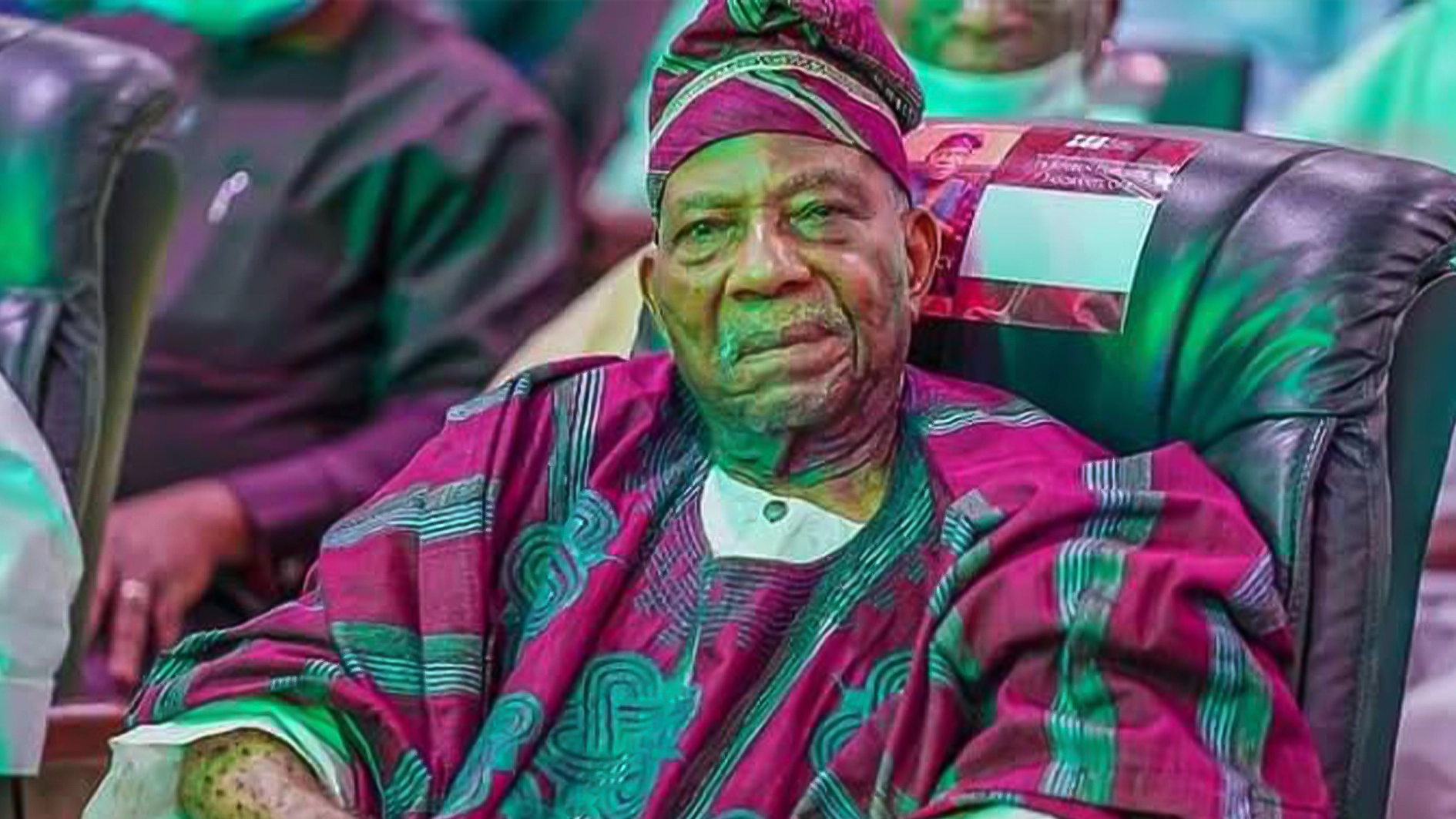
• Bereaved son says demeanour amid adversity unmatched
• Osoba, Abiodun, Makinde mourn
• Awolowos says it’s end of remarkable era
The death of Pa Reuben Fasoranti, yesterday, marks the passing of one of the last surviving links to the generation of Nigerian politicians whose convictions were shaped by the nationalist struggle, Obafemi Awolowo’s progressive philosophy and the fight against military dictatorship.
With Fasoranti’s demise, the Olu of Iluabo, Olu Falae, also dismissed concerns about a succession struggle within Afenifere, saying the organisation’s leadership chooses itself and that a new leader will emerge without any contest.
Tributes have started pouring in from many prominent Yoruba leaders, especially past and serving governors, as his son, Taiwo, who confirmed the passing of the icon to The Guardian at the family residence, described it as a moment of celebration rather than mourning, given the impactful life his father lived.
Head of the Awolọwọ Family, Dr Ọlatokunbọ Awolọwọ Dosumu, said the passing of Faṣọranti at the venerable age of 100 marks the end of a remarkable era in the political history of the Yoruba nation and Nigeria.
“With his departure, we have lost, in a very real sense, the last of the titans of the Awolọwọ political tradition,” stated the Chairman of African Newspapers of Nigeria (ANN) Plc, publishers of the Tribune Titles.

Faṣọranti belonged to that extraordinary generation of leaders whose political convictions were rooted in principle, whose commitment to public service was steadfast, and whose loyalty to the ideals and philosophy of Awolọwọ endured through changing times and circumstances.
The statesman, who celebrated his 100th birthday on May 11, 2026, lived through Nigeria’s colonial era, Independence, civil war, successive military regimes and more than two decades of uninterrupted democratic government. His was a life that mirrored the country’s political evolution, with its triumphs, disappointments, ideological battles and unfinished promises.
Yet, his legacy is not only that of a centenarian who witnessed history. It is also the story of an educationist, public administrator, pro-democracy activist and Afenifere leader whose final years in politics were defined by a consequential disagreement over the direction of the Yoruba socio-political organisation he spent decades building.
Born in Uso, present-day Ondo State, on May 11, 1926, Fasoranti trained as an educationist, studying at the University College, Ibadan, now the University of Ibadan, before pursuing further qualifications in education in the United Kingdom and Australia.
He taught at Ondo Boys’ High School and other institutions before establishing schools, including Omolere Nursery and Primary School and Akure High School. His commitment to education reflected a conviction central to the political philosophy he embraced: that public leadership must expand opportunities for ordinary people rather than serve the interests of a privileged few.
That conviction drew him into the orbit of Awolowo, the foremost exponent of progressive politics in the old Western Region. Fasoranti belonged to the Action Group (AG) in the First Republic and the Unity Party of Nigeria (UPN) of the Second Republic, remaining loyal to a political tradition that placed education, social welfare, healthcare and accountable government at the centre of public policy.
Between 1979 and 1983, he served as Commissioner for Finance under the administration of the late Governor Michael Ajasin in Ondo. The appointment placed him within the circle of political leaders who sought to translate Awolowo’s social-democratic ideals into governance.
The Chairman of the Southern Governors’ Forum, Governor Dapo Abiodun of Ogun State, expressed deep sorrow over the death of the elder statesman, describing his passing as a monumental loss to the Yoruba nation and Nigeria as a whole.
Abiodun commiserated with Afenifere, the pan-Yoruba socio-political organisation; Ondo State Governor, Lucky Aiyedatiwa; and other prominent Yoruba leaders, as well as the family and associates of the deceased.
The governor noted that Fasoranti lived a remarkable life defined by service, patriotism and an unwavering commitment to the advancement of the Yoruba people and the Nigerian nation.
The Governor of Oyo State, ‘Seyi Makinde, expressed profound sorrow over the passing of Fasoranti, describing him as a towering conscience of the Yoruba nation whose century-long life radiated wisdom, courage and unwavering moral clarity.
In a condolence message made available to journalists yesterday by the Special Adviser (Media) to the Governor, Dr Sulaimon Olanrewaju, the governor also described Pa Fasoranti’s death as a monumental loss to the Yoruba people.
“His passing is not just the departure of an elder statesman; it is the dimming of a light that guided our people through decades of political turbulence, cultural evolution and national transformation. Pa Fasoranti spent many of his 100 years shaping minds, strengthening institutions and reminding us of the values that define us as Yoruba,” he stated.
Falae recalled that as principal of Oyemekun Grammar School, Pa Fasoranti admitted many pupils from poor homes and allowed them to complete their secondary education on credit, giving them a chance to repay after leaving school.
He described the loss as a big void in the political, religious and social life of Akure, Ondo and the Yoruba nation.
“Leadership chooses itself. A new leader will emerge without any struggle. It is obvious who the next leader will be, and I hope and pray it will be so this time,” Oba Falae stated.