 Follow Us on Google News



 Follow Us on Google Discover
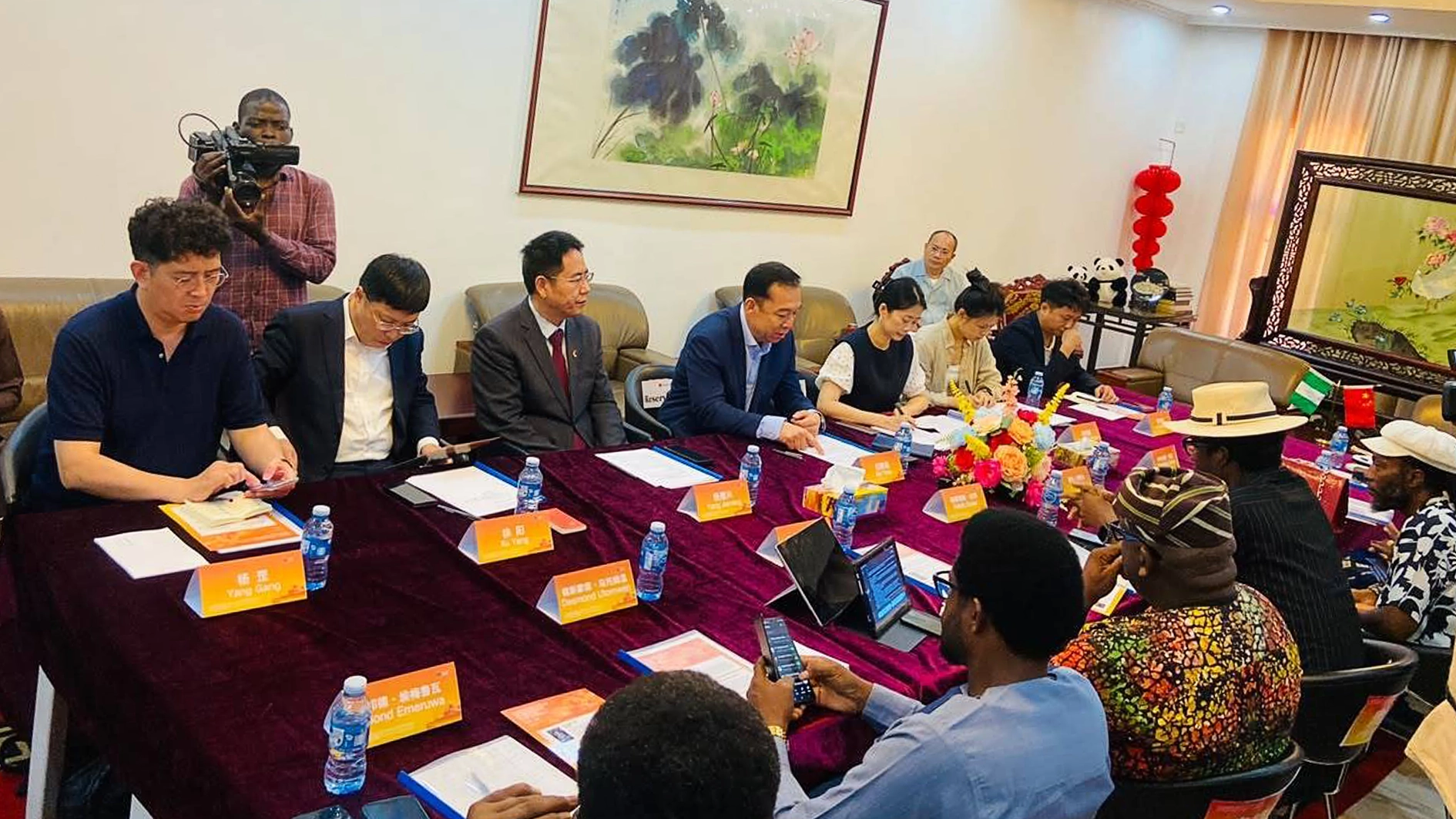
The Director of the China Cultural Centre in Nigeria, Mr Yang Jianxing, has called for stronger cultural exchanges between China and Nigeria through cinema, as filmmakers and industry stakeholders from both countries explore opportunities to expand distribution, production and access to each other’s markets.
Speaking at the Chinese Film Screening in Nigeria 2026 in Abuja, Jianxing said film remained an important medium for strengthening mutual understanding between the two countries, whose creative industries offer opportunities for cultural and commercial collaboration.
“China and Nigeria share a deep-rooted traditional friendship and close people-to-people exchanges, and film serves as an important bridge for fostering mutual understanding between our peoples,” he said.
He noted that cooperation between both countries had grown through reciprocal film screenings, professional exchanges, festivals and the distribution of productions across national borders.
Part of this relationship has involved the collaboration between the Chinese Embassy, the China Cultural Centre and StarTimes Nigeria to bring Chinese film and television productions to Nigerian audiences.
Jianxing said the partnership had supported a month-long showcase of Chinese film and television productions, the Chinese Women’s Film Festival and screenings of other Chinese works, some of which were dubbed or subtitled in local languages, including Hausa.

“StarTimes has successfully brought outstanding Chinese productions and knowledge series to a broader audience,” he said.
He added that Nigerian films had also reached mainstream Chinese digital media platforms, where their distinctive storytelling and human experiences had attracted viewers.
The screening coincided with the 23rd Abuja International Film Festival, which received 10 Chinese film entries this year, five of which were nominated for awards.
The festival’s founder, Fidelis Duker, said Chinese participation had remained a consistent feature of the event, with films from the country appearing in 22 of its 23 editions.
“As founder of the Abuja International Film Festival, now marking its 23rd edition, I am incredibly proud of how the platform has grown and how we have been able to work with the Chinese embassies in Abuja,” Duker said.
He also acknowledged StarTimes for supporting the festival over the years, noting that the relationship had contributed to the development of the event.
Beyond the screenings, Duker said discussions with the Chinese delegation had focused on production, distribution and co-production opportunities, including engagements with Nigerian film institutions and plans to meet distributors and cinema operators in Lagos.
He argued that the population sizes of both countries presented opportunities for the film industries to expand their reach, provided that the necessary infrastructure and distribution partnerships were developed.
“What we found out today, or what we’ve known over the years, is that China has technology,” he said, adding that the Chinese delegation had told participants that the country sold 1.3 billion cinema tickets in the previous year.
Duker said Nigeria could draw lessons from China’s film industry, particularly in developing its cinema market and expanding opportunities for local productions.
“When you marry Nigerian narrative vitality with China’s technical infrastructure, capital, and unparalleled distribution expertise, you can imagine” the possibilities, he said.
The Chinese delegation, led by Bai Yimin, chairman of Huaxia Film Distribution Company Limited, also highlighted the role of cinema in strengthening bilateral relations.
Bai said cooperation between the two countries had yielded results through reciprocal festivals, professional exchanges, and the translation and broadcasting of films.
“In recent years, cooperation in the film industry has become a brilliant chapter in China-Nigerian cultural and people-to-people exchanges,” he said.
He added that the Chinese Embassy and the China Cultural Centre would continue to support initiatives that use cinema to connect audiences and strengthen relations between both countries.
Three films were screened at the event: The Shadow’s Edge, Blades of the Guardians: Wind Rises in the Desert and The Lychee Road.
The programme also featured engagements between Chinese representatives and Nigerian film industry stakeholders on distribution, production and other areas of potential collaboration.
WWhile the exchanges highlighted the commercial possibilities of connecting two large populations through cinema, the challenge remains translating cultural goodwill into sustainable distribution arrangements, investment and co-productions that allow films from both countries to reach wider audiences.

