 Follow Us on Google News



 Follow Us on Google Discover
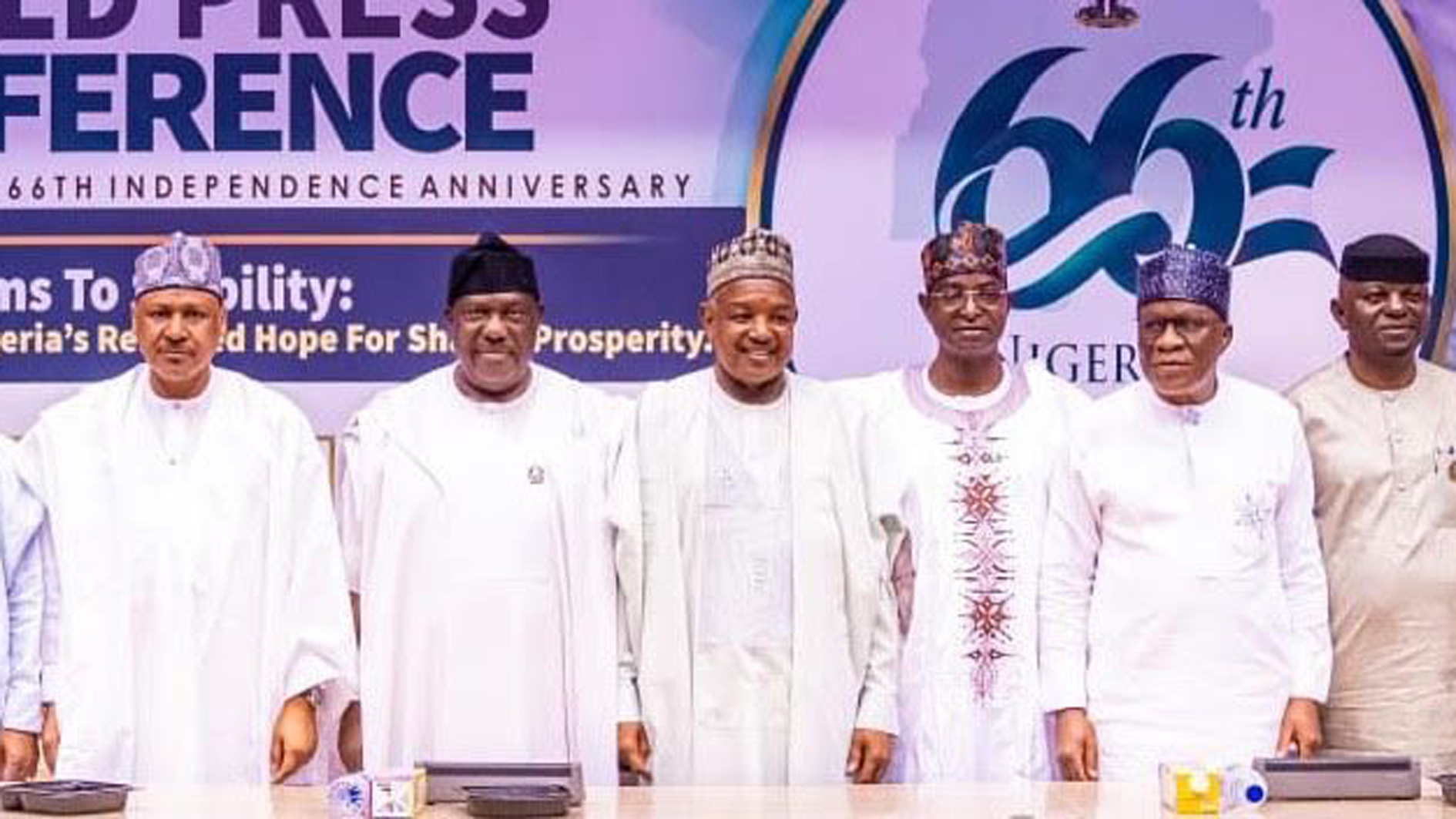
***Shettima tasks governors on affordable transport, healthcare, employment
***Council approves joint FG-states funding for CNG, electric vehicles; seeks lower fares
***Health Minister allays fears over Ebola, urges states to strengthen preparedness
The National Economic Council (NEC) has endorsed a 90-day economic action plan aimed at easing the cost of living, improving food affordability, attracting investment and accelerating projects with direct benefits to Nigerians.
The Council also approved a national dashboard to track projects across the federation, with emphasis on transparency, accountability and the utilisation of funds saved from the removal of petrol subsidy.
The decisions were reached at NEC’s 161st meeting, held virtually on Thursday and chaired by Vice President Kashim Shettima, following a presentation by the Minister of Finance and Coordinating Minister of the Economy, Taiwo Oyedele.
The development comes as Shettima charged state governors and relevant government institutions to ensure that the gains of President Bola Tinubu’s economic reforms translate into tangible improvements in the living conditions of Nigerians.
He identified affordable transportation, accessible healthcare, job creation and greater financial security as critical measures of the success of the administration’s economic policies.

The 90-day action plan prioritises five areas: food affordability, tax harmonisation, completion of high-impact projects, removal of investment bottlenecks and regulated household support.
Presenting the economic outlook, Oyedele expressed optimism about the progress of the administration’s reform programme, identifying further reductions in headline inflation and interest rates, with a target of single-digit levels by 2027, as key policy objectives.
He stressed that the next phase of reforms would require coordinated implementation by federal and state institutions to translate macroeconomic gains into measurable benefits for households and businesses.
The plan is expected to focus on targeted interventions, improved fiscal coordination and the removal of barriers to investment.
Addressing Council members, Shettima said economic reforms must ultimately be judged by their impact on the daily lives of citizens, rather than by policy announcements or headline economic indicators alone.
“The first dividend of prosperity should be the confidence to plan a life. Our task is to make such confidence less dependent on fortune,” he said.
The Vice President described the Council’s deliberations on transportation, healthcare, police reform and livestock development as critical to determining the quality of life Nigerians should expect from economic progress.
He said the country’s federal structure should promote cooperation among the different tiers of government rather than impede the delivery of essential services.
“Our separate jurisdictions must serve a common public interest,” he said.
On transportation, Shettima urged state governments to support affordable and accessible systems that would reduce the financial burden on commuters, particularly through the adoption of compressed natural gas (CNG) and electric vehicles.
He said the success of the National CNG Bus Initiative should be measured by the relief it delivers to passengers, rather than the number of vehicles deployed.
“The cost of reaching a livelihood should never consume the livelihood itself. The passenger’s experience must guide our ambition, because the value of public transport resides in the journeys it makes possible,” he said.
Shettima added that President Tinubu’s economic reforms were designed to achieve broader national prosperity, but governments at all levels must give the programme social and economic relevance by improving living conditions.
“Our separate mandates must not become competing excuses. Each Governor carries knowledge that no federal document can supply,” he said, urging governors to bring local realities into national policy decisions.
He challenged Council members to assess policies by their capacity to reduce uncertainty, expand opportunities and strengthen public confidence in government.
“Nigerians deserve institutions on which they can organise their lives. Providing that assurance is among the most consequential uses of public authority. That is the assurance we owe them,” the Vice President said.
In a related development, NEC resolved to establish a joint financing framework between the Federal Government and state governments to accelerate the deployment of CNG-powered and electric vehicles nationwide.
The decision followed a presentation by the Chairman of the Presidential Initiative on Compressed Natural Gas and Electric Vehicles, Ismaeel Ahmed, on the National Affordable CNG Transit Programme.
Council directed that the initiative must deliver measurable benefits to Nigerians through lower transportation costs, rather than merely increase the number of alternative-energy vehicles on the roads.
It also called for engagement with transport unions and operators to ensure that savings from the adoption of CNG and electric vehicles are passed on to commuters through reduced fares.
To implement the decision, NEC agreed to constitute a committee to coordinate the proposed financing arrangement, engage relevant stakeholders and develop practical measures for making transportation more affordable, accessible and sustainable.
Meanwhile, the Council received an update on the reported Ebola outbreak in the Federal Capital Territory from the Minister of Health and Social Welfare, Prof. Muhammad Ali Pate, who sought to allay fears of a major public health crisis.
Pate assured Council members that Nigeria had the institutional capacity to contain the situation, outlining measures being coordinated by his ministry and relevant stakeholders to strengthen the national response.
He identified coordination and governance, surveillance at points of entry, laboratory testing, logistics for essential kits and personal protective equipment, and strategic communication as key components of the response.
The minister said 21 states had updated their preparedness and response plans, urging the remaining 15 states to expedite action to strengthen their capacity to respond to potential outbreaks.
NEC also considered the report of its Ad Hoc Committee on Polio Eradication, chaired by Gombe State Governor Muhammadu Inuwa Yahaya, and directed states to strengthen efforts to eliminate the disease.
The Council called for post-campaign reviews, particularly in areas where children were missed during immunisation exercises and communities affected by insecurity.
It emphasised the timely release of counterpart funds, stronger routine immunisation, improved coordination with security agencies and closer collaboration among states to improve coverage in subsequent campaigns.
NEC further stressed that sustained political commitment from governors, traditional rulers and security agencies remained critical to achieving the complete eradication of polio in Nigeria.
On livestock development, Council received a report from its Ad Hoc Committee on the sector, chaired by Kebbi State Governor Nasir Idris.
It acknowledged the sector’s potential to stimulate economic growth, create jobs and improve livelihoods, resolving to strengthen collaboration between the Federal Government and states to accelerate reforms.
Council noted that all states had indicated interest in supporting the Federal Government’s livestock development initiatives and called for coordinated action to unlock the sector’s economic potential.
The meeting underscored the need for sustained cooperation among the tiers of government to ensure that ongoing economic reforms translate into opportunities for businesses, households and communities across the country.

