 Follow Us on Google News



 Follow Us on Google Discover
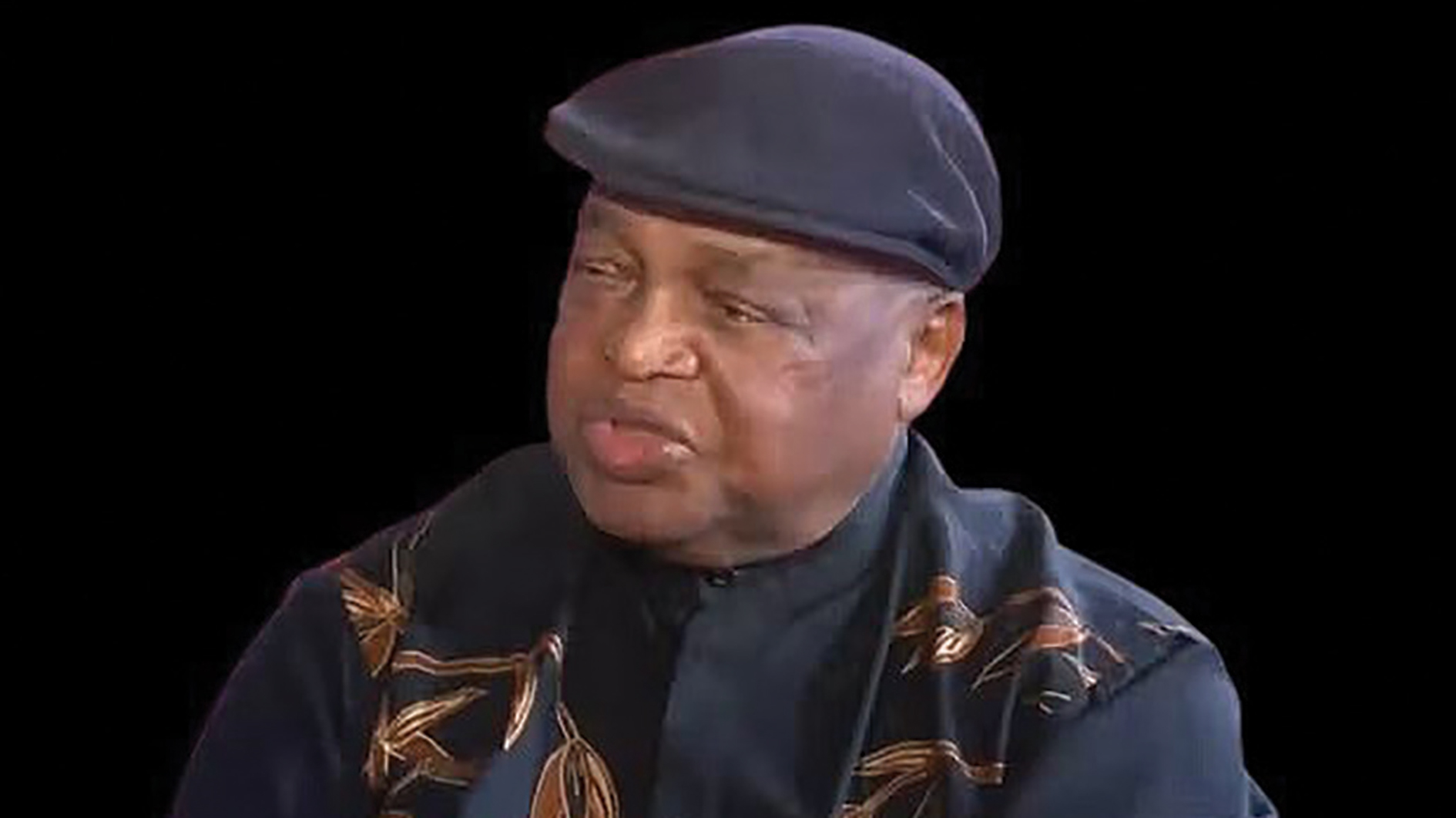
By Abdu Rafiu
To all who may be discerning, we are indeed living in unusual times, not just in our country, Nigeria but in nearly all parts of the world. There are protests even in relatively stable countries. There have been explosions with overturning of fuel tankers in Benin and the notorious Otedola Bridge in Lagos, long bitten by the bug and attendant deaths.The spate of deaths can’t but be terrifying. Many loved ones departing, literally speaking, in droves.
The incidents re-awaken what Funke Aboyade, lawyer and a one-time Law Pages Editor described movingly what she saw as slow darkening in the horizon. In her words: “It is getting dark slowly.” As an illustration, of the Second Republic 1979 class of governors none was alive when she made her observation in 2023. They had all departed earthly life.
In the distant past, when the death of a prominent person occurred, it would be on the lips of many a man on the street for days and run in newspapers for not less than a month. If the deaths occurred through accidents, the report would run for much longer in what editors call follow-ups. What does autopsy report say? When will investigation into the cause be held? Following the investigation when will those culpable be charged to court? Some say before they recover from the shock and perhaps attendant pains many other deaths have occurred in succession! Four eminent Nigerians have passed away within the past three weeks.
Every such exit reminds us of our own. When and how it will come, it is hard to say. Life begins in a cycle, the freshness of the body of a baby, followed by charm of youths in the melancholy age bracket, the solidity and firmness that defines the age of action and the weathering folds and wrinkling of old age! Look at the grasses of the field and the trees of the forest. We are all creatures. The Law of Development drives the cycle. It brings about the period of flowering, and the period of fruit bearing, the years of a man’s full estate. Then the ensuing period when the phlegmatic temperament takes hold, marked by calm, quiet and reflexion, then the cycle closes—death. The driving of the cycle helps us to understand the inevitability of an end for both man and plant; their cloaks being material going back to dust. “Dust thou art, and to dust shall thou return,” our clerics are wont to say.
However, we are made to note that in a storm both ripe and unripe fruits fall. In other words, much as we long for old age, it is not everyone that gets there. It bears also stating that when a person has fulfilled the purpose of his sojourn, he can be called away, otherwise what would he still be doing. In the limited knowledge of man, it will be said of him, even a child, that he left prematurely which is not necessarily always so.

Take for example, a soul sent on a helpful mission of bearing a certain radiation to open up the fallopian tube of a childless woman, ridiculed for years as barren, what else should that soul wait doing after accomplishing the mission through being the first baby? He could leave almost immediately after the christening.
Imagine what such a woman overwhelmed by a sense of hopelessness would typically want to do to herself. But then after regaining her composure, with the tube cleared, she begins to have babies in succession! What does man know? What do we know? We must bow our spirits in worshipful adoration of our Maker and Lord for the Grace of His Omniscience.
We learn about Temperament from the matchless Work, “In the Light of Truth” The Grail Message, by Abd-ru-shin as follows:
“As the physical body ages the blood composition also changes. Thus, when healthy blood changes through increasing age a corresponding change of temperament occurs at the same time.
“Besides advancing age in the body, however, there are still other things that have an influence on the change in blood composition, such as the characteristics of different regions and everything pertaining to them, i.e., the climate, the radiations of the stars, different kinds of nourishment, and many other things as well. They all affect the temperament directly because they are part of the world of matter and therefore linked very closely with it.
“In general, one can distinguish between four basic temperaments in mankind—the sanguine, the melancholic, choleric and the phlegmatic—and men themselves are described accordingly. In reality, however, there are seven temperaments and, with all the gradations, even twelve. But the principal temperaments are four in number.”
When a cycle of life closes which may be called death, the knowledge of the temperaments helps relations and friends recognising its inevitability and in absorbing the pangs of pains that come with its definitiveness. The nation has witnessed the passing of prominent leaders here and there, within the last three weeks among them Professor Idowu Sobowale, veteran journalist and communication scholar of note; Dr. Patrick Dele Cole, scholar, newspaper administrator and diplomat; Dr. Emmanuel Uduaghan, former Governor of Delta State.
As I wrote this came the breaking news that Chief Reuben Fasoranti has departed earthly life. Professor Sobowale left at 85; Dr. Dele Cole at 86, Dr. Uduaghan at 71 and Chief Fasoranti, the national leader of the powerful and influential Yoruba socio-cultural and political organisation departed at 100.
The departed were men of eminence and influence held in high esteem for being role models in their respective area of responsibility, each deserving of befitting national conversation and truck-load bags of tributes.What is tribute if it is not looking back to catch legacies and shed light on what has made the departed iconic? Why are they our loved ones, some unforgettable in our hearts?
Dr. Richard Ikiebe, Adjunct Senior Fellow, School of Media and Communication, Pan-Atlantic University, and currently Chairman, Board of Directors, BusinessDay gives us what may be said is a hint.
He had long had an extensive interview with Dr. Patrick Dele Cole as part of a drive to record what he called contributions of media leaders in Nigeria. The interview is available in “Nigerian Media Leaders: Voices Beyond the Newsroom”published in 2013. Of course, Dr. Cole was my boss both at the Daily Times where he was Managing Director and The Guardian where he was Special Adviser.
Before his years at the Daily Times, Dr. Cole had been Visiting Professor, University of Pennsylvania, United States of America (1969-1973); Fellow King’s College, Cambridge, England (1969-1973); Administrative Officer, Political Department, Cabinet Office, Lagos (1973-1976); Managing Director, Daily Times of Nigeria (1976-1979); Special Adviser to The Guardian from 1980 and years later, his last roll-call as Member, Editorial Board. He was Member, Presidential Panel on the History of Nigeria Since Independence; Member, Nigeria-U.S. Forum, Italy (1977); Nigeria-China Forum (1979); Nigerian Ambassador to Brazil (1987-1990); Deputy National Chairman (South-South), Peoples Democratic of Nigeria (1998-1999); Special Adviser on International Relations to the President (1999-2001; Delegate to the United Nations and the Organisation of African Union (now African Union) 1976, 1989, 1989 and 1990); author of Modern Elites in the Politics of Lagos; A Call on the Black World, Communities in Nigerian Foreign Policy.
In the interview, Dr. Cole was asked: You are a Cambridge-trained historian, how do you see the journey of the media to date?
P.D.Cole: From the earliest days of British colonisation, I think six years or so, there were newspapers already in Nigeria, and they have continued to exist and be vibrant throughout our history. So, the history of journalism and Nigeria are coterminous. And from that early time, the job of the Nigerian Press has been to play a watchdog over British colonial government. There were a large number of ex-slaves –Brazilians, Sierra Leoneans, etc who could say: “Hey, what you cannot do in Britain. You cannot do here; if we are all British subjects, then we are subject to the same law.
For the educated Saro and Brazilian elite, being British citizens was important. They held up as it were, a mirror. They took pride in being British subjects, and therefore held the colonial government to account for all it was doing here: British Administration was very economical; they didn’t want to spend that much money and they wanted to develop the colonies to pay for themselves while propping up home government by regular remittances. So, all the money went out, and a little came back.
Frankly, I don’t see too much of a difference between what happened then and what’s happening now. We were primarily regarded as producing countries, to produce things for the factories in Europe. The model was quite simple: colonies were to produce raw materials for the industries in Britain. To do this, peace must prevail.
There was also a belief by the British colonialists that their administration was to be paid for by taxing the people, hence excise and customs duties, stamp duties, and a host of other regulations aimed at raising finance. The template of colonialism has not changed. Africa is still a colony. The methods and terminologies may have changed but not the essence. To the West, Africa is a continent to be exploited for raw materials, including human; its wealth is to be developed, not for the benefit of its people but for the benefit of Europe and the West in general. It is this mentality that was responsible for the large-scale mining of mineral resources in South Africa, Congo Brazzaville, Zimbabwe (where Europeans also farmed and mined). In the 20th and 21stcenturies, large parts of Africa were sold to Arab countries and to the West as an eventual food bank for the development of Arab countries.
Question: One hundred and fifty years ago, did the media play a different role? Are they playing the role that they played then now?
P. D. Cole: No, I don’t think that the media is awake to this kind of new interpretation because of its almost instant nature, so “news” is always a two-day wonder: the thing happens, you report it, send the message, comment on it, and move on. What’s the next thing? The media has not been able to step back to say: ‘Hang on a minute, what is it that has changed?’ When you take structure that are formulated elsewhere and transpose them to our society and follow through almost automatically like a robot, when do we stop to consider the effects of the things we mimic, whether banking, insurance, or even our style of consumption. It becomes a little frightening and ironic, that the West has to preach to us today about breastfeeding, that shows you, for example, how far we have veered from our traditional culture. Today they have foundations which have come to teach Africans that say, “Look, my friend, the mother’s milk is still the best.”
QUESTION: You were already in the Cabinet Office, and were among those Cambridge and Oxford graduates working with the military, the people they respected, obviously well educated but people with the guns were still those calling the shots. In the case of Daily Times, Obasanjo was said to have been misled, but by the time he came to realise it, the government couldn’t reverse itself. And so, you came in, how did you handle the military?
P. D. Cole: Okay, let us say there was a mistake in the intervention, in the sense that wrong information got to the military. But it was already done. I had two constituencies; I had the journalists who were noticeably nervous. ‘Who is this guy who has come from nowhere to run this place? We don’t know him. And he is going to be listening to those guys from Dodan Barracks.’ So, first I had to try to gain the confidence of the journalists, and the only way to gain the confidence of anybody working with you is to be able to tell and show that you can protect him/her. Hence the need for reassurance: ‘My friend, while I am here, I assure you that no journalist will be arrested; they will not close this place. Do your job and no one will ever call you and tell you what to write.’ I can’t remember one single instance when I called somebody and said, “This is the way you are going to report.’’ They were professionals.
So, the idea was to bridge the two constituencies and to build a wall protecting the journalists. The journalists also went out and did the work. And for that, Nigeria responded by buying the newspaper. So we were at 350,000 copies a day, 600,000 copies on Sundays—heights which had never happened since. This was not because they were reading a government gazette; they were reading things about themselves which they believed. We also introduced many features; we brought the best writers that we could find. I went round bringing back people to Nigeria from overseas, because at that time I believed that the country needed the people. So not only bringing people into Daily Times, I brought them back to do other things.
For the military, I cannot tell you how many times they threatened to shoot and lock me up, and all that. But in the long run, I think they adopted the attitude of: ‘Look, leave him alone to run the newspaper, he is a crazy man, it is better we leave him alone to run the place than stir the pot further by trying to lock him up.’ They also had a problem, which I think we were able to solve.
Transition government is always difficult because you had to sell the transition. You had to sell the programme; so how do you move from military to civilians. And you know, there was friction within the military elite itself. And I think, (for want of a better word) self-preservation taught them that it was time to leave. Yes, they left because they had fulfilled their programmes and promises, but they knew that if they stayed in politics, they would continue to subdivide and the idea of oneness in the military would dissolve with time, and that would be an anathema. In short, the military left to preserve its unity.”
It was not all smooth sailing for Dr. Cole. Exposed and connected as he was, after leaving the Daily Times he became jobless and homeless. Even though President Shehu Shagari would like him to keep his job as the MD, the community of government courtiers around him made staying unattractive. He left to get back to the civil service. The reception was cold. He left, and his dark days ensued. He soon found he had only N253 in his account and had to squat with a friend at 1004 Estate, Victoria Island, with a wife and six children, for two and a half years.
When Mr. Alex Ibru heard about his condition, he privately placed him on a monthly pay and presented him a new car. How he bounced back is a story for another day. And also, tributes to my bosom friend that the world calls ID Noble—Professor Idowu Sobowale, the renowned Communication scholar. He exited earthly life, aged 85.
The Laws governing Creation are now infused with intensifying Light Pressure, awakening all that is in slumber, heating up and hastening things in our world and universe.

