 Follow Us on Google News



 Follow Us on Google Discover
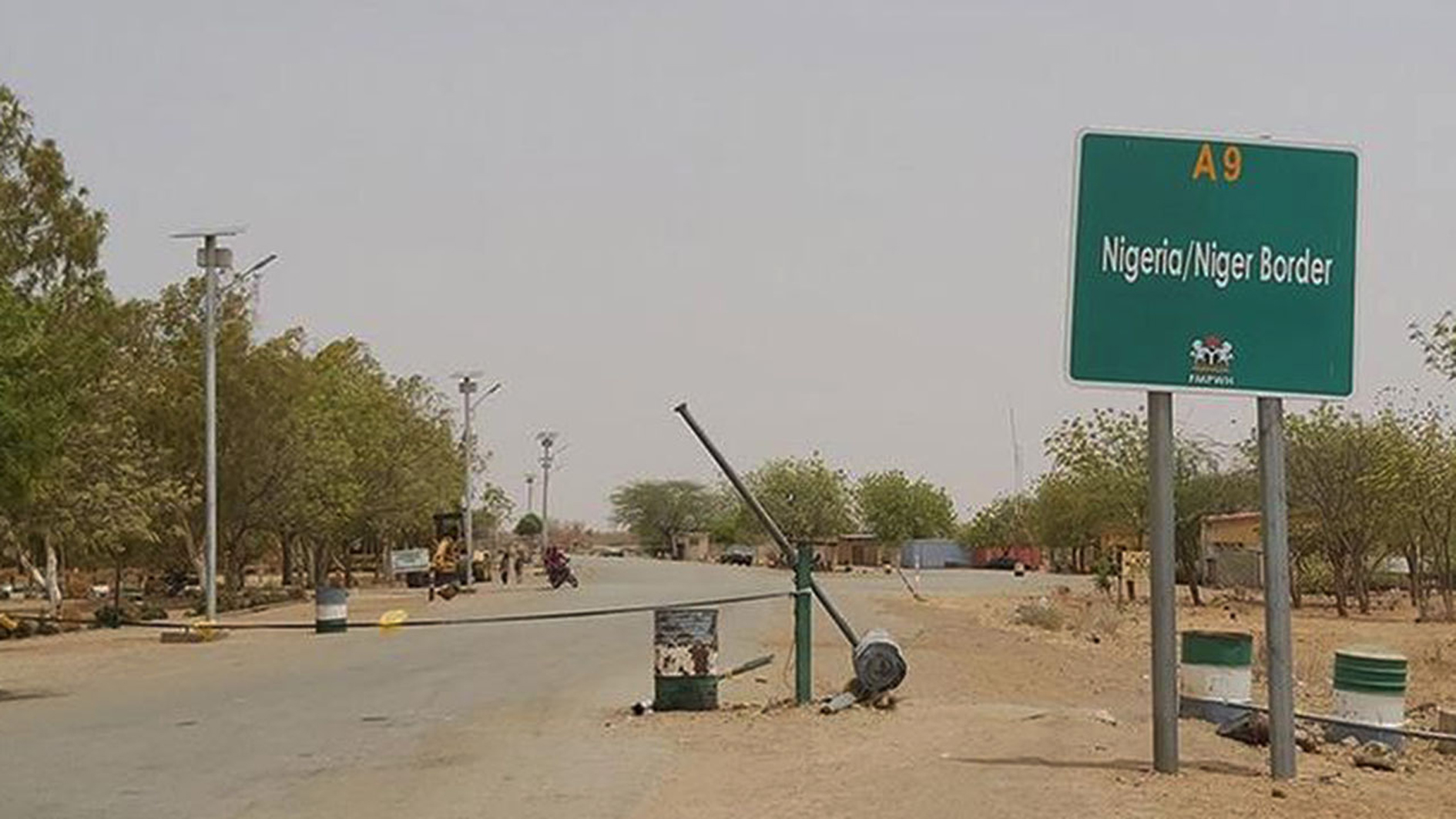
Until recently, Nigeria’s borders have long been where the country’s administrative weaknesses are most visible: queues at passport offices, opaque visa decisions, touts at airport terminals, and security agencies struggling to identify who enters or leaves the country. Hence, the decision to extend Comptroller-General Kemi Nanna Nandap’s tenure, alongside that of Nigerian Correctional Service Controller-General Sylvester Nwakuche, is more than a routine official decision. It is a decision about whether to let a reform agenda already reshaping immigration, travel and border security mature.
President Bola Tinubu approved the extensions on the recommendation of Interior Minister, Dr Olubunmi Tunji-Ojo, with Nandap now serving until June 30, 2028 and Nwakuche until May 26, 2028.
The Presidency argued that the extensions were intended to address succession gaps and give the relevant boards time to appoint successors, while commending both chiefs for reforms achieved under their leadership. For the Nigeria Immigration Service, however, the deeper issue is not merely administrative continuity. The question is whether Nigeria can turn its promising digital reforms into durable institutions that are secure, commercially useful, and resistant to the corruption that once defined too many travellers’ experiences.
When Nandap was confirmed as Comptroller-General in March 2024, she inherited an institution whose public credibility had been badly eroded. Passport scarcity, prolonged delays and informal payments had made ordinary services feel like privileges rather than rights. Her response has focused on reducing discretionary human contact in high-risk processes: online applications, contactless processing, decentralised change-of-data services and improved passport availability.
These reforms matter. A Nigerian student renewing a passport abroad, a businessperson seeking a visa, or a family travelling through Nigerian airports does not experience policy as a communiqué. They experience it as waiting time, predictability, cost and dignity. By moving key services online and reducing face-to-face interference, the Service has begun to shift the incentive structure away from rent-seeking and towards service delivery.
The e-visa regime, operational from May 1, 2025, is perhaps the clearest example. Within its first six weeks, the Federal Government reported more than 14,000 applications processed through the system. The significance is not only the volume. It is that Nigeria has begun to make entry decisions more rules-based, auditable and accessible to visitors, investors and members of the diaspora who previously had to navigate uncertain physical processes.

Border reform is often presented as a choice between openness and security. Nigeria’s recent experience suggests a more useful framing: poorly managed borders produce both insecurity and economic loss, while well-managed borders can improve both.
The deployment of Advance Passenger Information and Passenger Name Record (API/PNR) systems gives immigration authorities the ability to receive and analyse passenger data before travellers arrive. By late January 2025, the system had flagged 97 persons of interest. The value of such technology lies in prevention: identifying risk earlier, targeting scrutiny more intelligently, and allowing legitimate travellers to move with less friction.
The NIS has also invested in training personnel on API/PNR data analytics and global passenger-data standards, an essential complement to the technology itself. Systems do not secure borders; trained, accountable people operating credible systems do. The Service’s more recent airport overhaul, including automated e-gates, biometric surveillance, passenger profiling and queue-management reforms, points in the same direction.
The central test, however, is implementation. Biometric gates and surveillance tools can reduce opportunities for extortion, but they can also create new risks if data protection is weak, oversight is thin, or technical failures are met with improvisation. Nigeria must therefore pair digital border control with clear privacy safeguards, independent audit, transparent complaint mechanisms and consequences for abuse. A modern border should not simply replace human discretion with opaque algorithms.
Immigration reform is economic policy. Every unnecessary delay at an airport, every unclear visa requirement and every informal payment raises the cost of doing business in Nigeria. For a country seeking investment, tourism, academic exchange and stronger diaspora engagement, predictable traveller processing is not a cosmetic issue.
The e-visa and contactless passport systems can help Nigeria compete more credibly for global mobility. So can the introduction of electronic landing and exit cards, electronic CERPAC and temporary work permits, which reduce the need for physical visits to immigration offices. These measures make Nigeria easier to enter legally, while preserving the state’s ability to screen, track and enforce its immigration laws.
But technology alone will not deliver competitiveness. Nigeria must ensure that online systems are reliable, inclusive and affordable. Applicants without strong internet access, diaspora applicants facing payment barriers, and travellers with unusual documentation needs must not be pushed into a new layer of frustration. The measure of reform is not the launch event; it is whether the system works consistently at 2 a.m., during peak travel seasons and in remote passport offices.
Nigeria’s border reforms cannot be understood in isolation from West Africa. Nandap’s emergence as chairperson of the ECOWAS Heads of Immigration Forum placed Nigeria at the centre of regional efforts to modernise mobility while managing shared security threats.
The ECOWAS National Biometric Identity Card, intended to replace the ECOWAS travel certificate and residence permit, is particularly important. It aims to simplify movement and residence rights for community citizens while strengthening identity verification across member states. For Nigeria, regional cooperation is not optional. Trafficking networks, irregular migration, counterfeit documents, arms flows and insecurity in the Sahel do not respect national boundaries.
Nigeria’s leadership should therefore be judged not only by domestic digitisation, but by its ability to promote interoperable standards, data-sharing protocols and mutual trust among ECOWAS states. A border that is digitally advanced but regionally disconnected will remain porous in the ways that matter most.
Supporters of Nandap’s extension argue that reforms of this scale require time. That argument has merit.
The planned biometric Single Travel Emergency Passport, further passport and visa upgrades, and the expansion of contactless solutions are not one-off projects; they require procurement discipline, staff retraining, maintenance budgets and political protection from reversal.
Yet continuity must not become immunity from scrutiny. The honest measure of the extension will be whether the NIS publishes measurable performance data: average passport processing times, e-visa approval timelines, complaint resolution rates, corruption cases investigated, border interception outcomes and system downtime. Public institutions earn trust not by announcing reforms but by allowing citizens to verify them.
There are also unresolved challenges that need special attention. Touts have not disappeared from every passport environment. Digital systems remain vulnerable to poor connectivity, insider abuse and weak enforcement. And modernisation must not become a pretext for excluding citizens who cannot navigate digital platforms. These are not reasons to halt reform; they are reasons to supervise it rigorously.
Tunji-Ojo’s role deserves recognition because institutional reform requires political cover. A minister who insists that visas should not depend on personal connections, and who supports automation as a tool for both security and convenience, has helped create the policy space in which the NIS can act. But ministers, like comptrollers-general, should be assessed by outcomes rather than announcements.
Nandap’s extension is best understood as a conditional investment. The President has given the Service time to consolidate gains; citizens should expect visible returns. Those returns should include shorter and more predictable passport queues, fewer informal payments, faster visa decisions, safer airports, stronger data protection and deeper ECOWAS cooperation.
Nigeria does not just need a tougher border regime. It needs one that is smarter: able to welcome legitimate travellers, facilitate trade and investment, protect citizens, and deny criminals the anonymity on which they depend. The reforms since 2024 have moved Nigeria closer to that ideal. The next 18 months must prove that the progress is structural, not episodic, especially in the light of the Ebola scare and the need to protect the nation’s major port of entry for passengers.
If the NIS sustains transparency, invests in its people and treats technology as a public good rather than a prestige project, Nigeria’s borders can become what they should always have been: gateways of opportunity, guarded with competence and administered with integrity.

