 Follow Us on Google News



 Follow Us on Google Discover
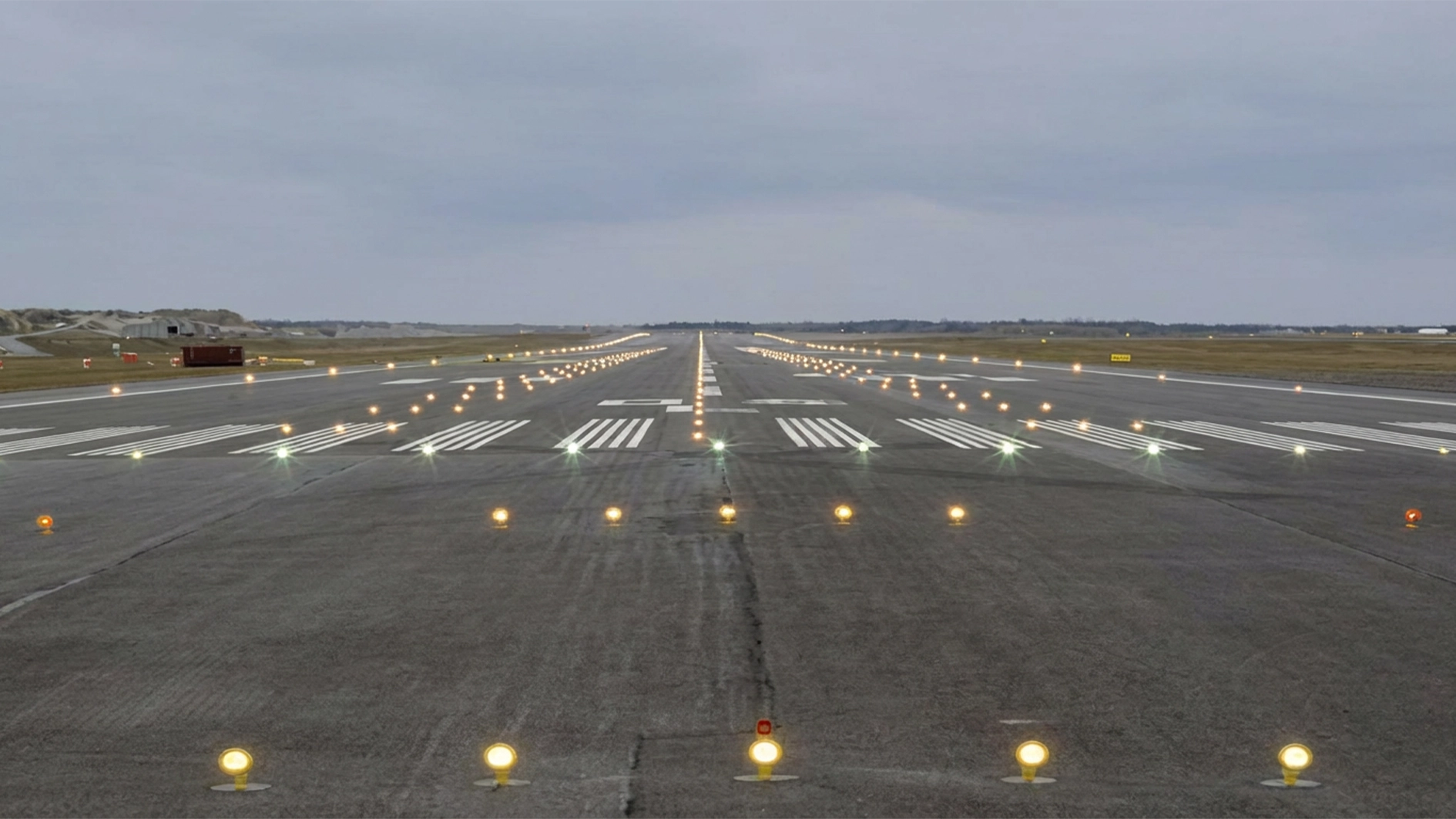
Experts in Nigeria’s aviation industry have called for a rigorous audit of local airline operators following a serious incident in which a Challenger CL60 aircraft, operated by Triton Aviation, lost a door shortly after take-off from the Nnamdi Azikiwe International Airport (NAIA), Abuja, last week.
The experts queried aircraft airworthiness, maintenance standards, flight crew competence and regulatory oversight of the operators, especially those operating in business aviation. They insisted safety must remain the overriding priority in the aviation industry.
The Chief Executive Officer (CEO), Nigame Aircraft Consultancy based in the United States, Olufemi Adeniji, said the incident revealed the urgent need for a comprehensive and uncompromising audit of operators in the country.
Adeniji, in an interview with The Guardian, warned that the consequences could have been catastrophic had the aircraft been at cruising altitude.
Adeniji, who expressed concern over the growing number of aviation incidents, said the latest occurrence should not be treated as an isolated event, but as a serious warning about the state of safety oversight in the industry.
He questioned whether the aircraft’s door-warning and locking systems had functioned as intended, noting that modern aircraft are equipped with cockpit indications that alert flight crews when doors are not properly secured.

“Once again, just when we believed the series of aviation incidents had ended, another one surfaces. Following the runway overrun at Ibadan Airport, the road landing in Asaba, the overrun at Benin, the military crash at Igbokoda in Ondo State, and now, a door coming off during takeoff at Abuja.
“The aircraft has system and cockpit indicators that alert and indicate when all doors, including the main entry door, are safely closed and locked.Could the cockpit indicator light be faulty? Is there corrosion on the main entry door hinge? Is the flight crew adequately qualified?
“Every operator in Nigeria requires a rigorous, uncompromising audit. This event took place in a pressurised cabin; imagine the outcome at cruising altitude. Has anyone assessed the damage on the ground? A detailed investigation is imperative. Safety must remain the guiding principle of aviation.”
In his comment, aviation security expert, John Ojikutu, queried the aircraft’s operational status, the qualifications of its crew and the regulatory requirements governing foreign-registered aircraft operating within Nigeria.
Ojikutu wondered if the cabin crew were aboard the aircraft and whether the cockpit had a functioning warning system capable of alerting the pilots to a door-related technical defect before take-off.
He also asked whether the flight was commercial and whether the aircraft had obtained the necessary security clearance to operate within the country.
“This is a foreign-registered aircraft possibly flown by foreign crew. Was the aircraft on a commercial flight and has it a security clearance for flying within the country?” he queried.
Ojikutu further expressed concern about what he described as another instance involving a foreign-registered aircraft operated by foreign crew experiencing an operational problem in Nigeria.
He wondered if the Nigeria Civil Aviation Authority (NCAA), had verified the crew’s licences and the aircraft’s airworthiness documentation, while also seeking clarity on the outcome of an earlier incident involving a foreign-registered aircraft that landed on an uncompleted highway in Asaba, rather than Asaba airport.
According to him, the latest incident should prompt the relevant authorities to review the movement and operational activities of foreign-registered private aircraft in Nigeria, particularly amidst increased global and domestic security concerns.
Ojikutu posited that foreign registered aircraft should not operate beyond their authorised points of entry or outside the conditions and duration of their security clearances without the necessary approvals.
He also called for closer scrutiny of aircraft that operate within Nigeria without being registered locally, insisting that the authorities must ensure compliance with applicable aviation and security regulations.
The latest incident occurred last week in Abuja when the aircraft, with registration number: T7-SEI and flight identification: DWC052 and owned by Triton Aviation, was operating a flight from Abuja to the Murtala Muhammed Airport (MMA), Lagos.
According to an incident report obtained by The Guardian, the aircraft departed Runway 22 at approximately 4:17 p.m. Coordinated Universal Time (UTC) and was climbing through 3,000 feet, about three nautical miles from the airport, when the crew declared an emergency.
The crew transmitted a “Mayday” distress call after reporting that a door had opened in flight, prompting air traffic controllers to direct the aircraft back to Abuja for an emergency landing.
Airport fire and emergency personnel, as well as the medical team, were immediately placed on standby to respond to any eventuality.
The aircraft subsequently landed safely on Runway 22 at approximately 4:34 p.m. UTC, about 14 minutes after the distress call.
An inspection after landing confirmed that the door was missing from the aircraft’s fuselage. The aircraft was later taxied to the international apron extension and parked.
In a development that further increased concerns about the incident, a video circulated online showed the missing door reportedly discovered by farmers in farmland within Abuja.
In the footage, a man, whose identity could not be established, said the farmers found the door while returning from their farm.
The Nigerian Safety Investigation Bureau (NSIB) is currently investigating the remote and immediate cause of the serious incident.

