 Follow Us on Google News



 Follow Us on Google Discover
Popoola urges business leaders to unite capital, build champions
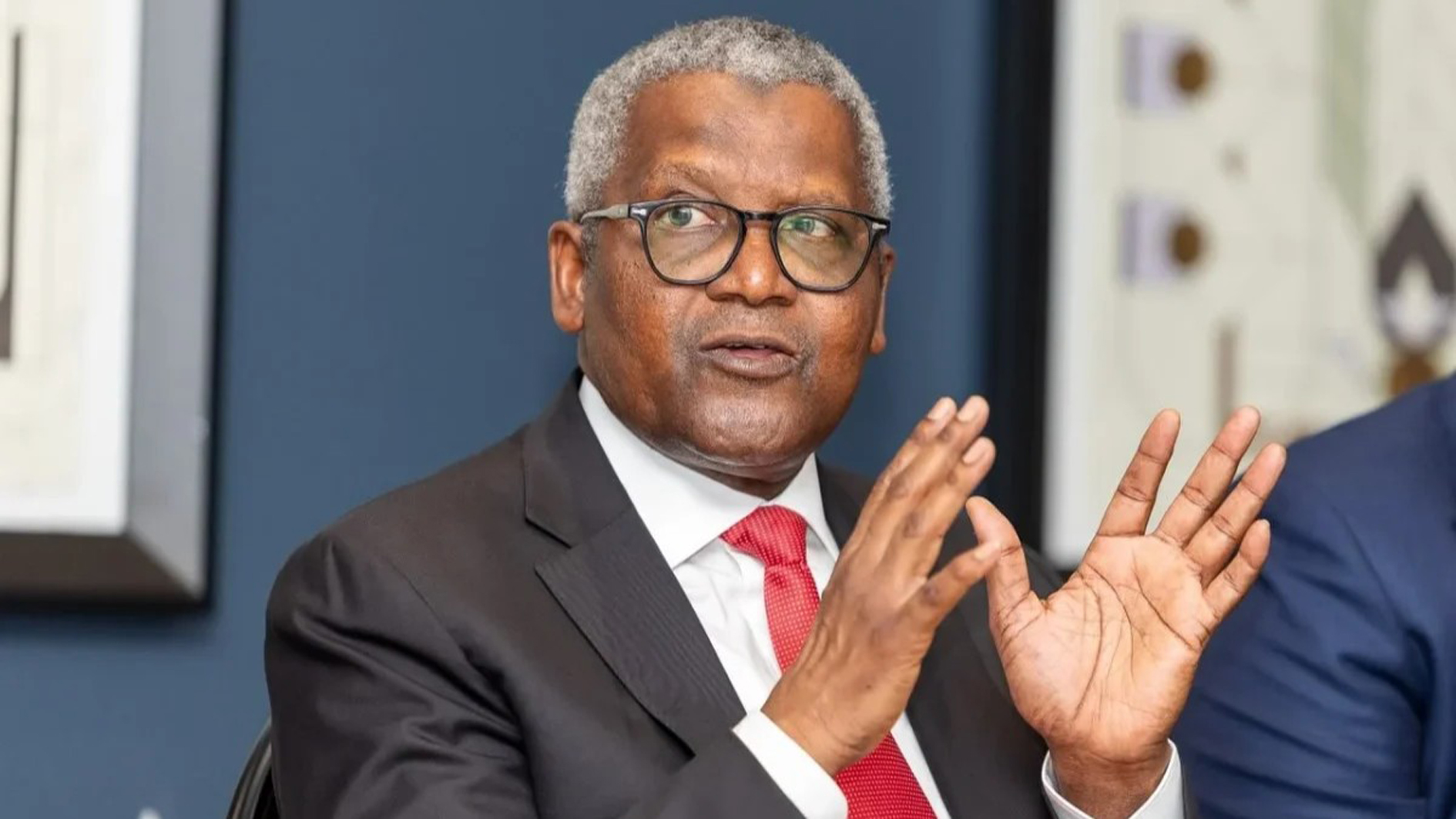
President and Chief Executive of Dangote Industries Limited, Aliko Dangote, has cautioned that African investors risk losing out on the prosperity generated by the continent’s industrial expansion if they continue channelling funds abroad instead of backing businesses at home.
Speaking during a conversation with the Financial Times, Dangote outlined his ambition to expand the Group’s industrial investments across Africa, while urging governments and business leaders to take greater responsibility for the continent’s economic future.
He said the continent needed a stronger commitment from its own investors to finance businesses capable of transforming its economies, arguing that African capital should play a greater role in building globally competitive companies.
Dangote decried the gap between Africa’s investment potential and the willingness of its own investors to commit capital to businesses operating on the continent, describing what he sees as a weakness in Africa’s approach to financing its development.
“We are doing it in reverse, where we take our own money to their banks, strengthen their banks, and we don’t really keep our money on our own continent,” he said.

He noted that the challenge is not simply attracting foreign investment but ensuring that African investors participate in the businesses being built around them.
He argued that local capital should help establish industries, create jobs and retain a greater share of the value generated from the continent’s resources.
He also raised questions about the role of African capital markets in financing large businesses. Stock exchanges across the continent provide a channel through which companies can raise equity from investors, while allowing individuals and institutions to share in their growth.
Dangote argued that African businesses should be willing to list on the continent rather than look first to foreign markets for public capital. Such an approach, he believes, would give African investors greater access to major companies while helping businesses mobilise funds for expansion.
The challenge is particularly relevant to institutional investors, including pension funds, insurance companies and asset managers, whose investment decisions can influence the availability of long-term capital for productive industries.
If more of these funds were channelled into viable African businesses, they could support industrial expansion while providing investors with opportunities to earn returns from the continent’s economic development.
Achieving this, however, would require credible investment opportunities, effective regulation, transparent corporate governance and confidence in the protection of investors’ interests.
Meanwhile, the Nigerian Exchange Group (NGX Group) has called for a more integrated approach to capital formation across Africa, connecting businesses with appropriate sources of financing at every stage of their growth to build globally competitive enterprises.
Group Managing Director and Chief Executive Officer of NGX Group, Temi Popoola, made the call at the Financial Times Africa Summit 2026 in London, during a panel session titled: “Building African Champions – The Investment Case for Scaling SMEs.”
Popoola noted that capital markets have traditionally focused on large, mature companies ready to list, while promising businesses often require several rounds of financing before they can access public markets.
“Historically, we have taken a sort of top-down approach to look for big companies ready to go public,” he said, explaining that businesses typically progress from founder funding and support from friends and family to venture capital, private investment and, ultimately, public-market financing.
He observed that the growing availability of private capital, alongside fewer new listings and an increase in delistings across several markets, underscores the need for a more connected capital formation ecosystem. Rather than waiting for businesses to mature before engaging with them, capital market institutions must find ways to support promising enterprises earlier in their development.
This requires stronger connections between public markets and the broader investment landscape, including private equity, venture capital and institutional investors. Such linkages can help businesses access financing as they grow while creating potential exit opportunities for private investors through public listings.
Popoola also highlighted family-owned enterprises, describing them as “hidden champions” that could make significant contributions to African capital markets if supported to scale and access appropriate sources of capital.
He identified receivables and invoice financing as another way capital markets can help ease funding constraints facing small businesses. By enabling companies to leverage invoices, receivables and purchase orders linked to larger corporate customers, these financing structures can help SMEs unlock working capital and sustain growth.

