 Follow Us on Google News



 Follow Us on Google Discover
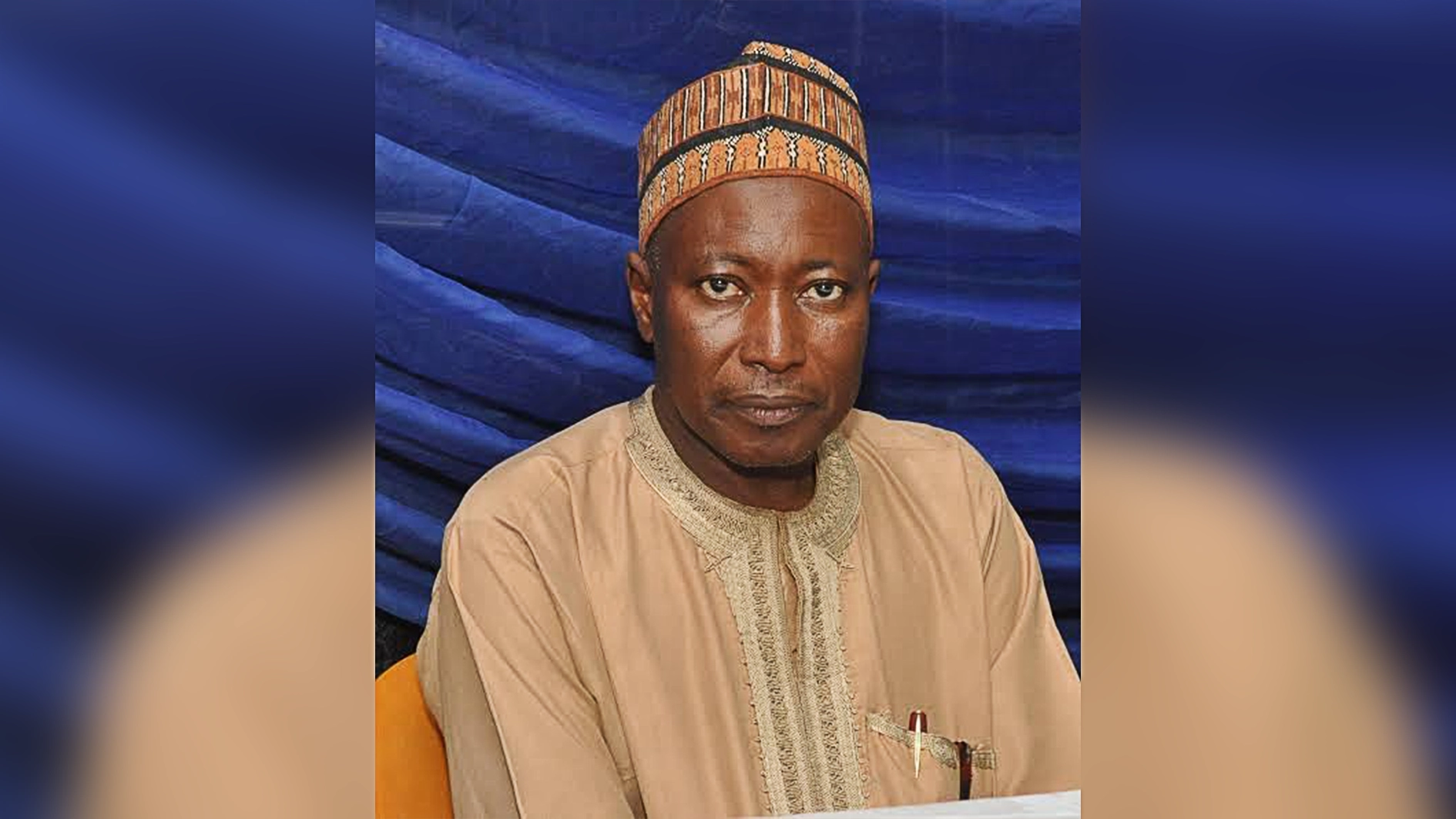
Dr Mainasara Umar Kogo is Chairman of the Code of Conduct Tribunal (CCT). In this interview with AMEH OCHOJILA, the lawyer and historian discusses the challenges of fighting corruption, the tribunal’s prosecutorial limitations, his proposal to transform it into a National Anti-Corruption Court, and efforts to recover allegedly disposed-of properties. He also speaks on the state of the institution when he assumed office, funding constraints and his vision for reforming the tribunal.
With your long career in public service and advocacy, can you trace your background and journey to the CCT?
My life’s trajectory is quite long. I hail from a royal family in Katsina, but I grew up as a Marxist and participated in various platforms of struggle, dating back to the PRP (Peoples Redemption Party) days.
I have belonged to several national and international bodies, but I am particularly known as an international media analyst on good governance and human rights protection. I am also a teacher, historian, sociologist, lawyer and public servant.
President Bola Ahmed Tinubu appointed me chairman of the Code of Conduct Tribunal on June 13, 2024, following recommendations by some statesmen that I should return to sanitise the institution. I had served here as chief registrar about 25 to 27 years earlier.
The recommendation followed concerns about developments considered detrimental to the integrity, goodwill and image of the institution.
Given Nigeria’s corruption challenges, do you believe there is still hope in the fight against corruption?
Yes, there is hope. Before my appointment, I was president of the African Transparency Front. Since my appointment to this position, I have not experienced any interference in the discharge of my responsibilities.

The major issues are the institutional mechanisms and legal frameworks, which need to be strengthened. We must also instil patriotism, discipline and statesmanship in people entrusted with adjudication and public responsibilities.
Anyone occupying a position of authority should understand that the office is a responsibility, not a luxury. No one is inherently more important than the ordinary person on the street. Public office is an opportunity to serve.
People must also understand the gravity of taking public funds. In my view, even taking one naira from the public treasury is a serious moral offence because public resources belong to the people.
Throughout my 34 years in public service, I have maintained that principle. I do not have a car of my own, and people assist me with transportation to and from work. I have tried to live by the belief that public office must not become an instrument of personal enrichment.
I do not believe all hope is lost. There will always be people capable of introducing reforms and putting society on the path of truth, justice and moral rectitude.
Can you assure Nigerians that the tribunal will move swiftly against politically exposed persons, regardless of their status?
People must understand the constitutional and legal framework within which the tribunal operates. Under the current arrangement, the Code of Conduct Bureau is responsible for investigating and prosecuting matters before us.
The Attorney-General also has constitutional prosecutorial powers and has assigned prosecutors to the Bureau. Therefore, we are limited to the cases brought before us through the existing arrangement.
We cannot independently decide who should be prosecuted. We deal with the cases brought before us, and all cases are equal before the tribunal. It is the substance of each case that differs.
The proposed legislation is intended to address this limitation by allowing anti-graft agencies to bring relevant cases before us, irrespective of the status of the persons involved.
There are several issues that may require legal scrutiny beyond asset declaration, including certificate forgery, falsification of records, academic plagiarism, dual citizenship and foreign bank accounts. The appropriate legal framework must determine which offences fall within the court’s jurisdiction.
If the proposed law is passed, we will have a broader framework for receiving cases from multiple sources and handling them expeditiously.
What exactly do you want to achieve through your proposed major change to the tribunal’s mandate?
I am trying to reposition the tribunal in line with the Constitution’s intent. The CCT is specifically mentioned in the Constitution and has an important responsibility in enforcing the Code of Conduct for public officers.
I have introduced a bill to change the name of the Code of Conduct Tribunal to the National Anti-Corruption Court. Under the proposal, anti-graft agencies and civil society groups would be able to prosecute relevant cases before the court.
We also propose establishing about seven judicial divisions and recruiting 37 additional judges to handle corruption-related cases expeditiously. The idea is to create a modern institution capable of dealing with cases promptly and strengthening the fight against corruption in Nigeria and beyond.
I have appealed to the Attorney-General of the Federation and the President to consider adopting the bill as an executive bill to facilitate its passage by the National Assembly.
We have also introduced 10 new departments to address emerging challenges. One of them will focus on international enforcement. Where judgments involve people with dual citizenship or assets and investments abroad, we may require cooperation with international bodies, including Interpol, and diplomatic missions to enforce them within the law.
Some people believe corruption worsened with the return to civilian rule in 1999. What is your assessment?
My concern is not simply the statistics people cite, but how much the lives of ordinary Nigerians have improved. How many people can afford two square meals a day? The phrase “food on the table” is frequently used, but many people do not even have a table in their homes.
The depreciation of our currency has weakened its purchasing power, while the economic system increasingly encourages people to pursue individual interests at the expense of collective welfare.
There has been a serious erosion of nationalism, national cohesion and patriotism. Everyone appears concerned about what they can gain, while the national interest suffers.
Our Constitution emphasises national unity, social justice and the responsibilities of citizens and public institutions. Yet, many people in positions of authority do not appear sufficiently conscious of their constitutional responsibilities.
We have more politicians than statesmen. Politicians may be concerned with acquiring power and wealth, but statesmen think about the country, the welfare of its people and the future of generations to come.
In the First and Second Republics, we had people widely regarded as statesmen because they placed national development above personal interests. Today, we need leaders who regard public office as a sacred responsibility rather than an opportunity for self-enrichment.
The National Orientation Agency should also play a stronger role in promoting national unity, patriotism, responsible citizenship and public service. We need a change in the principles and strategies guiding our leadership.
What institutional failures did you encounter when you assumed office, and what have you done to address them?
Honestly, I found an institution that had deteriorated considerably. We built this building when I worked with Justice Bashir Sambo and Justice Constance Momoh. Returning after many years, I was worried about where to begin.
There was no electricity or water supply, the lifts were not working, the building had not been renovated for more than 25 years, and basic working materials were lacking. Security was also poor, and burglaries were rampant. Even armoured cables had been stolen.
I engaged corporate security and cleaning companies, resolved outstanding electricity issues and restored power supply. I also provided two boreholes and began renovating the building.
Staff development was another priority. We have completed 36 streams of capacity-building training to prepare personnel for contemporary professional demands. I have also facilitated professional development for lawyers and accountants.
We addressed outstanding promotions and irregular staff placements. There are no pending promotions that we have not implemented, and we have paid the retirement entitlements of about 70 to 80 per cent of affected retirees. Some had waited for as long as two decades, while some died before receiving their entitlements.
I introduced about 13 new allowances and other welfare measures, including support for staff transportation, vehicle maintenance and welfare packages during Christmas, Ramadan, Sallah and Easter. We have also introduced a 13th-month salary bonus to motivate staff.
How has it been managing the tribunal’s operations despite inadequate funding?
On average, we receive between N26 million and N28 million as overhead, and the money does not always come monthly. Sometimes, it takes two or three months before it is released.
I want it placed on record that since I assumed office, I have not received one kobo as capital allocation. By the time we pay for security, cleaning, electricity, water, vehicle maintenance, stationery and other essential services, almost the entire allocation is exhausted.
Because of these constraints, I reached out to international donor agencies and other institutions. We have received computers, laptops, photocopiers, printers and other equipment.
I have also worked to restore relationships with relevant institutions, including the Chief Justice of Nigeria, the Secretary to the Government of the Federation, the Head of the Civil Service of the Federation, the Attorney-General of the Federation, the Ministry of Budget and National Planning, the Director of Public Prosecutions and the Code of Conduct Bureau.
The Bureau is assisting us with the production of our practice direction because we do not have sufficient funds for it.
I introduced a practice direction intended to limit the period for handling cases to about six weeks, to expedite proceedings and ensure that justice is delivered within the shortest possible time. I have also introduced an annual legal year to assess our performance.
What is the current state of efforts to recover properties allegedly disposed of by previous leaderships?
The recovery of properties and other assets has been a major concern. I am still discovering items and properties that were allegedly taken away or disposed of.
The official residence designated for the chairman was, according to the information available to me, sold to private interests. That is why I do not have official accommodation. I have been staying in a house someone lent me at Life Camp.
I also do not have an official vehicle. Some of the tribunal’s vehicles are dilapidated, while others were stolen. Because of the lack of resources and transportation, I asked the security personnel assigned to me, including officers from the DSS, police and civil defence, to return to their respective offices.
The official residence was also vandalised. Windows, doors, toilet fittings and the generator were removed. However, we have recovered a property in Wuse II with the intervention of the FCT Minister, Nyesom Wike. He revoked the sale and restored the certificate of occupancy in the tribunal’s name. We are awaiting funds to renovate the property.
We have also recovered a property in Bauchi that had allegedly been converted into a commercial plaza.
The tribunal is seeking funds to renovate it and return it to official use.
Another concern is the disconnect between our headquarters and state and zonal offices. Some offices are locked, and weeds have taken over their premises. I am visiting these offices to take inventory of their assets, identify their needs and restore effective coordination.
What key achievement would you like to record as your legacy before leaving the tribunal?
I do not want to attribute anything I achieve to a personal legacy, because whatever I do is by the grace of Almighty Allah. My desire is simply to do what is right and provide exemplary leadership.
Once I have fulfilled that responsibility and helped put the institution on the right footing, I will be willing to resign, whether that happens in one or two years or even later, and devote myself to preparing for my ultimate return to Almighty Allah.
I already see myself as someone on a journey towards the Hereafter, and I do not want to lose sight of that ultimate destination while serving in public office. My priority is to provide the right leadership, establish a sound institutional foundation and ensure that the institution can continue to function effectively beyond my tenure.
After that, I want to return to the classroom, not as a teacher but as a student, to learn more about life, leadership and, above all, how best to prepare for my return to Almighty Allah. That is what matters most to me.

