 Follow Us on Google News



 Follow Us on Google Discover
By Japhet Esangbedo
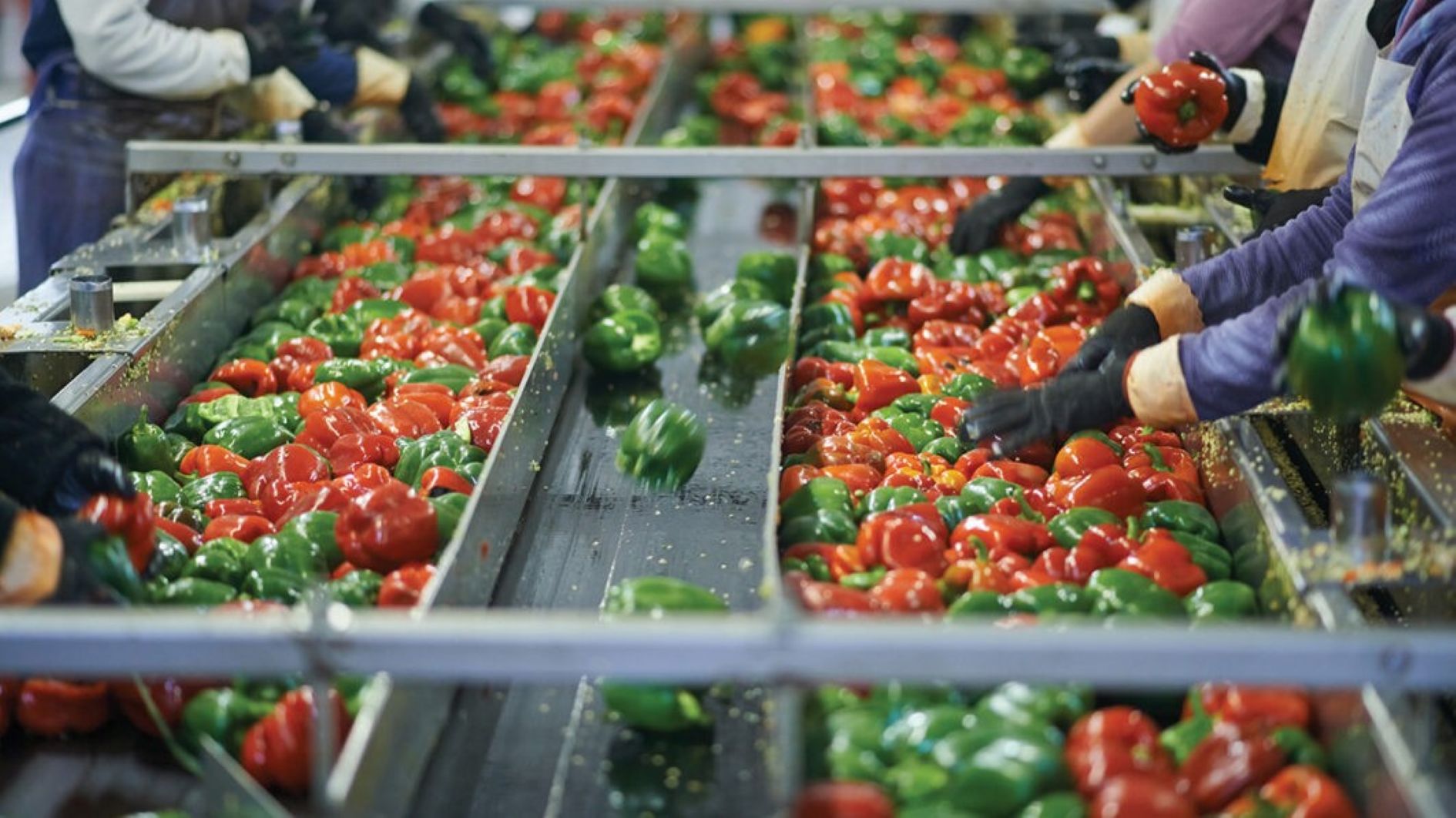
Agricultural food processing is adding value to farm products. It is the food processing enterprises that record the wealth of agriculture in their accounts book.
Agriculture is the mainstay of the people in the rural area. There is ample supply of one kind or many others of agricultural produce that serve as raw materials in industry. It is cottage industry specifically streamlined to the food sector.
Industries are not meant to be established only in the urban centres. Social and economic development of rural areas can be accelerated by setting up industries there. Industries can spring up in the rural areas for the processing of those produce. That will in turn boost the social and economic development of the area. People will move to the area rather than migrate to the urban centres where they are not welcome and are forced to do menial jobs worse than they would do in their native homeland. Food processing industries in the rural areas will engage the services of a few or many hands and give employment to those who are ready to work.
Food and drinks
Let me explain food processing industry with specific examples. The case is not particular to one town; rather, it is prevalent in all the communities of the country. The people carry and sell their food wares in open basins and vessels. Wind blows dust and air borne micro-organisms into them. Flies have a field day thereon and pay back for what they took with germs and pollution of all sorts they may bear. The people console themselves that disease does not kill the black man. They need to be more concerned about hygiene. The entire process is to add value to the products. So doing, it is crucial to do it well.
The staple food of the people is one of swallow, such as pounded yam, eba, akpu, amala, etc., and the market can never get a glut of the supply. Garri processing can be industrialised. One woman can process a basin of garri, which is about 50 kg, involving harvesting, peeling, washing and taking it to the mill to grate; there, she puts it in a sack and has it pressed to squeeze out the water. The following day she fries it, or if she wants it fermented to sour, leaves it for extra three or four days before frying it. That takes a time span of two to five days. By a co-operative effort of, say, twenty women, one ton of garri, that is, 20 bags of 50 kg each, could be produced in that period of time. A moderate sized industry owned by a co-operative society or an individual with means can produce 30 tons or 600 bags of 50 kg per bag in a day. That puts more food in the market in a shorter time.

On another dimension, the packaging could target the pocket of the common man and students by having the product in sachets of 100 gm, for once consumption. There could also be other packs of 1/4 kg, 1/2 kg, 1 kg, 2 kg and bags of 10 kg, 25 kg and up to 50 kg. Garri should be sold in this form in market squares and stores.
In industrial production, there will be specialised departments: purchasing of cassava, peeling, washing, grating, drying, frying, bagging, warehousing, and marketing. That was how flour mill was developed from one family processing to a giant factory production. This size of production necessitates large hectarage of cassava farm as there is of wheat and maize in America.
It is the same form of processing of beans, and rice. They can be picked free of stones, sand and husk, and packaged. Maize, millet, sorghum can be prepared to be used for porridge in place of wheat and oats. Beans (Phaseolus vulgaris) can be dehusked, dried, ground into flour and packaged ready to use to make akara, moin-moin and as soup thickener (gbegiri). This form will make for higher export demand.
In the area of drinks, for example, palm wine, pineapple juice, burukutu of which there is abundant supply, can support a viable bottling industry. The preservation of these fresh drinks for bottling could be done by the simple process of pasteurisation or ultraviolet radiation (UV) radiation. It is a natural process and does not require chemical preservatives. They could have an alternative taste by a mix of natural ginger extract. It is within the capacity of an individual. The entrepreneur could begin with 100 bottles a day. When the person secures a market, he or she can expand it to 1000 bottles a day and increase production steadily to a higher volume.
Oil
Of the domestic oil consumed in Nigeria, about 90 per centof it is produced in the rural areas manually. With the availability of locally fabricated mills, the people are increasing their production greatly.
Feed mill
The animal sector is deficient because attention has not been given to animal feeds. The materials for production of feed abound to spilling point in the rural areas though the season may affect them in some areas. Cassava peels, yam peels, potato peels, maize chaff, maize sheath, etc. can be cut to small sizes and prepared as feed for goats, sheep, and cattle. It is also very good for pigs.
NAFDAC
The need to pay attention to the quality of products is imperative. International standards must be complied with. Even if sold locally, beans and rice should be free of weevils, grits and chaff. Kain-Kain is a gin but given a bad name as illicit to destroy it while Gordon Gin is a gin but extolled as social drink and acceptable. The Agency is a bane to the growth of small scale rural industries, and even to the industries in the urban areas aspiring to grow big. NAFDAC should soft-pedal on fledgling industries.
Esangbedo is an agriculturalist based at Igueben and running a food processing enterprise.

