 Follow Us on Google News



 Follow Us on Google Discover
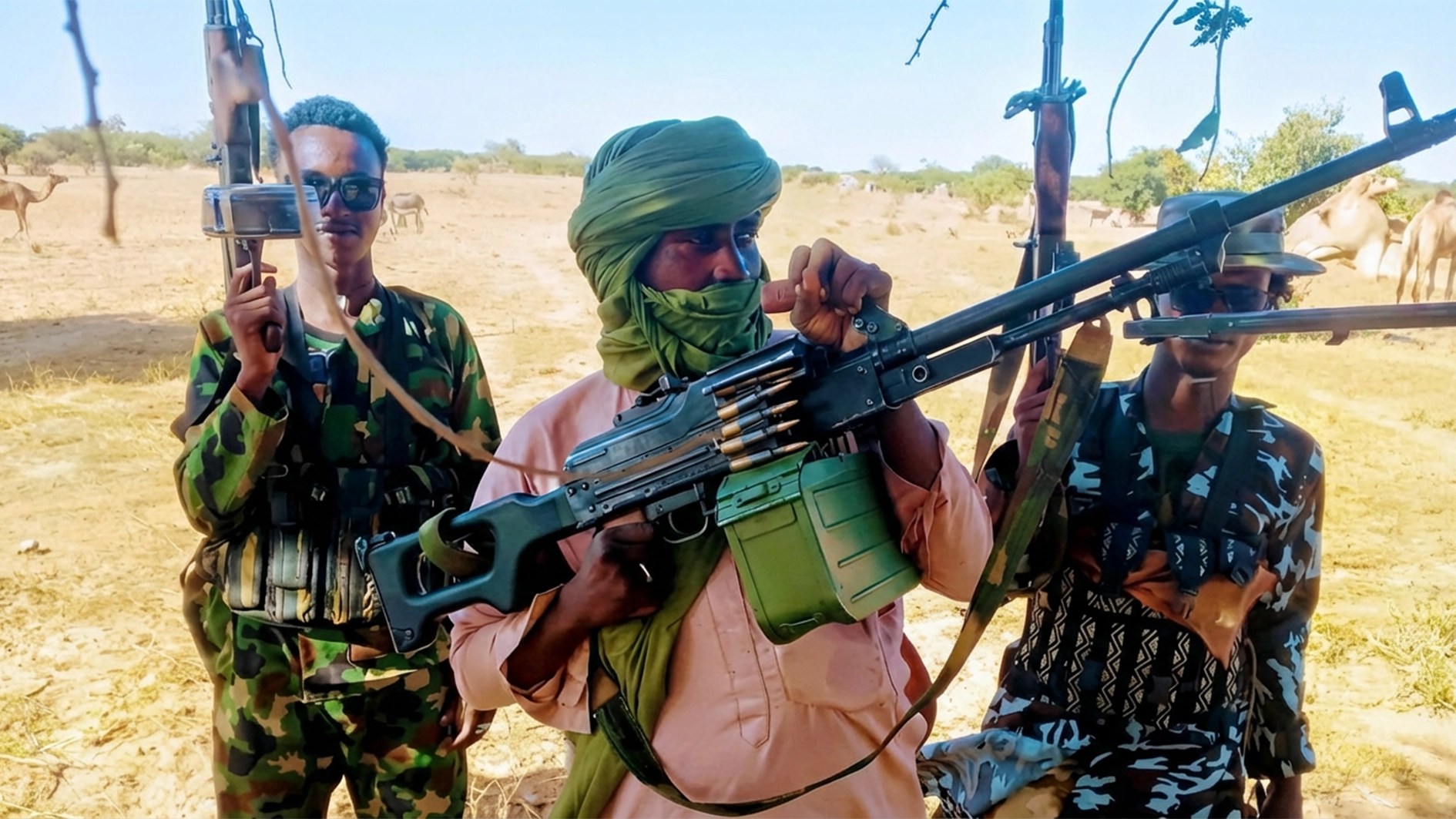
Interconnected conflicts are reshaping Africa’s security landscape by forming a continuous crisis belt stretching from the Sahel through Sudan and the Horn of Africa down to the eastern Democratic Republic of Congo (DRC).
The Sahel and West Africa: Burkina Faso, Mali, and Niger face severe democratic backsliding and militant Islamist insurgencies, with violence spilling over toward coastal West African nations.
Sudan and the Horn of Africa: The devastating civil war in Sudan—pitting the Sudanese Armed Forces (SAF) against the Rapid Support Forces (RSF)—merges with regional disputes over Nile waters, Red Sea maritime access, and shifting proxy alliances involving Egypt, Ethiopia, and Gulf states.
The Great Lakes Region: M23 rebel advances and regional tensions continue to destabilise the eastern DRC.
Nigeria: Persistent convergence of northwest banditry and extremist activities strains central state authority. The involvement of Eritrea, Sudan and Egypt made the crisis in Ethiopia a regional conflict. Fighting in northern Ethiopia could also fuse dangerously with the war raging across the border in Sudan. Traditional multilateral mediators like the UN and the African Union (AU) face marginalisation as Gulf states, Turkey, Russia (via Africa Corps), and China expand their economic, military, and mineral footprints.
Technological Escalation: Non-state actors and national militancy across dozens of African nations are increasingly integrating commercial drones and advanced tactical tech into local battlefields.

Eroding Architecture: The African Union Peace and Security Architecture faces immense strain from unconstitutional changes of government (coups), severe food insecurity, climate stress, and a frustrated youth demographic driving widespread urban protests.
The rush for rare earth elements and critical minerals across Africa is fueling severe geopolitical, economic, and security crises due to exploitative extraction models and weak local governance. Involvement of Armed Groups: Militant factions and extremist groups—such as Boko Haram and the Islamic State West Africa Province (ISWAP)—tax miners, control transit routes, and demand protection money in resource-rich areas like the Sahel and Nigeria.
Organised Crime and Foreign Exploitation: Unlicensed foreign operators often collaborate with illegal trafficking rings, turning mineral wealth into a currency for conflict rather than community development
Conflict has been synonymous with the DRC for the last three decades. This was born from the legacy of the Rwandan genocide and has manifested in persistent conflict between the government’s Armed Forces of the Democratic Republic of the Congo (FARDC) and Rwandan-backed M23 rebels.
The DRC globally ranked third last on the Institute for Economics & Peace‘s (IEP) Global Peace Index 2026 and last in the sub-Saharan region, as its ongoing conflict remains among the worst in the world and has contributed to a significant displacement crisis. As of September 2026, the UN indicated that the situation in the DRC continues to deteriorate, harming the security of its civilians.
There are at least 16 countries with active armed conflicts in sub-Saharan Africa in 2026: Ethiopia, Mali, Niger Republic, Burkina Faso, Burundi, Cameroon, the Central African Republic (CAR), Chad, the Democratic Republic of the Congo (DRC), Mozambique, Nigeria, Somalia, South Sudan and Sudan. Eight were low-intensity, subnational armed conflicts, and eight are high-intensity armed conflicts (Ethiopia, Nigeria, Somalia, the DRC, Burkina Faso, Mali, South Sudan, Sudan and Cameroon).
Almost all the armed conflicts were internationalised, including as a result of state actors (whether directly or through proxies) and the transnational activities of violent Islamist groups, other armed groups and criminal networks. The conflict dynamics and ethnic and religious tensions are often rooted in a combination of state weakness, corruption, ineffective delivery of basic services, competition over natural resources, inequality and a sense of marginalisation. Two other cross-cutting issues continued to shape regional security: the ongoing internationalisation of counter-terrorism activities, and the growing impact of climate change—with water scarcity being a particularly serious challenge.
A worsening crisis in the Sahel and Lake Chad region
The armed conflicts in Burkina Faso, Cameroon, Chad, Mali, Niger and Nigeria all worsened in 2026. The security challenges are linked to the rise of violent extremism and the proliferation of armed non-state groups, such as Boko Haram, which has spread from Nigeria across the Lake Chad region. The violent extremist groups are interwoven with rural insurgent groups, feeding off intercommunal tensions and exploiting grievances of marginalised communities. In North West Nigeria, bandits and other jihadist groups are operating.
Armed conflict fatalities increased significantly in Burkina Faso in 2026 due to a broadening of three inter-connected layers of conflict: the government’s conflict with heavily armed Islamist groups, clashes between armed ethnic and Islamist groups, and inter-communal violence.
Central Africa
There were two main challenges in Central Africa in 2019: (a) the implementation of a new peace agreement in the CAR between the government and armed groups, and (b) a period of political transition in the DRC, which was accompanied by an increase in insecurity and political violence in the eastern provinces and an ongoing health emergency from measles and Ebola outbreaks. African countries face severe intersecting crises driven by protracted armed conflict, mass displacement, and acute food insecurity, with millions affected across the regions.
Sudan: The ongoing civil war between the Sudanese Armed Forces and the Rapid Support Forces (RSF) has caused millions of displacements and split the country, creating a massive humanitarian catastrophe.
Democratic Republic of the Congo (DRC): Persistent eastern conflict involving armed groups drives over seven million displaced persons and severe regional instability.
Nigeria: In North west, bandits, in Borno State and the wider Lake Chad basin, Boko Haram and ISWAP violence leave millions facing acute food insecurity and emergency hunger levels.
Horn of Africa and Sahel: Ethiopia, Somalia, Burkina Faso, and Mali grapple with overlapping insurgencies, political transitions, and climate-induced shocks.
Armed Conflict: Intra-state wars and proxy regional rivalries disrupt local governance and agriculture.
Food Insecurity: Millions face crisis-level hunger or famine risks due to disrupted supply chains and destroyed health/agricultural infrastructure.
Cameroon, Ethiopia, Mozambique, Burkina Faso, and Mali make up the top five, each grappling with widespread internal displacement from hundreds of thousands to over two million people, and mounting refugee pressures.
Despite the scale of need, these crises suffer from chronic underfunding, limited international engagement, and minimal media visibility, leaving millions in prolonged humanitarian limbo. According to the Norwegian Refugee Council’s 2024 ranking, eight of the world’s ten most neglected displacement crises are in Africa, with Cameroon, Ethiopia, Mozambique, Burkina Faso, and Mali leading the list. Iran and Honduras round out the top ten.
Inwalomhe Donald, a researcher, wrote from Birnin Kebbi, via: [email protected]

