 Follow Us on Google News



 Follow Us on Google Discover
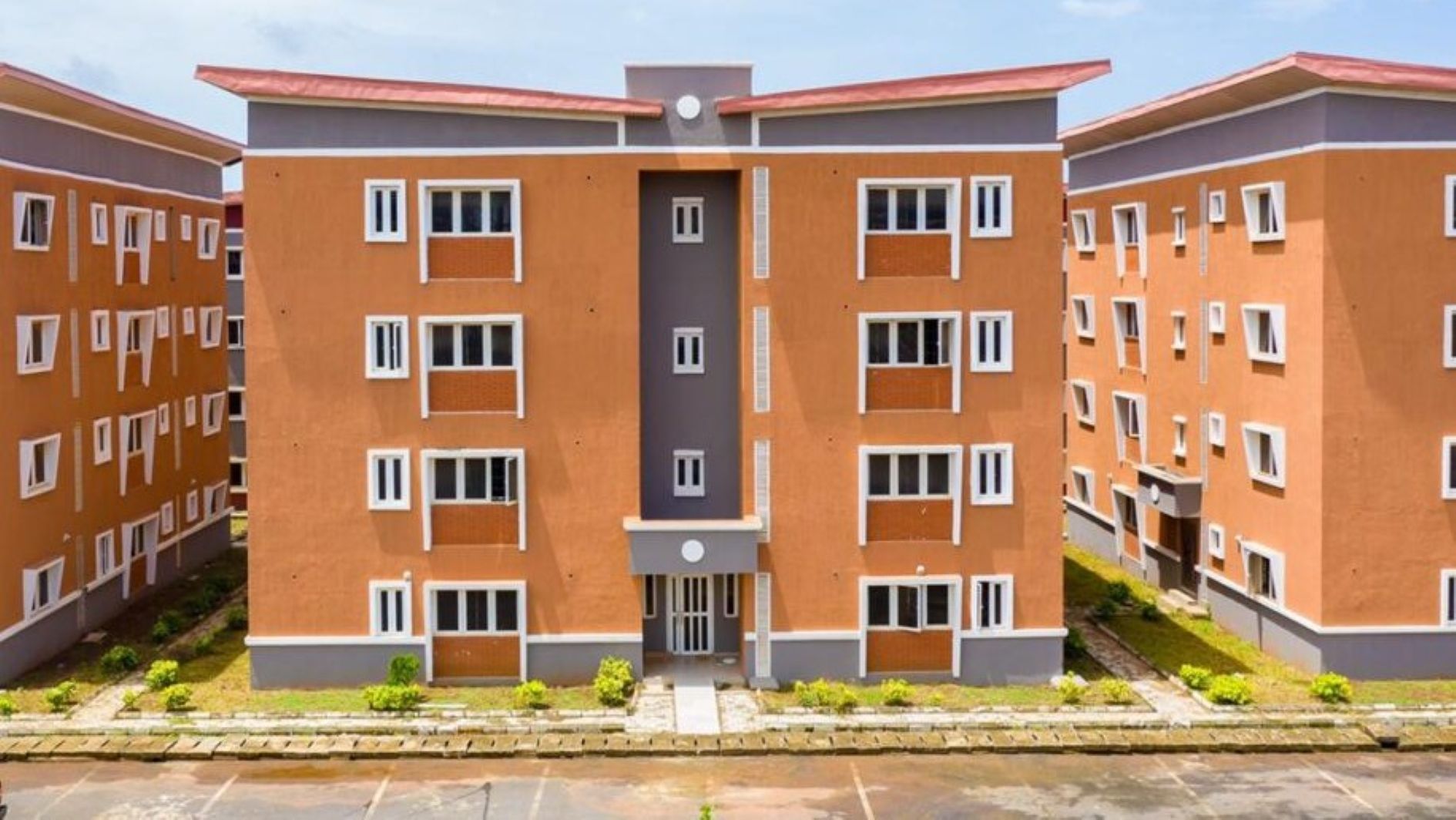
Experts have urged the Federal Government to decentralise housing delivery through local councils and promote alternative building technologies to reduce construction costs and expand access to affordable homes, particularly for low-income earners.
A Professor of Construction Management at the University of Cape Town, South Africa, Abimbola Windapo, made the call at the Urban October Industry Dialogue on Practical Solutions to Housing Affordability, organised by the Centre for Housing and Sustainable Development (CHSD) and the ARUA Centre of Excellence for Urbanisation and Habitable Cities, University of Lagos.
Windapo said empowering local councils to facilitate housing delivery could improve access to land, basic infrastructure, local artisans and building-material suppliers. She also advocated taxing the wealthy to subsidise housing for low-income households.
The dialogue, which brought together academics, industry experts, policymakers and other stakeholders, focused on the theme, Building Affordable, Cost-Effective Construction, Finance and Delivery Models for Housing in African Cities.
Delivering the keynote address, Windapo said housing affordability depended on an interconnected system involving land, building materials, finance, labour, regulation, procurement and political will. She identified land, construction materials, finance and household income as critical determinants of affordability.
She advocated alternative construction technologies, including sandbag construction and precast building systems, to reduce building costs. According to her, construction materials account for between 50 and 60 per cent of total construction costs, making projects more expensive and potentially delaying completion or rendering developments unviable when prices rise.

Windapo identified six major material groups that collectively account for 44.4 per cent of building costs: reinforcement, cement, granite, crushed stone, bricks and blocks, and concrete. She urged stakeholders to address the costs of these materials collectively rather than focus on a single product.
However, she cautioned that cheaper building systems alone would not resolve the housing affordability crisis, given the additional pressures of expensive land, high borrowing costs and low household incomes.
“The practical message from this is that technology needs to be considered alongside the factors of secured land, suitable finance and a workable delivery system,” she said.
The professor stressed that alternative building technologies should be assessed not only on their initial costs but also on their performance, ease of construction, public acceptance and maintenance requirements.
She noted that limited availability of alternative materials and unreliable supply chains could impede their wider adoption. Low public awareness, gaps in professional knowledge and weak government promotion also posed challenges, she said, adding that new construction systems must meet established performance and safety standards.
Windapo called for alternative construction methods to be introduced to younger generations of architects, engineers, builders and other construction professionals to encourage familiarity and acceptance. “Before scaling a new system, they need to be socialised with it. We need evidence. There needs to be standards. We need trained people. We need finance and insurance, acceptance and user confidence,” she said.
She urged governments, industry practitioners, financial institutions, professional bodies, households and civil society organisations to work together to address the housing crisis. “Responsibility becomes fragmented if everyone is not brought together and no one is answerable,” she added.
Also speaking, the Director of the ARUA Centre of Excellence for Urbanisation and Habitable Cities, University of Lagos, Prof. Timothy Nubi, questioned the failure to implement the Employee Housing Act, which he said had been in existence since 1995.
He called for stronger advocacy to ensure that employers with at least 50 employees complied with the law and provided accommodation for their workers.
A property developer and founder of Cogent Properties Limited, Folajomi Ibrahim, warned that widespread adoption of alternative construction methods could drive up their costs if demand outstripped supply.
“The moment all of us move from conventional styles to alternative styles of construction, the demand side would switch and automatically alternative housing will become more expensive than it initially looked,” he said.
Ibrahim argued that improving household incomes through increased productivity and value addition across economic sectors was essential to sustainable housing affordability. “Government cannot budget its way out of it, and no developer can price their way out of it. So the sequence will remain: income first,” he said.
He maintained that expanding the middle class through greater economic productivity would improve households’ capacity to purchase homes. “Housing will become more affordable to those who earn more. If we can grow a middle class through value addition in the different areas of production, we gain leverage,” he said.
The Chief Executive Officer of SYSTEMAP, Nnamdi Uba, identified land ownership disputes and difficulties verifying titles as major obstacles to housing affordability and investment.
He said uncertainty surrounding land transactions exposed prospective homeowners to risks and increased the costs of property development. “If land is acquired securely, building becomes more affordable, because land is actually the first thing,” he said.
Uba added that improving confidence in land transactions would encourage more Nigerians to invest in homeownership. “We believe that when fear is removed, affordability becomes easy for the people owning those houses,” he said.

