 Follow Us on Google News



 Follow Us on Google Discover
…Committee backs fuel price relief, targets 90-day national reserve
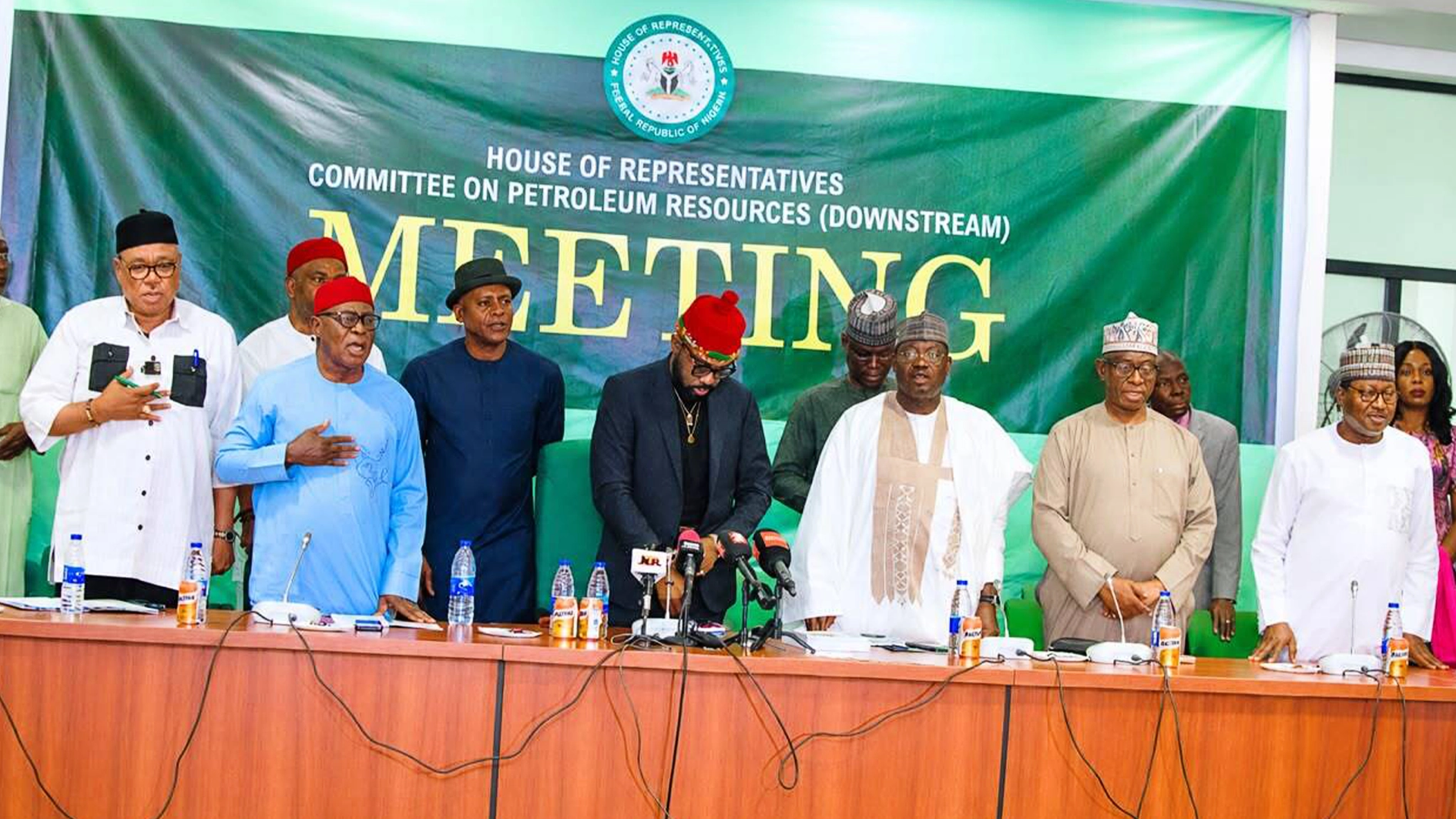
The House of Representatives Committee on Petroleum Resources (Downstream) has dismissed a petition accusing Nigerian National Petroleum Company Limited (NNPC) Executive Vice President (Downstream), Dr Mumuni Dagazau, of money laundering and conflict of interest.
The committee said the petitioners failed to provide evidence to support the allegations despite being given additional opportunities to do so.
Its chairman, Ikenga Imo Ugochinyere, announced the decision on Monday during a committee meeting at the National Assembly, Abuja.
He said the petition, submitted by the Coalition for Transparency and Accountability in Nigeria’s Petroleum Sector, was referred to a sub-committee, which invited both parties to appear between October 21 and 23.
According to him, the petitioners appeared on October 21 but presented only newspaper clippings to support their allegations. They failed to return on the following two days to provide further evidence.

“The petitioners appeared once, on Wednesday, 21st October. To support allegations as grave as money laundering, they brought nothing but newspaper clippings,” Ugochinyere said.
He added that Dagazau honoured the committee’s invitation through his representatives, who answered the sub-committee’s questions to its satisfaction.
The committee also considered a subsisting court order relating to the matter before adopting the sub-committee’s report and dismissing the petition.
“Having considered the report of the Sub-Committee, this Committee has today resolved to dismiss the petition in its entirety. No evidence was placed before us in support of any of the allegations,” he said.
Ugochinyere warned against using the National Assembly to pursue unsubstantiated allegations against public officers but said the committee remained open to petitions backed by credible evidence.
On the wider downstream sector, the committee backed the Federal Government’s efforts to cushion the impact of rising international crude oil prices following the removal of petrol subsidy.
Ugochinyere said crude prices had risen above $100 per barrel amid the conflict in the Gulf, putting pressure on domestic fuel prices.
He argued that restoring the former pump price regime would cost more than N20 trillion annually, based on the Federal Government’s estimates and daily petrol consumption of about 50 million litres.
The committee maintained that any relief should be targeted, temporary and affordable rather than a return to blanket fuel subsidies.
It cited NNPC Limited’s N66-per-litre petrol discount introduced on October 1 and the subsequent decision by NNPC Retail to sell petrol at cost for 30 days by foregoing its profit margin.
Ugochinyere said the measure was intended to ease the burden on Nigerians, particularly commercial transport operators, without drawing directly on public funds.
The committee also reported progress in domestic crude supply, saying local refineries received 97.4 per cent of their allocated volumes under the Domestic Crude Supply Obligation in the second quarter of 2026.
Between January and September, domestic crude accounted for more than 80 per cent of the crude received by Nigerian refineries. The committee also reported that local refineries’ contribution to petrol supply had increased by more than 75 per cent.
Ugochinyere said the committee had agreed with the Nigerian Midstream and Downstream Petroleum Regulatory Authority to raise national fuel sufficiency to 45 days within the current quarter and establish a National Strategic Stock capable of meeting up to 90 days of demand in 2027.
The committee’s reform priorities include amending the Petroleum Industry Act 2021, securing crude supplies for local refineries, regulating fuel imports, improving product quality and strengthening pipeline security.
It also plans to expand compressed natural gas (CNG) and liquefied petroleum gas infrastructure, establish fuel quality laboratories and set timelines for rehabilitating state-owned refineries.
Ugochinyere said more than 120,000 vehicles were now running on CNG, while NNPC Limited had acquired 500 CNG-powered trucks for product distribution and delivered 35 CNG hybrid buses to the Presidential CNG Initiative.
The committee commended NNPC management and Dagazau for their contributions to the sector’s reforms. It also passed a vote of confidence in President Bola Tinubu’s leadership of the reforms and in the Group Chief Executive Officer of NNPC Limited.
Separately, the committee granted its sub-committee investigating NIPCO Plc an additional 14 days to conclude its work.
Ugochinyere said the committee would continue to monitor the implementation of its downstream energy security roadmap and hold relevant agencies accountable.

