 Follow Us on Google News



 Follow Us on Google Discover
•‘I asked God if autism was a punishment’
A Non-Governmental organisation, Obimi, has decried the neglect of children living with disabilities in Nigeria, saying that poverty, stigma and inadequate support have forced some parents to keep their children indoors, denying them opportunities to learn, develop their abilities and participate in the society.
The organisation, which said it had spent 13 years advocating inclusion and supporting persons with disabilities, called for early diagnosis and intervention to help affected children reach their full potential.
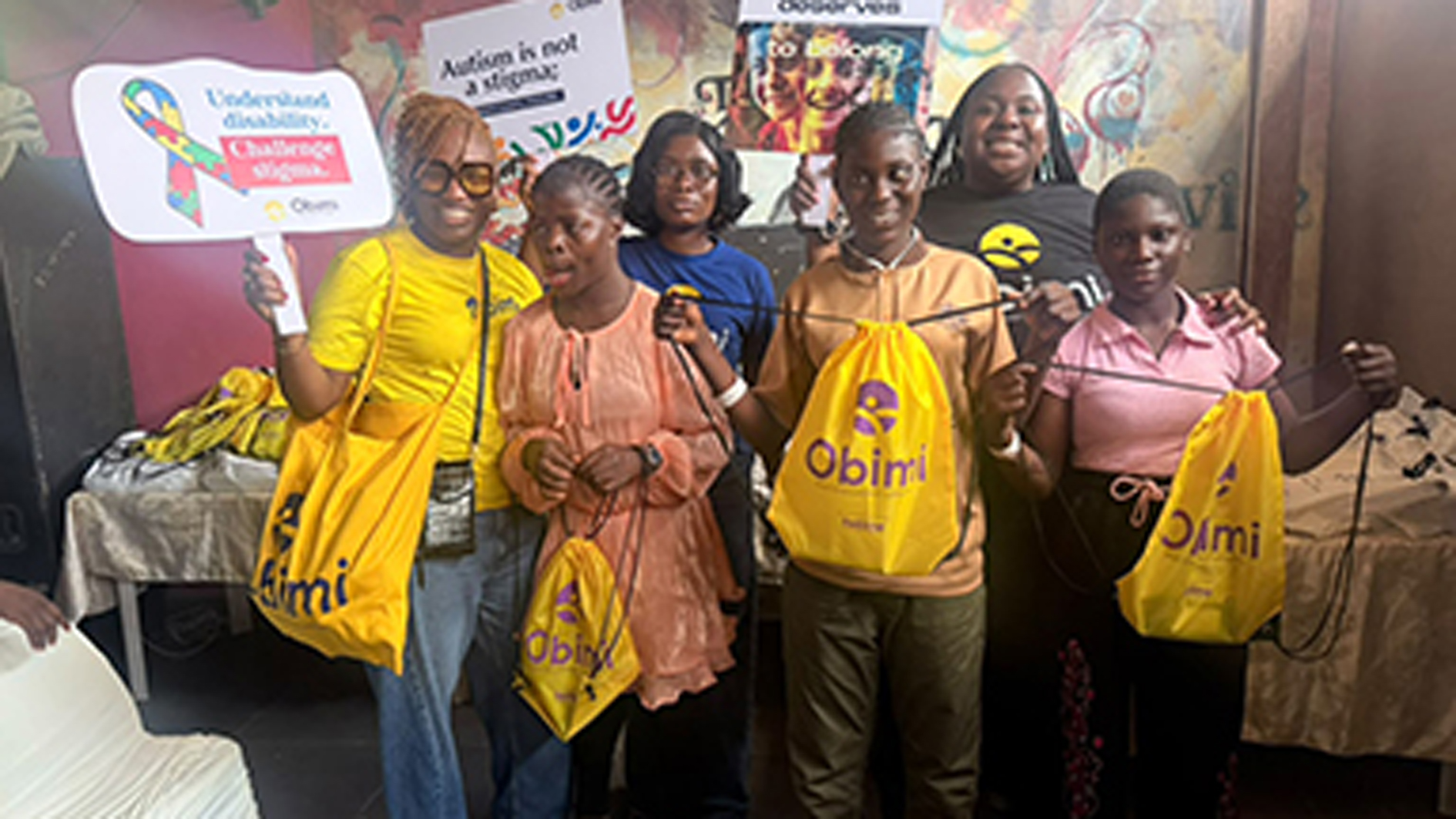
Its Founder, Helen Ewumi, made the call during a community outreach in Ijaiye, Itire, Lagos, where she distributed clothes, food items, school bags, notebooks and financial assistance to persons with disabilities and their parents.
Ewumi, a UK-based social worker, said caring for children with disabilities should be a national concern, urging individuals, organisations and government at all levels to work together to promote inclusion and eliminate stigma.
Obimi, which means “my parent” or “my parents”, according to the organisation, brought parents together to reassure them that they were not alone in their struggles and to encourage them to seek appropriate support for their children.
“We brought parents of persons living with disabilities together to show them that they are not alone in their struggles, that the condition was not caused by witches or witchcraft, and that it is not their fault. God gave them these children, and they need to take care of them,” she said.
Comparing support systems in the United Kingdom and Nigeria, Ewumi said stigma remained a challenge in both countries, but access to early intervention and specialised services made a significant difference.
She lamented that many Nigerian children with disabilities had never received speech and language therapy or adequate educational and psychological support, while some had never attended school.
“Through schooling, they can unlock their full potential, which otherwise remains hidden. It is stressful being a caregiver, but no one sees that aspect,” she said.
Drawing from her experience as a parent of autistic children, Ewumi said early intervention had helped her children thrive, attend school and prepare for independent lives.

“They can get jobs and get married. I think it is important to establish this in Nigeria and work with government at all levels, as well as organisations, to train teachers,” she said.
She said that the outreach was the first time she had undertaken the project in Itire, Nigeria, despite supporting persons with disabilities for more than 13 years.
“I have been doing this for over 13 years, and I decided to carry out this project in Itire, Nigeria, for the first time because Nigeria is my motherland. I want Nigeria to become number one in supporting children with disabilities,” she said.
According to her, the donations included food hampers, clothes, bags, notebooks and money to help families to access speech and language therapy.
Ewumi urged parents not to hide children with disabilities at home, noting that poverty and fear of discrimination often prevented families from seeking help.
“Take the children out; you are not helping them by keeping them at home. There is support out there, but poverty makes parents hide their children. We will keep supporting these children by giving them scholarships so they can thrive,” she said.
She added that Obimi planned to extend its outreach to schools, where it would provide assistance to children with disabilities and their teachers.
One of the beneficiaries, Rashidat Olatunji, a mother of a 26-year-old autistic daughter, described caring for her child as an emotionally, physically and mentally demanding experience.
She said the family had received little support from the government, prompting her to establish the Faizat Hope Foundation for Autism and Special Needs to help others facing similar challenges.
Olatunji said she had registered with the Lagos State Office for Disability Affairs (LASODA) and approached the agency for assistance but was told that it was not yet her turn to receive support.
Recounting her daughter’s early years, she said the family initially had little knowledge of autism and struggled to understand the developmental delays she observed.
“We did not know anything about autism when she was born. Her neck was not stable until she turned one, and she could not crawl. She only started walking after the age of three. I was confused and worried as a mother,” she said.
Olatunji said she initially sought help from herbalists, pastors and imams, while her daughter was given herbal concoctions because the family did not understand her condition.
It was not until her daughter was 11 that she was taken to a psychiatric hospital, where she received a diagnosis of autism and the family learnt more about the condition.
“Faizat is my first child and my only daughter, and she is still non-verbal at 26. I asked God if it was a punishment, but later, I attended a special needs therapy certification training where I learnt about early intervention,” she said.
Olatunji expressed regret that she had not known about early intervention earlier, saying greater awareness could have helped the family seek appropriate support sooner.
She, therefore, urged parents who notice developmental delays in their children to seek medical assessment promptly rather than resort to unverified treatments.
Olatunji thanked Obimi for its support, describing the intervention as an encouragement to families raising children with disabilities.

