 Follow Us on Google News



 Follow Us on Google Discover
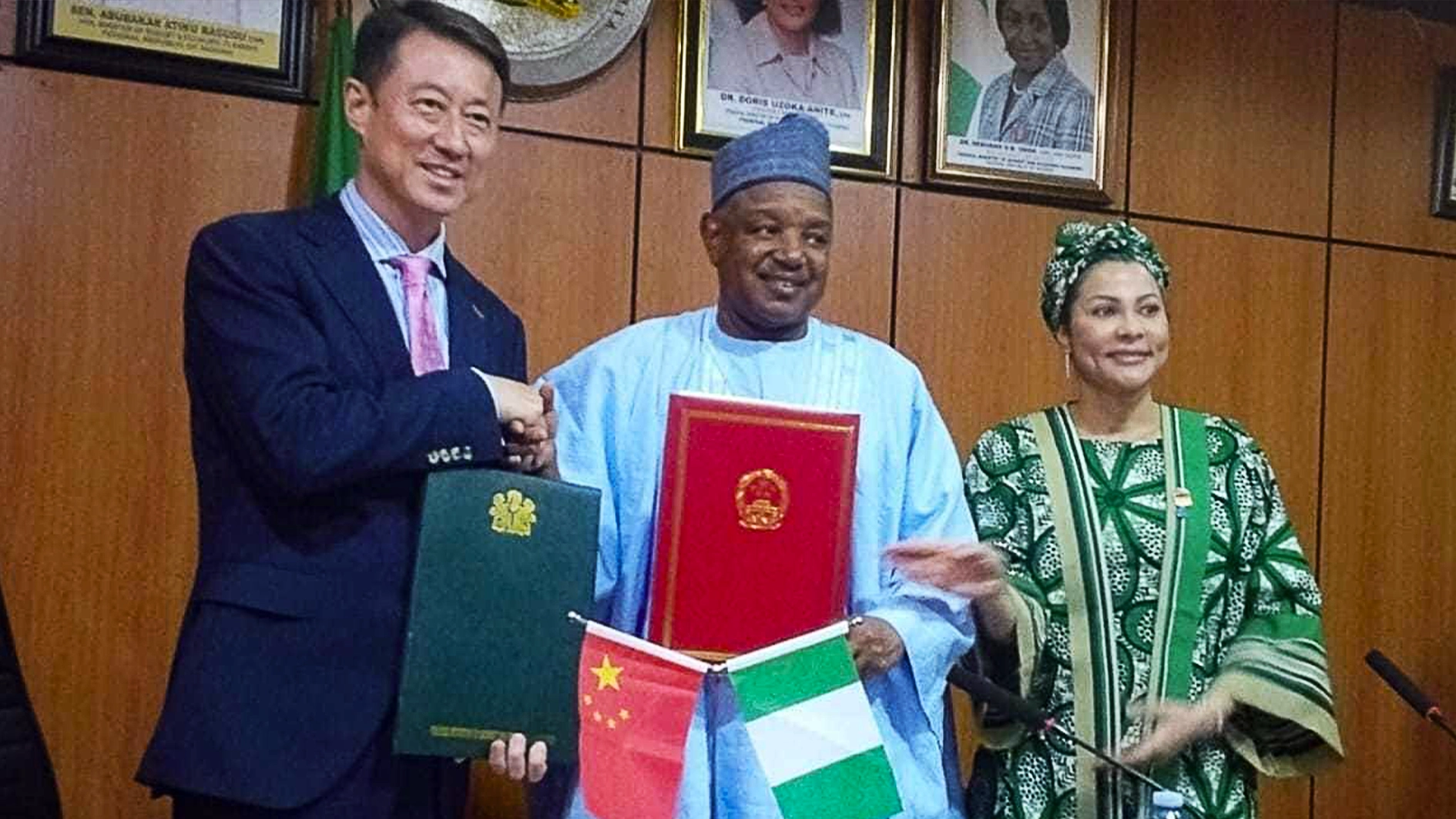
CHINA and Nigeria yesterday signed a RMB 200 million (about $30 million) in grant assistance agreement to finance local development projects designed to deliver quick, tangible results that will directly benefit citizens.
The exercise, which was held at the Ministry of Budget and Economic Planning office, Abuja, had both governments’ representatives agreeing on projects that address local needs and support Nigeria’s development priorities.
Chinese Ambassador to Nigeria, Yu Dunhai, said the grant demonstrated his country’s commitment to Nigeria’s economic and social development, also reflecting the strong partnership between both countries
He said the funding is to support what China described as “small but beautiful” projects, designed to achieve meaningful results with modest investments and improve people’s livelihoods. He however explained that the corporation has no strings attached but purely based on mutual respect and fully respects Nigeria’s strategic autonomy.
“The funds will be used on projects mutually agreed upon by our two sides. We call them ‘small but beautiful’, meaning projects that require less input, deliver quick returns and directly benefit the livelihood of Nigerian people”, Dunhai said.
The ambassador expressed confidence that the grant would be judiciously utilised towards the intended result.

“Chinese assistance fully respects Nigeria’s sovereignty and aligns with Nigeria’s own development goals. There are no political conditions or strings attached whatsoever.”
Dunhai added that the grant was part of efforts to implement agreements reached by the leaders of both countries and the outcomes of the Forum on China-Africa Cooperation (FOCAC) summit held in Beijing last year.
He noted 2026 marked the 55th anniversary of diplomatic relations between Nigeria and China, adding that their ties have strengthened since both countries elevated their relationship to a comprehensive strategic partnership in 2024.
According to him, bilateral trade between Nigeria and China reached $18 billion in the first half of the year while Nigeria’s exports to China increased by 80 per cent following the introduction of the zero-tariff policy, which offers Nigeria opportunities to expand exports, attract investment and move into higher-value industrial production.
Dunhai urged both countries to make effective use of the preferential trade arrangement before it expires on May 1, 2028.
In his remarks, Minister of Budget and Economic Planning, Senator Abubakar Atiku Bagudu, welcomed the grant and expressed appreciation to the Chinese government for its continued support for Nigeria’s development.
“Our responsibility is to translate this commitment into tangible benefits for all Nigerians”, Bagudu said, noting that his ministry, working with the China-Nigeria Strategic Partnership Office, has compiled proposals for small-scale projects submitted by states.
He said the proposals would be reviewed and consolidated to identify interventions capable of addressing local needs and advancing national development objectives.
Bagudu also invited Chinese experts to examine the results of an economic mapping exercise covering Nigeria’s 8,809 wards, saying their technical input could help accelerate development across the country.
He said Nigeria could benefit from China’s experience in tackling poverty through targeted interventions at the grassroots, adding that the government was willing to work with Chinese experts to identify ways to speed up development in all parts of the country.
The minister reaffirmed Nigeria’s commitment to sustaining cooperation with China in ways that delivered mutual benefits and supported the country’s development goals.
He said the grant agreement marked another phase in the partnership, with the government expected to ensure that the selected projects delivered tangible benefits to communities.

