 Follow Us on Google News



 Follow Us on Google Discover
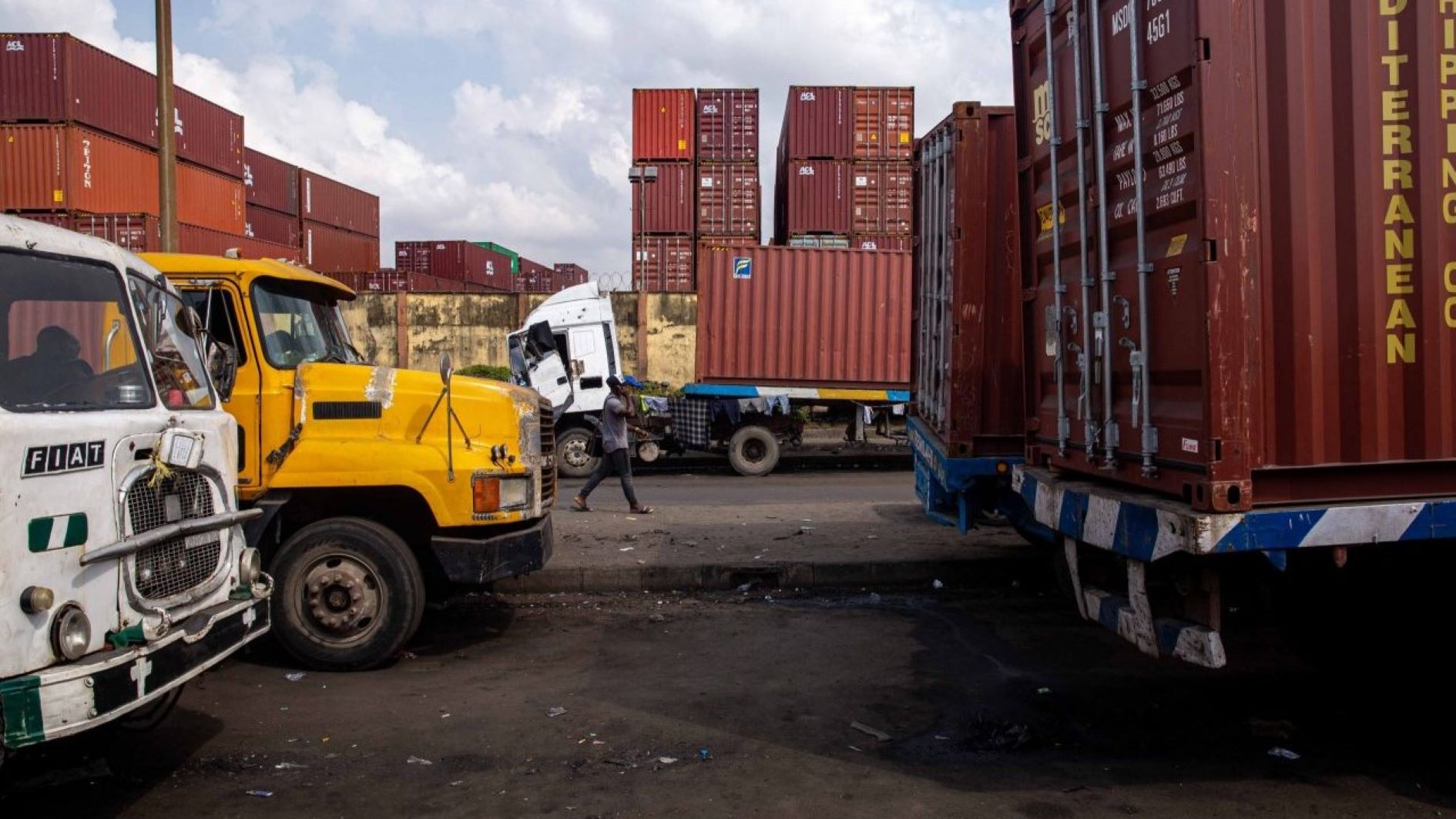
• ACTOAN claims illegal charges cost truckers 25% of trip profits
• Faults NPA’s manifest requirement despite e-call up system documentation
The Amalgamation of Container Truck Owners Association of Nigeria (ACTOAN) has lamented the increasing difficulties, delay and N50,000 additional costs associated with moving export-laden containers into the port, despite the Federal Government’s efforts to boost exports and revive the economy.
The ACTOAN alleged that for every export container, truckers are forced to pay a whopping sum to officials of some government agencies and terminal operators, saying it is all in the name of a corrupt system; it amounts to about 20 to 25 per cent of their profit per trip.
In a cry for help to the Presidency yesterday, Chairman of ACTOAN, Ridwan Bello, alleged that export-laden containers with all the proper documentations, including those of the electronic call-up system, are forced to pay approximately N15,000 to officials of the Nigeria Customs Service (NCS) before a container can be dropped at the port.
Bello noted that drivers who failed to make the payment faced delays and could eventually have their trucks clamped by agents of the Nigerian Ports Authority (NPA) for non-compliance.
The ACTOAN chairman further claimed that upon reaching the terminal, the terminal operators also demand payments for offloading export containers, with the charges sometimes reaching N10,000 per container, among other costs.

According to Bello, the combined financial burden on truckers could reach N50,000 per export container, significantly reducing their earnings and threatening the sustainability of their businesses.
He said the alleged charges were undermining efforts to promote non-oil exports and sustain haulage businesses, citing Nigeria’s non-oil export earnings, which reached a record $6.1 billion in 2025, representing an 11.5 per cent increase from the $5.46 billion recorded in 2024.
According to him, the situation at the Tin Can Island port corridor contradicts the government’s export promotion drive, as truckers face additional hurdles even after completing the necessary documentation and obtaining access through the electronic call-up system.
The ACTOAN chairman said that the introduction of the electronic call-up system was intended to eliminate human interference and promote port efficiency.
Bello also said that trucks scheduled for port access through the call-up system should not be subjected to unnecessary additional hurdles that could delay their operations.
The Association, however, alleged that the manifest had become an instrument of extortion along the Tin Can corridor, calling on the NPA management to explain to the truckers whether the electronic call-up system had become ineffective and why a man-made manifest that never existed before is now disrupting truck management operations into the ports.
Bello questioned how haulage operators could remain profitable and expand their businesses under what he described as a system of multiple charges and alleged corrupt practices.
He said that the additional costs and delays could undermine the competitiveness of Nigerian exports and raise concerns that the agencies responsible for facilitating trade make the process increasingly burdensome.
He therefore called for an explanation of what he described as the NPA’s and other agencies’ constantly changing policies, alleging that the arrangements were imposing unsustainable financial demands on truck owners.

