 Follow Us on Google News



 Follow Us on Google Discover
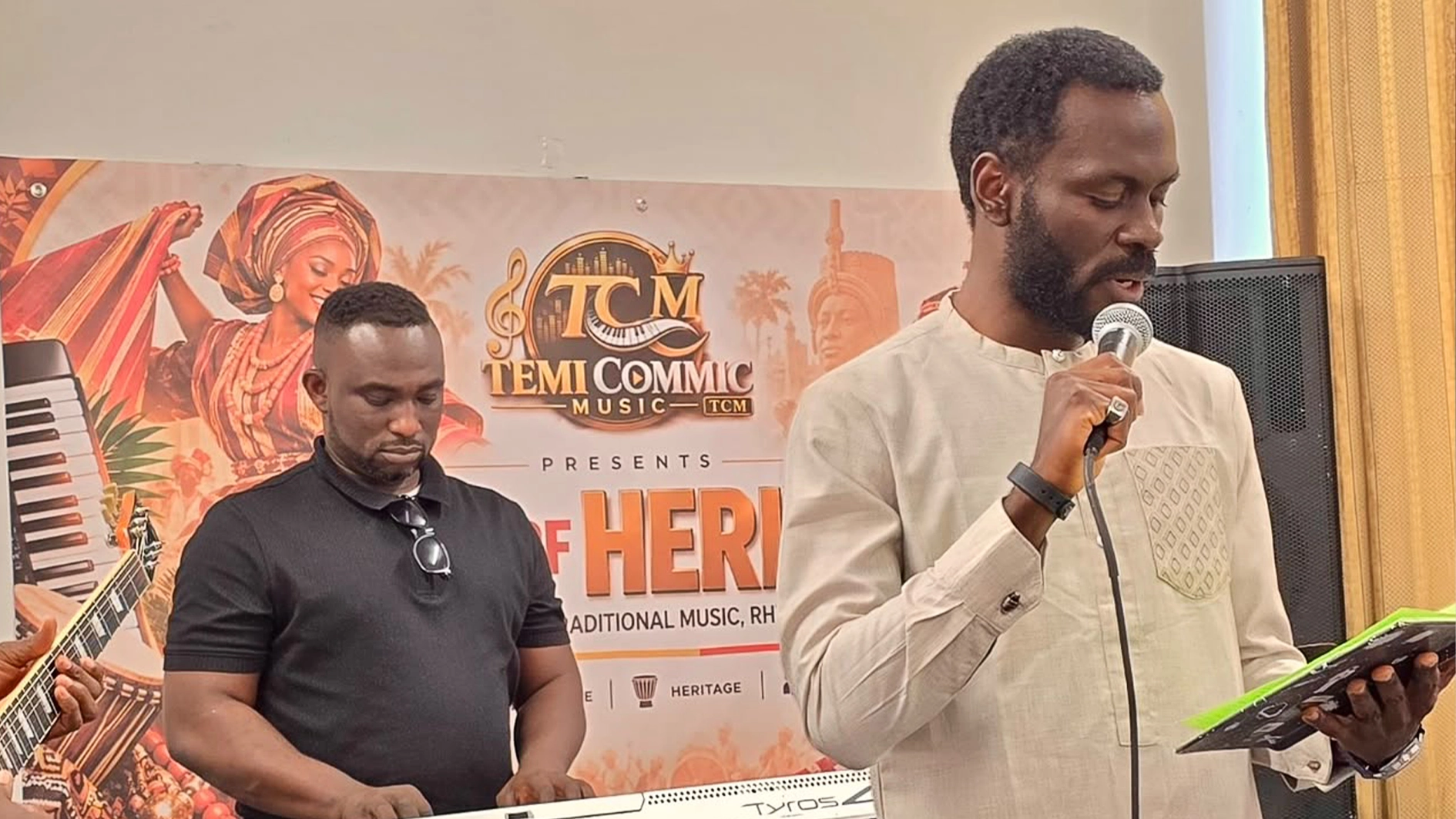
THERE are artists who work with instruments, and there are those who make an instrument of the human voice. For Olugbenga Fayehun, popularly known as Gbenga, poetry offers a way to explore the experiences, memories and cultural connections that shape how people understand themselves.
That interest found a fitting setting at Keys of Heritage, a celebration of Nigerian music and cultural identity held on September 20, 2026 at the Agora Centre in Bletchley, Milton Keynes.
Organised by Temi Commic Music, the event brought together different forms of artistic expression under the theme “A Live Musical Experience That Connects Tradition to Tomorrow”.
Gbenga’s spoken-word contribution introduced poetry into a programme celebrating rhythm, music and heritage. His participation raised a question that sits at the heart of contemporary cultural practice: how do artists preserve the meaning of inherited traditions while finding new ways to communicate them?
Gbenga reflects on the connection between spoken word, sound and cultural identity in a post event interview.
Your presentation at Keys of Heritage focused on sound and culture. What interests you about that relationship?
“Sound carries more than melody. It can remind people of home, bring back memories and connect them to experiences they may share with others. With spoken word, I work with language, but rhythm is still important. The way you deliver a line, where you pause and how you use your voice can change how people receive the message,” he remarks.
The event celebrated Nigerian traditional music. Where does spoken word fit into that kind of programme?
“I see spoken word as part of a wider tradition of telling stories. Across African cultures, stories, proverbs and music have helped people pass knowledge from one generation to another. Spokenword has its own identity, but it can still engage with those traditions,” Gbenga says.
When Poetry Meets Rhythm
The relationship between poetry and music is not difficult to recognise, although each form has its own demands. A musician can use melody and rhythm to establish an atmosphere; a spoken-word performer works through language, cadence and vocal expression. Both depend on timing and the ability to hold an audience’s attention.

At Keys of Heritage, Gbenga’s appearance placed these qualities within a wider cultural programme. The event’s emphasis on Nigerian artistic traditions provided a context in which poetry could be considered alongside music as another way of expressing identity and preserving memory.
For a spoken-word artist, the stage is a space where language becomes immediate. A poem that might appear reflective on the page can acquire greater urgency through performance. Equally, a carefully measured delivery can allow a line to settle, giving listeners time to consider its meaning.
Do you think younger audiences are finding new ways to connect with heritage through live performances?
“I believe there is room for that connection. Young people may encounter culture through different forms, including music, poetry, theatre and digital media. What matters is that the meaning is not lost. We should create opportunities for people to understand where certain traditions come from and why they still matter today.
His answer points towards a broader challenge for cultural events. Heritage cannot remain relevant simply because it is celebrated on special occasions. It needs to be communicated, experienced and discussed in ways that allow people to develop their own relationship with it.”
One Heritage, Many Expressions
The theme of Keys of Heritage acknowledged that Nigerian culture cannot be reduced to a single sound or artistic tradition. Its message, “One Heritage. Many Rhythms. One People”, placed unity alongside cultural diversity, recognising the many forms through which heritage can be expressed.
For Gbenga, spoken word offers one route into that diversity. Poetry can explore personal experiences while opening up questions about community, belonging and identity. Its flexibility allows the performer to move between reflection and commentary, making the art form particularly suited to conversations about cultural memory.
What would you like audiences to take away from your work at an event like this?
“I would like people to think about the stories behind the sounds and traditions they encounter. Culture is not just something we inherit; it is something we participate in. Every generation has a responsibility to understand it, appreciate it and find meaningful ways to pass it on,” he confesses.
The response to that idea need not be limited to Nigerian audiences. Cultural events in the United Kingdom bring people from different backgrounds into shared spaces, creating opportunities to encounter traditions beyond their own experience.
Music and poetry can help make those encounters more accessible, giving audiences a point of connection even when they do not share the same cultural history.
The Work Beyond The Stage
Organised by Temi Commic Music, Keys of Heritage sought to connect traditional Nigerian expression with contemporary performance. Its combination of music and spoken word reflected an understanding of culture as a continuing creative process rather than a fixed collection of practices.
Gbenga’s contribution formed part of that wider ambition. By bringing poetry into the programme, he offered another way to explore the relationship between sound and identity, while drawing attention to the expressive possibilities of language in a live setting.
Looking ahead, how do you see spoken word contributing to the preservation of cultural heritage?
“Spoken word gives artists room to tell stories in their own voices. It can preserve memories, raise questions and encourage conversations between generations. For me, the important thing is to remain open to new creative possibilities without losing sight of the experiences and traditions that inform our work,” he says.
That balance between continuity and change is central to the future of cultural performance. Artists must be able to engage with inherited traditions while making work that speaks to the audiences and circumstances of their time.
At Keys of Heritage in Milton Keynes, Gbenga’s spoken-word appearance brought that relationship into focus. The event provided a platform for different artistic forms to meet around a shared interest in Nigerian culture, while his contribution highlighted the place of poetry within a broader conversation about rhythm, memory and identity.
Heritage survives through more than remembrance. It survives when people continue to give it a voice, find meaning in its stories and pass those stories on in ways that speak to the next generation.

