GDN SIDEBAR
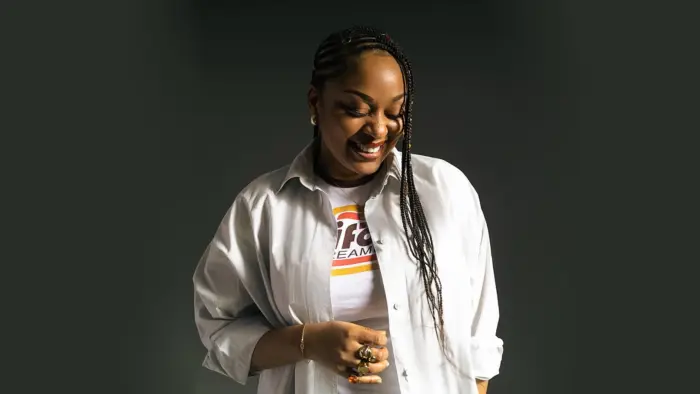
After 16 years on the radio, Gbemi Olateru-Olagbegi is bringing her interviewing experience to The Fashion Roundtable. As the podcast enters its second season, she speaks with MUSA ADEKUNLE about the first season’s revelations, the cost of telling fashion’s stories, and how building her shoe brand, Gbemisoke, shaped her understanding of the business.
Why did you leave radio?
I left radio because I felt like I had reached the peak of my radio career. I had interviewed pretty much everybody. The list is long, from a sitting president to Nigerian and foreign celebrities. I had seen everything.
I had been on radio for 16 years at that point. When I joined radio, we were still using CDs. Then we moved on to software. I had seen the changes in technology, and I was asking myself, “What else is there?”
It started to feel the same for me, so I felt it was time to go. When I feel uneasy like that, I know it is time to pivot, move, and do something else.
What drew you to fashion and led you to start a shoe business?
I have always loved fashion. I have always been interested in the world of fashion and pop culture.
I started Gbemisoke Shoes in 2015 because I love shoes. They are my number one accessory. I could buy multiple pairs of shoes but stick to one or two bags for the rest of the year. That is the sort of person I am.
I also started the business because I wanted to solve a problem. Women who wear above a size 10 find it difficult to find shoes. It is not just a Nigerian problem; it is a global problem. I am one of those women. I wear a size 11, which is a 43.
There were so many women like me who were not content with the ugly shoes often available to us just because we wear bigger sizes.
Even if you walk into Zara today, for example, you most likely will not find a size 43 for women. If you do, it might be one pair in the whole store. That is why I started Gbemisoke Shoes.
 How did your interest in fashion develop into The Fashion Roundtable?
The fashion podcast came about because I realised there was more to the world of fashion beyond the beautiful clothes and aesthetics.
There is a whole fashion ecosystem making sure people look their best. It is not just the designers. People always think of fashion designers and models, but there are photographers, creative directors, pattern makers, beaders and stylists.
In 2025, I started creating content with Nigerian fashion brands. It started as, “Let me just do a few videos,” and I ended up working with about 50 fashion brands in that year alone.
I would go to a store, try on a few pieces on camera and ask my audience to pick their favourite outfit. With social media, it is not just about posting. You have to get your comments buzzing.
I was asking myself how I could do that without controversy. If you want attention on social media now, all you have to do is say something crazy or slightly controversial.
I wanted to create content that tied in with my interests, and one of my interests is fashion.
While visiting these stores and trying on outfits, I would speak to the founders or creative directors, and they would tell me their stories. Some would say they went through a lot. Some would say they sold their houses.
I would think, “Nobody knows this story. They just know you make nice clothes. They do not know how you got here or how many times you quit or almost quit.”
Then I searched. Podcasts are popular right now. There are sports, movie and music podcasts. There is a podcast for everything, but there were not many, if any, long-form fashion podcasts in Nigeria. So I decided to start The Fashion Roundtable.
 What challenges did you face when you started Gbemisoke Shoes?
I started Gbemisoke Shoes in 2015. At the time, logistics were challenging, particularly getting orders out to customers on time.
There was also a capital issue, especially because the shoes are made outside the country.
It took a lot of time and effort to find factories that would agree to make shoes for women with big feet. Most fashion brands stop at size 10, if they get there at all, so most factories are used to stopping at that size.
I had to do a lot of research, travel and convince factories to work with me because we go up to sizes 46 and 47.
There are women who wear those sizes, and they are not necessarily plus-size women. Some are slim and tall and just have bigger feet. Those were my core customers.
Sometimes, factories would say they wanted a minimum order of 2,000 pairs. I would ask, “Am I Zara? Am I ASOS? Who am I to be making 2,000 pairs?”
Logistics were another issue. Same-day delivery was almost unheard of then, but things have gotten better.
We also had to convince people to shop online. People would say they wanted to come to our store, and we would explain that we did not have one. That was never the business model. It was supposed to be online.
Once in a while, we would do pop-ups, but we were strictly online.
A lot of women were not sure of their shoe sizes, so we had to do a lot of teaching and coaching. Imagine someone saying they want to buy shoes, but when you ask their size, they say, “I actually do not know. Let me go and check.”
I think people are better informed about their sizing now.
Foreign exchange was also an issue. When I started the business, it was about ₦180 to a dollar or something like that. Then, in the same year, it went to ₦300.
 How much did you invest in the business at the start?
It was about three or four million naira. I also did a lot of travelling, and that was part of the expenses. I had to visit different factories.
Who was your first customer?
It was Blackmagic, the artiste. When I announced the business and the press releases went out, he was the first person to reach out and say he would like to buy a pair for his mum.
Did being a recognised media personality help the business?
Definitely. It helped my business. At the same time, I feel some people did not take us seriously. A lot of public figures open businesses, and after a couple of years, those businesses no longer exist. Some people felt it was just publicity, but we are still here. Has it been easy? No.
In the beginning, people did not really take us seriously, but being a media personality helped with awareness. Absolutely.
What was your biggest fear when you were starting?
That it would not work. After spending about a year researching and finally getting a factory, my first set of shoes were flats because that was what I could afford. It was one style in two colours.
About 600 pairs arrived in February 2015. I do not think I realised how much storage space I would need.
I had a tiny apartment in Oniru then. I kept some in my living room, some at my parents’ house and some in a colleague’s garage.
I was so overwhelmed by the quantity that I would just walk past the shoes in my living room.
One day in May, I told myself, “You cannot continue to ignore 600 pairs of shoes. You need to start.”
I was afraid. What if people did not buy? What if people laughed at me? There were so many what-ifs, but I decided to start.
My next-door neighbour was also selling shoes, and she suggested putting them on e-commerce platforms.
I also had to think about how I would deliver shoes to customers, so I signed up on Jumia, Konga and the rest. That was how I started.
 Which revelations from your guests in the first season of The Fashion Roundtable surprised you most?
I spoke to so many different people in season one, including creative directors like The Style Infidel, who revealed that some people pay as much as $8,000 for their wedding aso-oke.
I remember that episode went viral because I could not believe it, and he was being honest.
I also spoke with two of the most stylish men in Nigeria, and it was interesting to hear their perspectives on the Nigerian fashion scene.
Then there was Kiki of Zephans & Co, a womenswear brand that has been around for about 10 years.
When I became interested in speaking with her, I had heard that she had sold 35,000 pieces in one year. By the time I spoke to her, she said they had surpassed that. They had crossed 100,000 outfits sold in a year.
It was amazing and inspiring to hear that Nigerian brands were doing big things. They might not make a lot of noise, but they are doing a lot.
Based on those conversations, what are the biggest challenges facing people trying to make a living in fashion?
One of their biggest challenges is that the people they are trying to sell to have limited spending power.
Before people think about clothes or shoes, they think about feeding themselves, getting to work and where they are going to live.
Another issue people mentioned was not having enough fabric.
Typically, if you are a fashion brand in Lagos, you might go to Balogun, Yaba or even as far as Aba to buy fabric.
You might not find enough of a particular fabric because a lot of the fabric that reaches our markets comes from samples from factories abroad. There might be only 50 yards.
You make 10 or 20 dresses, post them online, and people love them. Then you receive 100 orders, and everybody wants that particular fabric. What do you do?
Some people go as far as China or Turkey to buy fabric or produce their own. Some print or create custom fabrics because they are tired of disappointing customers.
There is also the issue of staff. If you own a fashion brand in Nigeria, especially if you make the outfits, you have to factor in housing your staff.
If you do not, they may show up late. If your business is in Ikeja, for example, some staff may be coming from far away and spending hours on the road. Why not house them nearby so they can report to work?
Apart from housing, some people provide transportation or feeding to keep their staff happy and comfortable.
These are factors you have to consider when building your business.
When people complain about the cost of Nigerian fashion, these businesses are going through a lot. You have the factory where the tailors work. If you have a walk-in store, that is another expense. Then there is accommodation for staff, electricity and everything else. It is very expensive.
 Have there been subjects that potential guests were uncomfortable discussing?
There were people I wanted on the show for season two because they had been victims of plagiarism and imitation in the fashion industry.
It can be upsetting and disappointing to come up with a design, post it and, within three to five working days, have another Nigerian brand copy it completely.
They may use inferior fabric, so theirs is cheaper. Or someone in China copies your design and floods Balogun with dupes.
Some people have created their own logos and monogrammed outfits, and there are fakes being sold on TikTok and in the market.
Some people were not comfortable discussing that.
When we reach out, we explain what we want to focus on. Some would say, “Not right now.” Some were still in court and would say it was not a good time, or that we could discuss it when the court case was over.
What has producing the show cost you, and how do you plan to make it sustainable?
In the past year or so, all of us in Nigeria have experienced rising prices, including food, transportation, petrol and diesel. That also affects production costs.
If you want to rent a studio, they are factoring in the cost of diesel. Then you have to pay your crew and rent equipment you may not own. The cost of production has gone up.
When planning the show, I reached out to many brands I thought would be a great fit. I received so many noes.
At first, I was discouraged, but I told myself to keep going. I kept pitching, attending meetings and sending follow-up emails.
In the first season, we were lucky enough to partner with Credit Direct. For this season, we are partnering with Flutterwave.
There is a joke on social media about wondering why a business is untapped, then getting into it and realising why. It is expensive.
It is expensive to shoot, and you do not want to shoot anything tacky. You want it to look good. You want the quality to be good, and all those things cost money.
One of my guests last season spoke about how fashion suffers when it comes to funding.
When it comes to music, brands are excited. They are chasing music stars, trying to sign them as ambassadors, work with them or pay them hundreds of millions of naira to perform at events and Christmas parties.
If you watch a typical Nigerian YouTube movie, you see product placements from different brands.
For some reason, fashion has still not reached that level, and I do not know why.
I need brands to pay attention, especially now that Nigerian fashion is getting recognition around the world. This is the time to partner and invest in the fashion industry.
 As a woman in broadcasting and business, have you faced treatment that your male colleagues did not?
Let me start with radio. You would interview a celebrity or a top government official, and the moment the microphone was off, they would ask for your number.
It was not in a “Let us just be friends” way. It was beyond that, and you would be thinking, “I am just here to do my job. Please go. Thank you.”
Another aspect was erasure. I had a long career and was able to achieve a lot and work across different platforms.
At some point, I noticed that if you do not speak about your achievements, the things you have done and how you have contributed to a station, your achievements can get erased.
I always encourage female professionals, especially, to post about their achievements and speak about what they have done.
Do not play humble so that people think you are not doing anything.