 Follow Us on Google News
 Follow Us on Google Discover
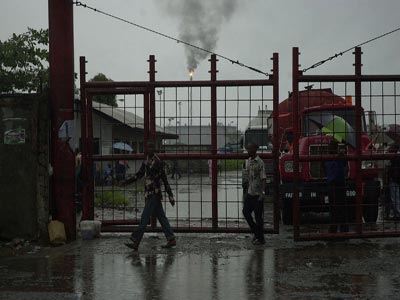
AS President Muhammadu Buhari has offered to supervise the Petroleum Ministry, stakeholders in the oil and gas sector have emphasised the need to avoid political interference in the management of oil and gas resources, pass the Petroleum Industry Bill (PIB) and build refineries in the country.
Proffering short and long term agenda for President Muhammadu Buhari, President of the Nigerian Association of Petroleum Explorationists (NAPE), Chikwendu Edoziem, said that the minister for Petroleum Resources should cease to be chairman of Nigerian National Petroleum Corporation (NNPC) board.
Edozien stated that the position of the Minister of Petroleum Resources, as NNPC’s Board chairman would make nonsense of the serious-minded reforms currently going on in the corporation, as the sector needs to be distanced from politics if it must become commercially viable and ready compete.
He noted that the Minister of Finance is never the chairman of CBN board, and that has allowed the CBN function professionally without undue political interference and that should be done to the NNPC.
Edoziem stressed the need for the Federal Government to build micro refineries in the ‘Niger Delta Economic Corridor’ pooling the current burgeoning illegal and unsafe refinery operators.
To increase exploration activities in the country, Edoziem called on the administration to provide enabling environment and incentives to increase exploration opportunities, especially, in high-risk frontier basins and under-explored deep high pressure high temperature plays.
According to him, the cost of deep-water exploration is so high that the oil companies will not be able to carry out any activity without adequate incentives and the right fiscal terms.
He said that potential revenue to Nigeria, employment opportunities for young Nigerians and businesses are lost due to non-performance of a significant number of oil block/acreages that were awarded during past bid rounds.
Edozien stated: “Fiscal instability, significant gaps and uncertainties in the oil and gas regulatory policies and laws have resulted in loss of investor confidence and preferential investment in other countries in West Africa and other regions by International Oil Companies. There are concerns that value may be further eroded through attempts by the executive arm of government to open fresh debates in the National Assembly in attempts to pass the Petroleum Industry Bill (PIB).
Edoziem said that the PIB should be unbundled while the relevant sections of the extant Petroleum Act be amended to meet the current realities, to position Nigeria to be globally competitive as an oil and gas producing country.
He stated: ‘‘Procurement and contracting cycles in Nigerian oil and gas industry is about 36 months, making it the longest and most inefficient in the world. The long contracting cycle results in high levels of uncertainties in costing and planning, thereby creating a sluggish business climate.
“Insecurity, oil theft and illegal refining are bigger threats to the oil and gas industry in Nigeria than the declining price, which is rather a reflection of an over-supply of oil in the world market’’
Dwelling on the need for more refineries, the NAPE president urged the Federal Government to adopt a strategy of standardised design, streamlined and cumbersome-free approval process, to ensure an efficient turn-around time for construction to full operation of 12 months. “There is an opportunity to reactivate the dormant licenses for private modular refineries and eliminate the perennial fuel scarcity caused by a lack of local refining capacity’’
He also condemned the procurement and contracting cycle in the Nigerian oil and gas industry, which is said to be no less than 36 months, thereby making it the longest and most inefficient in the world.
“The long contracting cycle results in high levels of uncertainties in costing and planning thereby creating a sluggish business climate.”
Edoziem also advocated for the renaming of the Department of Petroleum Resources (DPR) ‘Petroleum Directorate’ to reflect the proposed changes, increased role and overarching autonomy.
According to him, the full potential of DPR would not be realised if it were empowered as an independent oil and gas industry regulator.
He advocated the provision of an enabling environment and incentives to increase exploration opportunities, especially in high-risk frontier basins and under-explored deep High Pressure High Temperature (HPHT) terrain.
The NAPE president said that NipeX is further optimised to reduce contracting cycles for services and projects to a maximum of three months and nine months respectively, warning that the lowest bidder concept is being abused through ridiculously low bids.
In this regard, he advocated that for low to medium cost technical services bids, propositions that are significantly outside operator estimated cost ranges be disqualified.
Also, the Managing Director, Frontier Oil Limited, Dada Thomas, said that there is need for the president to remove the uncertainty that the lack of passage of the PIB has caused. “This has essentially blocked investment in Nigeria’s exploration and production, E&P sector, both by international investors and in some cases by local investors, by ensuring that as fast as it can reasonably do so, it passes the PIB,” he added.
Thomas also argued that the PIB could be broken into sections, which are not fractious. “For instance, the fiscal element, which causes so many problems can be easily passed very quickly. The one that is contentious can be addressed later. Therefore PIB passage is a topical matter that needs to be addressed.
“The second thing that needs to be addressed is the corruption in the petroleum sector, both upstream and downstream. The downstream sector witnessed massive corruption in petroleum subsidy. The upstream sector is suffering corruption of lack of will on the part of government to address pipeline vandalism, crude theft and all sorts of irregularities, which is denying the country of much needed revenue.
“The third thing that needs to be done is to find a way of making Nigeria a more attractive investment destination for Exploration and Production investors; that links to the PIB to a large extent. “The last thing in my view is that there is the need to enhance the development of the domestic gas sector so that we can unlock the potential of the power sector and the power sector reform, which is largely hinged on gas.
If you talk to anybody today, what the problem in the power sector is, you will be told it is non-availability of gas. Those are the four key things to be focused on by the new government,” he added.
Speaking at the Nigeria Annual International Conference & Exhibition (NAICE) of the Society of Petroleum Engineers (SPE) Nigeria Council, recently in Lagos, Managing Director, Deep Water District, Total E&P Nigeria Limited, Elisabeth Proust, who was represented by the Deputy Managing Director, Ahmadu-Kida Musa, urged the Federal Government to provide the right enabling environment for the development of the oil and gas sector.
Proust added that the country would benefit domestically from the multiplier effect of natural gas to diversify its economy, create jobs and boost the economy.
Explaining further, she said, “Nigeria has tremendous gas reserves and should be self-sufficient in both gas and power. Only about 46 trillion cubic feet (TCF) of the reported 178 TCF of discovered gas resources is currently developed. A joint effort by all stakeholders is needed to unlock the remaining 133TCF of gas to power the country and boost its economy.”
The Managing Director disclosed that Nigeria’s gas production had been “hampered by high development costs and low gas prices, unfavourable fiscal regime, inadequate infrastructure, prolonged project and contract approval process, payment insecurity,” among other factors.
She recommended that the government should put in place the following conditions to unlock the huge potential of the sector: Proper commercial and fiscal terms that enable gas development; Settlement of outstanding gas and power debts and ensuring payment security and promote willing-buyer/willing-seller market.
According to her, over-regulation, unworkable domestic gas obligations and penalties, price aggregation and allocation of Gas Process Operators (GPOs) should either be reviewed or discontinued.
She stated: “Government should ensure a power tariff level that provides a commercial return across the entire gas-to-power value chain and set globally competitive fiscals for gas, considering the total government take and returns sufficient to attract the required investment. Production Sharing Contract gas terms must be agreed; otherwise deep water gas will not be developed. Nigeria lacks adequate backbone infrastructure to enable sufficient delivery of gas to off-takers. Incentives are required to attract required investment in gas infrastructure.”

