 Follow Us on Google News
 Follow Us on Google Discover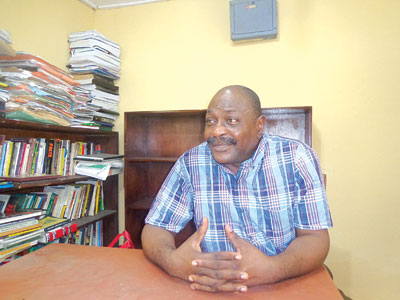

Professor of Political Science and International Relations, Kayode Soremekun, in this interview with MARCEL MBAMALU and IKECHUKWU ONYEWUCHI, counts the costs of delayed polls and warns that ominous signs are being sent to the military.
INEC has just postponed the 2015 general elections, what do you think this portends for the polity; what can INEC do differently in six weeks?
LET me begin with the style, before touching on the substance. By the style, I mean that I was very curious by the fact that this particular decision was initially floated outside the shores of this country by a top security operative.
To that extent, I must say that, as a Nigerian, I felt diminished; because if you look at the counterfactual, suppose the election was supposed to be held in Britain, will the British officials come here? So, to that extent, I think our leaders should learn to respect this country and themselves. The kind of respect they give to this country will invariably rub off on all.
I am saying this if only because, as a student of international Relations, I have also been observing the International dimensions of the elections.

Again, I was humiliated by the fact that the American Secretary of State came to Nigeria and virtually lectured and talked down on our leaders. When one sees such things, one begins to feel like our leaders don’t have a sense of what it means to uphold the integrity of this country. How can somebody tell us that he would deny our leaders Visas if they don’t do XYZ? It is very humiliating. And he must know what he is saying, because he knows that all of them have probably applied for Visas that, at the first sign of trouble they will flee Nigeria.
I feel very strongly about that. More so, when you make comparisons, Nigeria is a member of the Organisation of Petroleum Exporting Countries (OPEC); Iran, too, is a member of the organisation. At the moment, America is engaging with Iran in terms of the nuclear aspirations of Tehran. By contrast, they are talking to us about the need to uphold the integrity and sanctity of elections. The game there is at a higher level with Iran. I, therefore, hope that our leaders will take note of this and rise up to the occasion; because, as the words of our National Anthem go, “the labours of our heroes past shall never be in vain.”
What about the substance of the situation…
Going to the specifics, I must say that I am a bit taken aback and surprised. But, since then, I have had a lot of time to dwell on the issues and came to a number of conclusions: I will not want to blame INEC for this outcome. This is in the sense that, if you listen carefully to Prof. Jega, he said that he was confronted with a situation in which the top brass of our security outfit said they could not guarantee adequate security for the elections. That obviously left him exposed.
If I should put it in very narrow terms, it is like when your maiguard throws up his hands and says he lacks the capacity to protect you. What happens; do you still go ahead? Security being what it is, anyone can throw in spanner in the works.
But some people have accused INEC of playing a spoiler by that statement; it is argued that with the way the electoral body presented the matter, it seems to be saying that its hands are tied?
I want to see it differently. If it is true that he was told by the security operatives that they cannot provide cover for him, it will virtually be suicidal for him to go on.
Is Jega right in putting the military on the spot as it were?
I don’t see how else he could have presented it without being roped into it. The security chiefs are yet to controvert what he said. But, having said that, I will like to see the security issue as mere subterfuge. This is because when you look around the world where there are similar cases of insurgency, elections are going on.
And this is not the first time that we can see security as a subterfuge. In a general context, you see people voting monstrous amounts for security. One can see that it is a continuation of the use of security as subterfuge.
But how can you say it is subterfuge when over 13,000 people have been killed in the Northeast by the Boko Haram sect?
How about Ukraine and Afghanistan, where you have insurgencies and elections are going on at the same time? Something tells me that, judging by the ‘street conditions,’ if the status quo forces had the edge in this election, it would have held.
With the present state of things, would you say that elections can hold peacefully in Maiduguri, Baga and other strongholds of insurgencies?
People who are conversant with figures say we are talking about two per cent of the Nigerian population with this insurgency. However, there is no circumstance, where you can have absolute security. That is why I said it is very easy to dredge up a security component.
My own real worry on this is that a number of persons have not gotten their PVCs. That is why I think INEC is standing on very solid grounds. I watched the footage by Col. Dasuki on television, where he made the announcement in Chatham House, London, that the PVCs have not sufficiently gone round. I think it is a good reason.
But when you look at the ‘street conditions,’ some people say that a camp fears the outcome of this election. I am ascribing such perspective to those people; it is not my perspective. That is why we have to appeal to Nigerian leaders to have a long sense of history. Elections do not constitute the end of life; they should ideally be a mere episode in the life of a nation.
When people assume zero-sum mentality to elections, it spells doom for the polity. On a scientific level, one can understand why elections are so absolute here, in Nigeria. It is because those who win will get everything, while those who lose, lose everything.
Also, the main means of accumulation of wealth still remains the Nigerian State. Probably in some distant future, if we are able to divorce the state from a huge resource base, elections will not be as absolute. Many social scientists and knowledgeable people don’t even know the technical name for the study of elections. Elections are so few and far with Nigerians that it is an understudied area in Political Science. The technical name for elections is psephology. It is not because they are ignorant; it is because of what is called, in socio-linguistics, the dialectical linkage between language and society. If something does not happen in reality very often, chances are that the society won’t know much about it. This is because we have always had the Khaki boys in power.
That takes me to another dimension of this issue: unconsciously or otherwise, in the light of the security issue, people are dredging up the name of the military on a continuous basis. No less a person like Obasanjo says a coup should not happen. For Nigerians who are old enough, it rings a bell. The momentous events of 1966 had their origins in 1964, 65; and I remember what the late Enahoro said: When a particularly fiendish act happened in terms of declaring state of emergency in the Southwestern House of Assembly, Enahoro, in House of Representatives, said, “A chain of events have been set in motion the end of which no one knows.” Of course, remember 1964, 1965, 1966, and then the civil war. Fast forward in time to a particularly era, when one of the strong politicians in that era, I think Akinloye, said there are two political parties in Nigeria — the NPN and the Army.
So, people are now beginning to also dredge up, for good or for ill, the name of the military. When that happens, signals are being sent to some forces out there.
The Nigerian Army can easily be called the Army of Nigerians. In other words, it is not really a monolithic institution; it is made up of factions and fractions of the Nigerian society. People should go and read David Jemibewon’s book, A Combatant in Government, in which he contends that a coup does not really take place in a vacuum; that a coup usually occurs in the context of promptings from the larger society. I believe that with this postponement, such promptings are being sent. And it is dangerous for all of us.
How would you react to calls of constitutional reforms before elections?
It is very dangerous; it is like going into a tunnel — one won’t know when they would come out. To that extent, we will be caught up in a time warp such that the elections will probably be abandoned forever. Somebody told me that once they postpone the elections, it will never be held. I don’t want to subscribe to that pessimistic view.
By the time you bring this up with the pretext of restructuring and reconfiguring Nigeria before the elections, it is not right. Please, let’s perish the thought.
Again, that is an indirect way of sending signals to the military. I used the word, Mai guard, earlier. It is very easy for the Mai guard to become the Maigida. If that happens, I will be very sad; Nigerians will be the losers, not the political class. This is because, in every political regime, the political class will find a means to get into power. The international community does not give a damn as long as what they perceive to be their interest is protected. For the national conference, if there are matters arising, they can be tackled after the elections.
People really didn’t think through the implications of the postponement. Almost everybody I know made grand private plans in terms of keeping that date open for funerals and weddings.
Another dimension to that is that we have election observers on ground and before you know it, the elections have been shifted. Only in Nigeria can you see such a thing. I won’t say it is irresponsible, but I will say we didn’t think it through very well. The only grounds, as I said — because I won’t want to contradict myself — on which to postpone the election would be on that of the PVCs. It is strong enough. I have not gotten my PVC, even. Matters have got so far that the EU and other observers were here. You can imagine what it means. They don’t have a bottomless purse.
What cost does that constitute to Nigeria, image-wise?
There is no cost to our image, because we never really had any image. People regard our leaders as kleptocrats of the meanest order, anyway. There is no problem; it just consolidates on our irresponsibility and thieving tactics.
The campaigns have also been devoid of real issues; politicians have been talking about corruption and job creation without stating how exactly they want to go about those?
Those are mere sloganeering, which do not touch on the issues. This is where I will want to blame President Jonathan, because he had six years to take the steam out of the opposition’s rhetoric. He could have done some of these things, but he didn’t do them. Now the opposition appears to be having a field day.
There is the issue with pensioners. They were owed 53 per cent of their pension since 2009. But after a lot of pressure, he eventually paid them 33 per cent. At any point in time, when the minister had course to speak to the issue, she will say that paying the pensions like that will blow up the recurrent component of the budget.
But if you have been listening to the exchange between the Minister and Soludo, and the fact that oil was going for over $100 per barrel, you begin to wonder about the sincerity of the comment. For the status quo force, it would have taken just a stroke of the pen.
Worse still, at a point in time, retired soldiers were not paid this 53 percent. Somewhere along the line, someone noted the president wasn’t paying the retired soldiers, who have the capacity to manage violence or to even mismanage it. They paid the 33 per cent, in response. In other words, once you are the status quo there are things you can do easily.
Unfortunately, the other side, the APC, is not coming into this game with any intellectual input. They, too, are just sloganeering, and as it were, capitalising on the lapses of the incumbent. When you listen to their contentions on oil policy, for instance, they are not saying anything different. They are not talking about how they can address the fundamentals of the oil industry.
In Nigeria, many people speak out of ignorance; most people don’t even know much about petroleum aside collecting money from Shell and her technical cousins. The PIB is not the issue; it is just the linkage between law and policy. The point is where is your policy? All of a sudden, the price of oil goes down and we are in trouble. This means there was no planning anywhere on the part of government.
At a particular point in time, at a luncheon hosted by the Kings’ College’s Old Boys Association, I had cause to talk to Dr. Okonjo-Iweala on this openly. I said: “Is this what oil policy is all about?” At that point in time, oil price was over $100 per barrel. She was assuring the audience that there was no problem. I asked her that, as a former country director for Malaysia at the World Bank, was this, the oil policy in that country; where are the backward linkages, the refineries and petrochemicals?
If we have petrochemicals, all the things we import in this country, we won’t have to import them. From oil alone, there are over 100 derivatives that we are losing from sending the oil out. We have raised all these issues.
And unfortunately, even the opposition is not raising them. Everything is still centered on exporting crude and getting crumbs from multinationals. Some people will be looking at us somewhere and say, “these people are fools.”
What is the cost of the postponement to political parties, specifically?
For political parties, I know that they would have put up their own scenarios and hope that everything would have been over by February. However, they will dig further into their pockets for money; they have the money. The two sides have the money; both sides have formidable fiscal arsenals. The good thing, so to say, is that all the beneficiaries of the entire process will continue to benefit — the entertainers, musicians, food vendors and others. The election economy will have to continue. Most probably, they will also be busy trying to convince us.
But the point again is that, if you know human nature very well, once a human knows that attempts are being made to thwart him as regards this postponement, he is going to become more resolute. And that takes us again to 1965, when people sought to thwart the people’s will. They found that the more they did that, the more resolved the people were.
My own message to the politicians is that Nigeria is on the brink of something momentous. This is in the sense that if the APC should win it means that we will be able to demonstrate that we have knocked down an incumbent government. It paves a way for the counter force to come in democratically, which means, somewhere down the line, the APC, too, can lose.
That specific process has been mastered by the political elite in Ghana, in which one party comes in today, another party, goes in tomorrow. That accounts for their stability.
But politicians, by nature, will think that they have been logged out of power for so long. Abiola’s daughter told me something of recent. She made a very insightful comment, saying if the father had been allowed to assume office the eight years would have been over a long time ago. Probably, there would have been a counter-force in there.
There is a trend: the status quo gives way to the counterforce and the new status quo, in turn gives way for the new counterforce. Another word for that is elite consensus; it is the Clinton-Bush game — a Clinton is there today, a Bush is there tomorrow, all depending on the people’s will. Or, if you want to be cynical, depending on the ‘manipulated’ people’s will. That is what the political elite have failed to learn. In the process of probably trying to dig in, they are sending wrong and ominous signals to the other political party, that is, the Army.

