 Follow Us on Google News
 Follow Us on Google Discover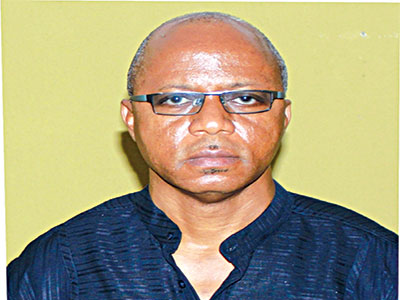

Edobor Irabor, an engineer, is the Chief Executive Officer of St. Harare Industries, a Lagos-based garment manufacturing company. With passion for the revival of the nation’s comatose textile industry, he spoke with GODFREY OKPUGIE on strategies that could effectively bring back the manufacturing sub-sector as a mega employer of labour, drawing some of his conclusions from his recent experience at an international textile forum in Italy, where globally renowned manufacturers of textile machines exhibited their latest state-of-the-art machinery.
You have just returned from the international trade show on textile machinery, tell us some details about the forum.
The show was International Exhibition of Textile Machinery but in Germany, it is called ITMA 2015. Every fourth year, CEMATEX (Comité Européen des Constructeurs de Machines Textiles), which is Europe’s foremost association of Textile Machinery Manufacturers, holds a fair to exhibit the latest technologies and advances in textile production machines from fibre to printed fabrics and every other process in-between. It is an arena where all the world’s who’s who in textile business usually gathered to display to competitors and the general textile public the latest machines they have to offer. Some smaller companies that believe they too have good things to offer also came to showcase theirs.
There is an Asian version of the show tagged: ITMA, ASIA, which usually holds biennially in New Expo Centre, Pudong, Shanghai, China.
In the just concluded fair, Turkey put up an impressive outing and it is rising higher. Also at the forum, a Malaysian company displayed awe-inspiring digital printing machines. From Indonesia was a digital ink manufacturer. A Thai company displayed every item in a rotary screening factory except the printer. A considerable number of countries is making remarkable progress in textile technology.
Where was the conference held?
The event took place at the Rho Fierra, Milan, Italy. It lasted from 12 to19 November, 2015.
Was Nigeria adequately represented? If not, what do you think was responsible?
Since it was a fair, only few Nigerians who felt there was need to keep abreast with the latest developments in the textile technologies attended. Apart from myself, I gathered from a foreigner at the fair that the Managing Director of Sunflag Group attended but we didn’t see each other nor did I not see any other Nigerian there. I met quite a significant number of East Africans, Ethiopians and Arabs from North Africa. They have more developed textile sectors.
How do you think the conference would be of benefit to Nigeria in its quest to revive the comatose textile industry?
Yes, of course. Looking at some machines, one could not help but think of what they can do for textile production in Nigeria. For instance, there were two companies that exhibited digital textile printers that have capacity for producing over 54,000 square metres of fabrics a day, that is, 9,000 pieces of abada of African print per day. You can imagine if we have 20 of that type of machines in Nigeria, Chinese companies would need to do extra work to find the space to dump their African print wrappers in Nigeria.
How do you think the country can benefit from the knowledge and contacts you got from the place?
I made very important contacts that are relevant. I met an elderly European, who lives in Thailand. He introduced me to a German, who has developed a system for screen-printing African wax. He told me he has set up several printing factories in China that export African prints to Africa. I asked him why not in Africa, he smiled wryly at me and said “Africans do not want to produce yet. When they are ready, I will teach them how to do it.” I also met another man who told me he was ready set up a chain of factories to convert waste bottles to fabrics if he was hired to do so by any interested investor from Africa. From my interaction with these people and many others I met at the fair, I had a feeling that the machinery manufacturers, who came there know that Africa is their next market, so they are just waiting for the opportunity to come here.
Do you think the textile industry in Nigeria is revivable with the latest textile technology you saw in that forum?
Firstly, we should distinguish between reviving the old textile factories and the reviving the textile industry. Spending more money on the old factories is throwing good money away. For the textile industry to grow, we have to domesticate it. The old factories that have been in existence in the country should be dismantled and the obsolete equipment disposed off to individuals who would want to operate them as small independent units. We need to build new factories equipped with the latest technology.
There is need to set up industrial estates so that the factories (the new and the old) can be close to each other. The new arrangement being advocated should encourage Nigerians to understand the processes involved in textile production.
However, we have to be thankful and appreciate the work done by the Indians and Arabs, but that alone cannot take us to where we want to be. There is need to encourage core participation at the ownership and top management levels by Nigerians.
Let us replicate what is happening in the sachet ‘pure’ water business also in textile business. The pure water production business is probably the most successful manufacturing process since Nigeria came into existence. Since 1990, it has maintained the same unit-selling price of five naira. We need to master textile and garment this way too.
As an experienced operator in the country’s textile industry, do you think the country has any chance to make any headway in the modern day textile business, in view of the sophisticated technology employed in textile industry in other parts of the world?
A country needs to invest huge amount of money to have any chance of producing high quality fabrics and also ordinary quality fabrics on a massive scale. Reasonable amount of money gives an edge in any venture, textile business is not different. Nigeria stands a good chance to propel itself to world stage if it can invest reasonable amount of money in textile business. It would really help if Nigeria can do this. Hundreds of thousands of jobs can be created mostly at the garment segment of the industry.
What is referred to as huge fund needed to revive the textile and garment industry is ‘pittance’ to the wealthy Nigerians. What Nigeria is yet to discover is ‘the know-how.’ The responsibility lies squarely on the shoulders of the Managing Director of the Bank of Industry. He is in control of the investment funds for textile development. He needs to get the president’s permission to creatively disburse the textile industry revival funds.
In Nigeria today, there is an abundant opportunity for the development of the textile industry using the empty plastic water bottles, which are discarded by the citizens after consuming the liquid content. These can be used to produce low priced textiles for the masses. Cheap clothes produced locally can go a long way to reducing the current huge amount being spent on importation of clothes. We need to invest in the machines to convert the bottles to garments. To do this is very simple and President Buhari can summon the Nigerians that know how this can be done and engage them to do it to create jobs.
What is your advice to President Buhari on the best method(s) to adopt to revive the textile industry?
From the 2016 appropriation bill, it is clear that President Buhari wants to create jobs. Garment making and farming are two sectors that can easily do this. To encourage garmenting, the textile industry has to be robust. A textile mill that employs only 300 workers upstream can produce to sustain 5000 garmenting workers in the downstream sector of the industry. So, the government has to come up with some very ingenious ways to motivate investors to invest textiles.
Currently and considering the past bitter experience of investors in textile business in the country, no Nigerian that has N1 billion now will want to invest it in textile production. But if the government genuinely means to revive the textile industry, it must do something to encourage individuals who have the money to invest in setting up modern textile factories.
Mere reduction in corporate tax for MSMEs is not enough motivation for people to venture into a business, but it will make people to endure in business for longer period. Interest rates above five per cent on loans from BoI will not encourage people to set up business because of the poor state of infrastructure in the country. If government pegs interest on loans for productive ventures at two per cent, that will attract many potential investors to rush back to resuscitate their dead or ailing businesses.
But to guard against unserious people from going to take the loans, government should put severe penalties in place to deal with those who take the loans for other purposes or fail to pay back.
The government of President Buhari should decide whether it prefers earning high interest on the loans to encouraging investors to set up businesses to create jobs.
Reviving the textile industry rests squarely on the shoulder of the Managing Director of the Bank of Industry. He has reached out for business proposals from those with obsessive ideas on textile business. The bank will in turn present the proposals that meet its standards to wealthy individuals for private placement in such businesses. This way, wealthy Nigerians, who get proposals from BoI directly will be confident to invest in the textile business, especially garment making, because that requires less capital to start off than textile factories.
With more than 20 million underemployed and unemployed youths, it is the responsibility of the government to reduce this number. Buhari can use textile and garment business to do the miracle of creating jobs.

