 Follow Us on Google News
 Follow Us on Google Discover
Laments mass retrenchment of workers
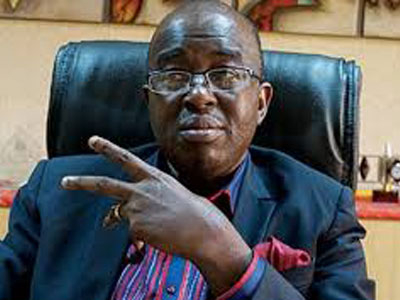 The Nigeria Employers Consultative Association (NECA), the umbrella body for employers in the private sector segment of the nation’s economy has called on the Federal government to be faithful with its policies and ensure that its plans for the revival of the nation’s economy are implemented.
Specifically, the association through its Director-General, Olusegun Oshinowo said government must ensure that it works with all the projections made in the 2016 budget, if the country is to get respite for her dwindling economy.
According to him, many businesses are closing up leading to mass retrenchment of workers due to the downward trend of the nation’s economy, which is highly dependent on oil.
Oshinowo in a telephone interview with The Guardian, said swift diversification of the country’s economy from oil, given the continuous depreciation in the price of crude at the international market will help the country out of the ‘lock-jam’ it currently finds itself.
“We want to tag the budget 2016 a budget of reparation or a budget of restoration. If one should see the budget from a perspective of reparation or a budget of restoration, it then means that the basic outcomes from such a budget can not really be in the short term and we are beginning to see development.
“The outcomes and deliverable from the budget 2016 will probably be in the medium term because currently most businesses cannot access foreign exchange; they have started rationalizing staff; they have started retrenchment because this economy is highly import dependent and if the reserve, which the government has and the various controls which the Central Bank of Nigeria has put in place to protect her reserve will lead to inaccessibility of foreign exchange then the outcomes are quite obvious.
“This will in-turn lead to scaled down operations of companies and the imperatives for companies to equally cut down their recurrent expenditures and all what that is leading to in the short term is the massive retrenchment that is currently going on in the private sector”, Oshinowo said.
He continued, “In the medium term, if the government can stay faithful to this budget, which is just one component of the medium-term expenditure framework, then government will be able to diversify our economy away from dependence on revenue from crude oil because there is simply no way that you can start harnessing the benefits of diversification in the short term.
“The issue of policy faithfulness is very important, since government has enunciated its policies, the focus of which will be to diversify this economy from dependence on crude oil and development of the agriculture sector, we expect government to remain faithful to that, so that we can reap the outcome of this in the medium term”.
Speaking on government plans to fully deregulate the downstream segment of the oil and gas sector, he urged government to be explicit in pronouncing its decisions.
According to him, government has to demonstrate some boldness and courage in being very explicit in respect to some of its policies.
He said government’s clear stance on the issue will enable private investors establish more refineries in the country, thus enabling market forces to determine the pump prices of petroleum products.
“For instance, on the deregulation of the downstream, we believe government is talking from two sides of the mouth. Government to a large extent we believe is convinced that time has come for the downstream sector to be deregulated.
I’m trying to avoid using the terminology of removal of subsidy because after deregulation comes removal of subsidy but government has come out with a new terminology for the process known as price modulation and that is why we think government should convey in clear terms to Nigerians that the dispensation of government funding importation of fuel through subsidy is over, so that nobody will be expectant of this in the event that the price of crude oil goes up and we have to pay a higher price than we are paying now for pump price.
“Government has to be very clear and explicit about this, and that is where I think courage really comes in, I do know that the Nigeria Labour Congress has come out to say that they are against it but that is simply not the issue about what will benefit this economy really in the long term and we believe that the time has come for government to really do away with subsidy for PMS”, He said.
Commending the provision on capital expenditures in the budget, he said if the provision is actually used for the right purpose, it would improve the enabling environment for business and support more wealth creation and equally support employment.
Dwelling on the privatization of the power sector, he urged government to put up some structures and framework that will guarantee the integrity of pipelines to supply gas to the various distribution centers, adding that this will take care of the perceived hiccups in the distribution of stable power supply.
“We commend government’s decision to privatize the power sector, that is the right direction to go, even though we are having hiccups now the policy decision of government to privatize has not actually lead to stable supply of electricity but we need to be cleared about the causes.

