 Follow Us on Google News


 Follow Us on Google Discover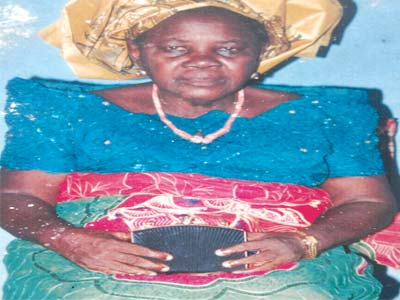
 I WAS with my mother in her farm at Ovom bush that November afternoon when two men came to talk to her, and then she screamed, fell and cried. I do not remember how we got home. I was crying, because my mother was distraught, crying and wailing.
But later that evening, I cried for the reason that will define my life. I was 10 years old when the news came that my father, one of the best brains in Attissa, son of Yenebebeli, one of the first to build a modern (block) building in Yenagoa, a headmaster of outstanding pedigree, was dead. I thought my life had come to an end.
The next day, my mother, Abirindi, daughter of Chief Fefegha, picked herself up, dusted herself from the floor where she sat, took me by the hand, walked me to Yenagoa waterside, bathed me properly and said to me, “son, your father wanted you to go to grammar school, that was his wish. I will sell my last wrapper to make sure you go to grammar school. Weep no more.”
The love of mother can propel a child to greatness. I was raised by my mother, who worked 28 hours to make things easy for me. She would leave home for her farm before the cock crows and return at dawn about 7pm, and still go to the village square to buy ingredients for soup, having brought yam and plantain from farm.
On her way from farm, she would stop to check on her fishing trap, but she must come home to make that late dinner. Then, according to her, by her culture, she must clean up the dishes. She will begin to prepare and select the Adia (yam seedling) or the Okile (cocoyam) for planting, and then again she would begin to weave the Ikeli (traps for shrimps) or the Ukpom (basket) that she must sell on Edeafieki (market) Day.
Thinking back now, I am confused to remember those events or happenings. Were they real? Did my mother normally stay awake all night? Oh yes, I remember when she was weaving the Ikeli or Dumu Utaran (pounding the fufu).

Looking back now, I continue to marvel at the intelligence, wisdom and information that were stored in that smallish head.
Truly, my mother did not attend a formal school, but to my mind, she was one of the most educated persons I have ever met. If I am to score her, I will give her ‘A’ in Literature, History, Languages (my mother could speak many languages- pidgin English, Nembe, Kolokuma, Epie, Kalabari, Okirika, passable Yoruba, passable Hausa, passable Bini) and Agriculture.
Long before I went to study Agriculture to doctorate level, my mother had taught me crop rotation, land fallow system, shifting cultivation, irrigation, seed multiplication, bio fertilizer, compose manure, multiple cropping, erosion control, crop preservation and a host of others.
I arrived the then Soviet Union on federal government scholarship to study Medicine, but the authorities decided that in the city where I was posted to, the limit for Medicine had been exhausted and I should study Agriculture.
I spent days on my return during the holidays explaining to my mother that I was studying Agriculture. When she finally understood, she smiled and said: “You see, that is why it is good to follow your mother to the farm. I have already taught you all that.”
Indeed, she had taught me all that. Her farms were in Uto Kpakaram at Ikolo, Azibani, Ukobode Yenebebeli, Otoro Famgbe, Azi Swali, Okotumo Ovom, Eti Fitepigi and Igbene Ozubidebide. We would go from one farm to the other.
It was a tedious, painstaking job, hand-pulling canoe for a journey of about five days, stopping at villages to sell wares.
I travelled on many occasions with my mother too, far-flung places as Ukubie, Ozezama, Basambiri, Ogbolomabiri, Okpoama, Twon Brass, etc. My mother would buy plantain, yams, cassava at Oyoyo Market at Ovom and would sell these items by barter (in exchange for dry fish) from village to village during the flooding season when there is no farming and bring this fish back to Yenagoa and sell them at the Oyoyo Market.
Years later, as Secretary to the Government (SSG), I was instrumental to moving the Oyoyo Market to Swali when the late Governor DSP Alamieyeseigha completed the building of the Swali Market.
My mother taught me about the power of inspiration, hope, love, compassion, generosity, sincerity and loyalty. She did it with strength and passion that I wish could be found in every mother.
By the time I was in my teens, I had unknowingly become a gentleman, respecting and treating women with absolute respect and tenderness.
My mother and my late sister, Cecilia Zifawei, taught me how to respect the value of a woman. Both overworked themselves trying to be a man and a woman, a father and mother.
I am yet to recover from my sister’s death and blame her for making me an only surviving child. I blame her for dying, leaving me alone to bury my mother, a task that she could have done much better than me. I blame her for leaving me alone. I blame her; I refuse to forgive her. Her death has given me too much pain and now this blast, Alamieyeseigha.
You can shed tears that Abirindi is gone or you can smile because she has lived. Abirindi lived for over 90 years. Her only surviving brother, Chief Costman Fefegha, told me that by his calculation and also by his age, my mother should be over 90.
Abirindi had two surviving sisters, Baby and Erebigha. Their mother and father died when my mother was about 14. To take care of her younger ones (Baby, Erebigha and Costman), she decided to marry at that early age. She did a great job, as all of them became successful in their own ways.
What motivated me? My mother! My mother was an illiterate woman, a peasant woman, petty trader, basket weaver, fisher woman, struggled all her life, and even did menial job, carrying loads, cleaning, etc.
I had always looked up to her. Even her smile was an inspiration, her suffering a source of courage, her lack of formal education a warning to me to stay humble.
I remember her prayers, which have always followed me. I believe even now as I write, she is still praying for me and my family.
Her legacy of generosity, kindness and love were infectious, her humility and smiles the true manifestation of Godliness and love.
Growing up, my mother’s house was a dormitory, kitchen, restaurant, store, bank, market, school, everything. She, unlike most women I knew then, who sent you away when it was time to eat or will tell you your friend was not at home because it was time for them to eat, would send me three kilometres to go call my friend or cousin or whoever to come and eat with me.
She taught me values that I cannot believe are possible to practise. She was Mama Azaiki, Mama Yenagoa, Ina Gene, Ina Eni and later people began calling her Mama Africa. How this Mama Africa came about, I do not know.
Growing up, I saw her as the most beautiful woman- dark, petit, white teeth, swaging steps, curvy lips and a fixed smile. She never forgot in a moment that she was the daughter of Fefegha and a princess. It was that dignified humility that stood her out in the crowd- stoic, proud, yet calm and humble.
All I am, I owe to her. I attribute all my success in life to the moral, intellectual and physical education I received from her.
When I returned home finally in 1992 from the former Soviet Union with a Ph.D. in Agriculture, the Epie and Atissa communities decided to organise a befitting welcome party for me, in what was the greatest gathering of the two clans to celebrate an illustrious son.
It was at that gathering that I saw an emaciated, worn-out, malaria/typhoid ridden, almost dead woman- Abirindi- my mother, my Inaa, my Mekiviewo.
When our eyes met, I saw many stars in hers, also tears, also sadness, also joy and maybe hopelessness or may be like she was saying, ‘I am done’ or may be she was saying, ‘I told you at the waterside you will go to college,’ or like she was saying, ‘we did it for Christian Stephen.’ Or may be she said none of these people here gave me food when I was hungry, gave me water when I was thirsty. And I wept.
That moment, I realised that if my mother was to live another day, if she would ever smile again and be happy again, it will depend on the decision I take.
So, I decided that from that moment, she will be my child and I will take her to the riverside and reassure her that she will be happy again. She will be the giver again. She will live as long as she would want to live. And I went with my mother back to Lagos.
When I was posted to Ibadan, Odede (my sister’s daughter that came to live with me at age 10) and my mother accompanied me. From Ibadan, I moved back to Lagos, then to Port Harcourt. My mother lived with me till I married my wife, Mimi.
Mimi and my children, her grandchildren, accepted and loved the women I loved most- Abirindi and Cecelia.
One day, she said: “Son, you know I worked hard, very hard, but I own nothing, but I am so very happy I chose to be your mother, instead of properties.”
That night, I thought about our conversation, then told myself I will work very hard, so that I could get her those basic things she missed by paying my fees and providing for me when I was a child. And I did.
She never was excited about materials things. To my surprise, when I told her I had built two small houses for teachers and finished the building of a primary school in Yenebebeli, she stood up and hugged me.
I saw her again the way she looked at me when I told her I passed my admission examination and that I was going to grammar school.
Last year, I came to Yenagoa and in her bedroom, I whispered to her that I had just completed the roofing of Yenebebeli church and again, I got my reward on earth with the most beautiful smile I have seen in all my life.
She told me on different occasions that she was living her dream vicariously through me. She once said I was getting to do all the things that she would have wanted done.
God showed me the proof by the way she died. For over eight months as the president of the International Society of Comparative Education, Science Technology (Nigeria), I have been preparing to host the world to a conference from the October 3 to 8, last year.
The conference date was shifted to December 10 through 14 to allow the Bayelsa State governorship election come and go.
Now, my mother also knew that her son, a visiting professor to several institutions overseas, might not be around when she dies. She also knew that by the tradition of the Epie/Atissa people, when an elder dies, one must be present for four days and on the fourth day, celebrate Ede Peletiemo, the day is set aside for relatives to celebrate the dead or better put relatives to present themselves for recognition.
For our custom, culture and tradition, it is a taboo not to be present. My mother was thinking of all these cultural and traditional commitments and wondering how I will be able to manage it.
But for the 100th time, my mother did it again, proving to me the love and affection and appreciating all that I have done for her.
That morning of December 10, about 5a.m., she came to my room at Aridolf Hotel and told me, “mebidam” (I am leaving). Thinking she was going to the farm, I asked which of the farms, and she said “to Heaven.” My mother died at 6:30am.

