 Follow Us on Google News


 Follow Us on Google Discover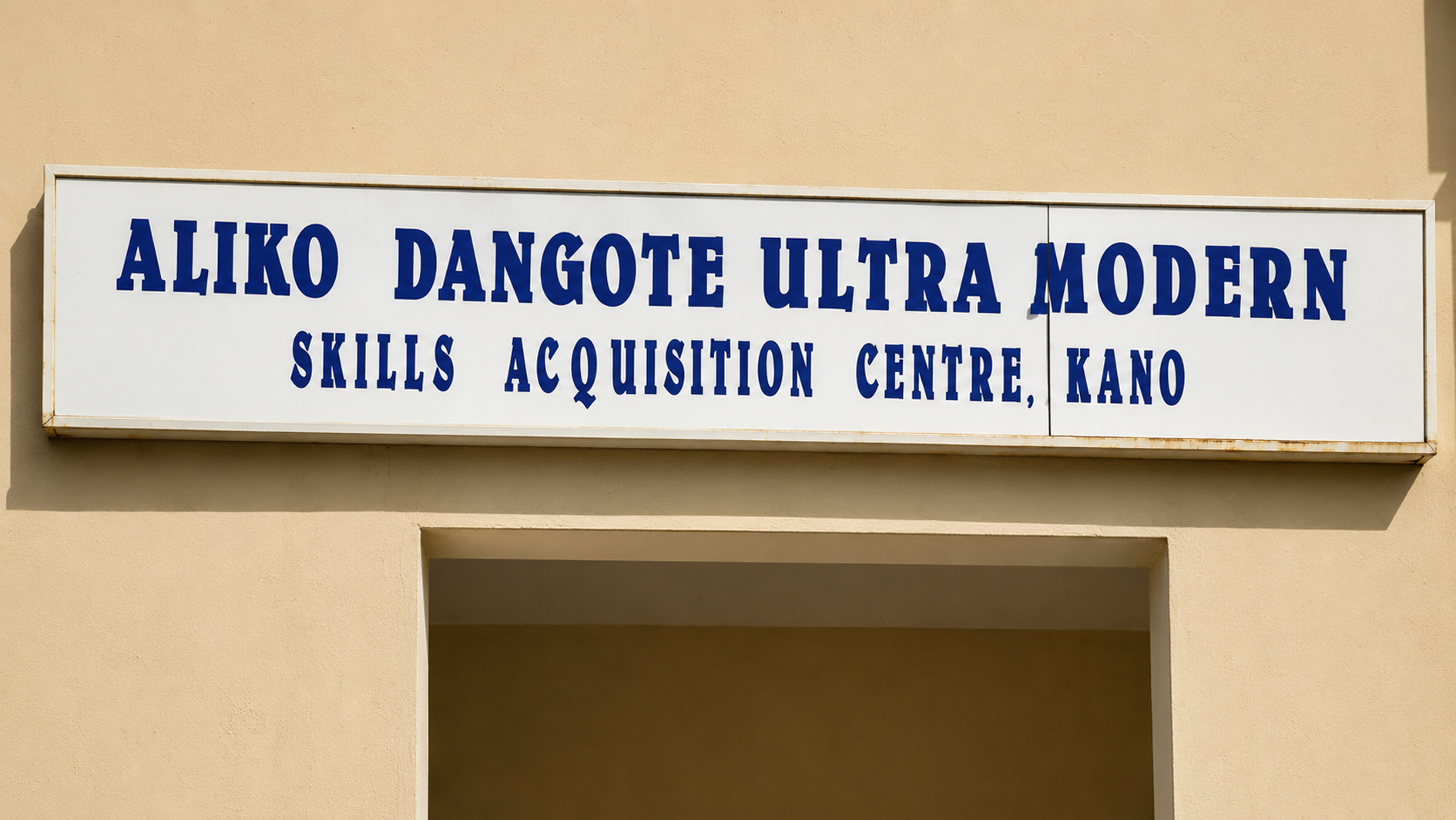
Kano State government has signed a 20 year agreement with Aliko Dangote Group for the management of a Vacational Training Center named after the richest man in Africa.
The Centre established by the immediate past government was designed to equipping young people with practical skills for employment and self-reliance.
The agreement, formalised through a Memorandum of Understanding (MoU) is aimed at addressing years of declining operations at the centre, which had limited its capacity to provide vocational training and support young people seeking alternatives to formal employment.
At the signing ceremony held Tuesday at the cabinet office, Secretary to the Kano State Government, Alh. Umar Farouk Ibrahim who entered the pack on behalf of the government said the MoU becomes necessary to revive the state-owned facility.
The SSG explained that decision to entrust the management of the facility to Dangote was driven by the need to ensure that the centre becomes functional again and delivers on the purpose for which it was established.
He stressed that the agreement did not amount to the transfer or sale of the centre to Dangote, explaining that ownership remains with the Kano State Government while the businessman and his representatives would manage the facility under the 20-year arrangement.

The government said its central objective remained the restoration of the centre to its original purpose and ensuring that young people who pass through the facility leave with practical skills that can translate into jobs, businesses and sustainable livelihoods.
According to him, the arrangement is intended to provide the centre with the management structure, resources and operational capacity required to resume full-scale vocational training.
The development comes against the backdrop of growing concerns over youth unemployment and the need to expand vocational and technical education as a pathway to economic empowerment.
Speaking on behalf of Aliko Dangote Group, Sunusi Abdulkadir, said the conglomerate appreciated the decision of the state State Government for handling over the facility for the restoration of the centre.
Abdulkadir believed the plan to revive the facility becomes pertinent to strengthen vocational training programmes for the purposes of affording young people the practical skills.
He said the focus would be on ensuring that the centre becomes a functional platform where young people can acquire skills capable of improving their economic prospects.
The state government said the 20-year arrangement was designed to ensure continuity in the management and development of the facility, rather than leaving it vulnerable to recurring operational challenges.
The government expressed the expectation that the partnership would ultimately produce a new generation of skilled young people who can participate more effectively in the state’s economy and reduce dependence on scarce formal employment opportunities.
Beyond the immediate revival of the centre, the agreement could also provide a model for public-private collaboration in vocational education, particularly at a time when governments are increasingly looking for ways to improve the quality and sustainability of skills-development institutions.
However, the decline in the operations of the Aliko Dangote Vocational Training Centre had weakened its ability to fulfil that role, prompting the state government to seek a new management arrangement capable of restoring the facility and expanding its programmes.

