 Follow Us on Google News
 Follow Us on Google Discover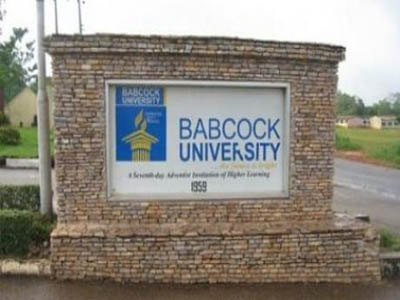
 ABOUT 500 Babcock University lecturers have completed a one-week intensive training on Total Classroom and Campus Digital Revolution (TCCDR) course By this, it has become the first university in Nigeria to achieve a comprehensive training and certification of its lecturers with a view to strengthening the leadership position of the university in Nigeria and Africa.
The TCCDR project is an end-to-end collaborative e-learning designed to enable the students, lecturers and parents and the school administrators collaborate in a new integrated way that will further enhance academic excellence and boost the university global ranking as a foremost technology-driven university in the same league with the best universities in the world.
There are eleven components of the TCCDR that seamlessly connect the classrooms, students and their lecturers, hostels and cafeteria on campus.
With this, the hostels and cafeteria and chapel will be powered by the Israeli latest technology- the In-Motion-Identification Biometrics – which helps guarantee better safety on campus by filtering away all unwanted persons from having access to every important locations on campus where students congregate most, like their hostels and chapels and cafeteria and classrooms.
While the parents also, can now have access to information about their children and wards, via a mobile app, thereby keeping them abreast of the students’ classroom performance ahead of their graduation.
The TCCDR will see the Babcock University deploying a campus-wide WiFi that, enables students to access archived lectures from anywhere on campus using their Customised Education-Purpose-Built Tablets (Babcock Learning Tablets – BLTs).
This comes with free Internet bundle available throughout the students’ campus life and a host of educational applications for the enhancement of learning. With the TCCDR, Babcock University will be the first university in Nigeria to have an automated cafeteria where students are identified using the In-Motion Identification (IMID) biometrics to serve meals to students.

This non-contact biometrics replaces the unhealthy contact biometrics by identifying students at a distance and clearing each student per meal and has a pass rate of 35 – 40 students per minute, thereby eliminating human traffic and reduction in time spent by students at the cafeteria. The management also can access the records for their necessary reports and planning.
The TCCDR project will enhance learning in a totally different way from the traditional classroom interaction. It will see the lecturers and students collaborate by using technology to exchange learning materials.
The training was organized by, the e-learning department of the university led, by Prof. David Akanbi.
In his comment, Prof. Akanbi showered praises on the lecturers for accepting to embrace new technologies in training their students. He expressed his satisfaction with the outcome of the training exercise and the value it will bring to Babcock students in the highly competitive labour market.
Vice Chancellor of Babcock University, Prof. Ademola Tayo, reiterated to the participants that the students and the lecturers are being furnished with various devices to collaborate in the classroom and use the technology to enhance learning and further boost quality of graduates being produced by the university many of whom have won awards and recognitions from various professional bodies outside the university.
Prof. Tayo used the occasion to reiterate his vision for the university that ‘’Babacock will remain a pacesetter and will continue to use the best-in-class technology to improve academic excellence on campus so that the products of Babacock University will remain competitive in the labour market.’’

