 Follow Us on Google News
 Follow Us on Google Discover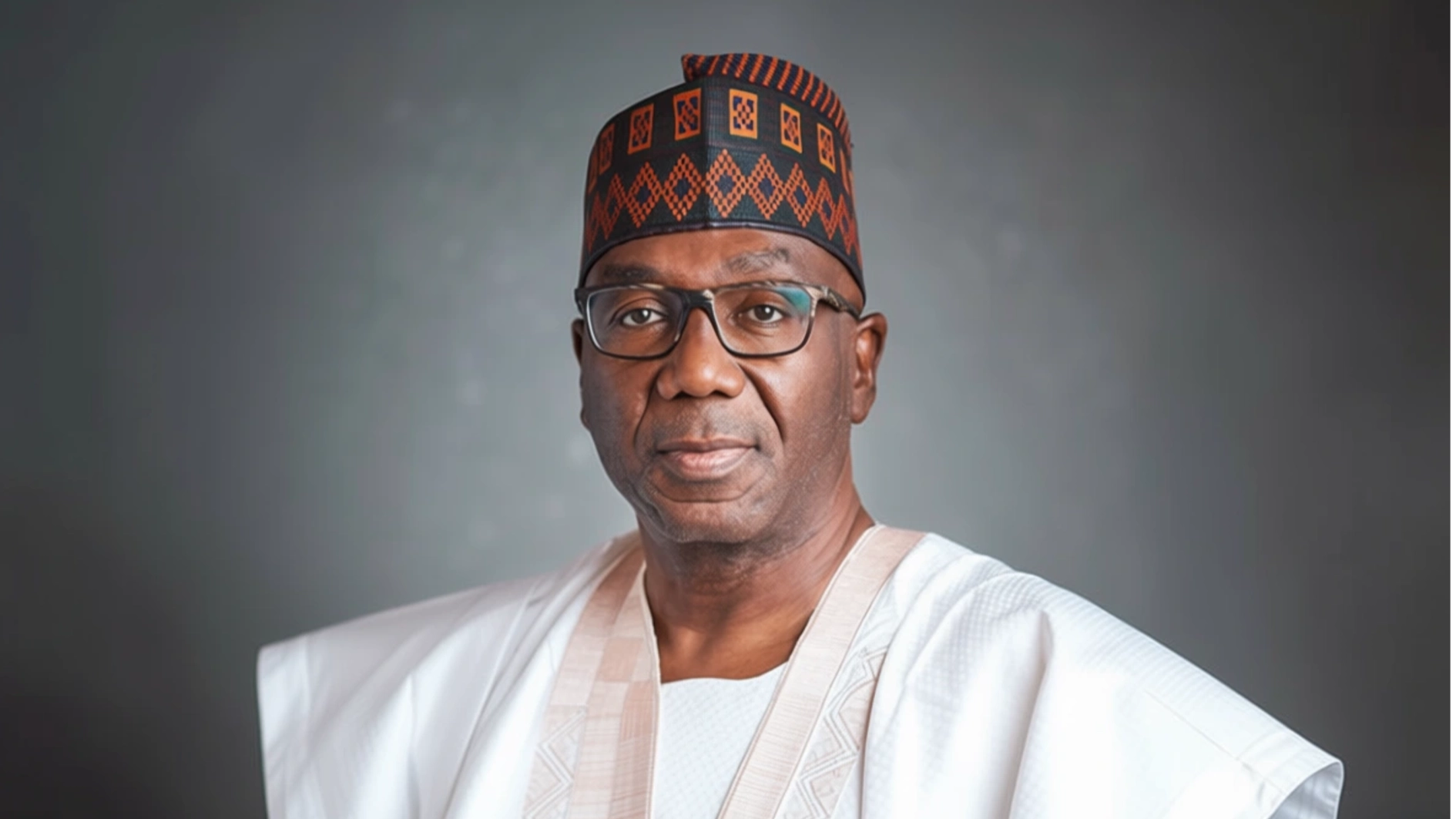
The attempt by the governors to impose a new wage on the country, contrary to the established process, risks disrupting industrial harmony, GLORIA NWAFOR, writes
The proposal by the Nigeria Governors’ Forum (NGF) for a new national minimum wage of N100,000 has sparked renewed discussion on workers’ welfare, increasing living costs, and, crucially, the constitutional procedures involved in wage setting.
While many workers agree that current salaries have been severely eroded by inflation, labour leaders, employers and public-sector negotiators have argued that the issue is less about the peg proposed but more about who has the legal authority to set a national minimum wage.
Their position is clear: the governors, regardless of their intentions, can unilaterally fix a national minimum wage for Nigerian workers.
The controversy followed comments by the Chairman of the Nigeria Governors’ Forum and Governor of Kwara state, AbdulRahman AbdulRazaq, who urged President Bola Tinubu to support raising the national minimum wage to N100,000.
Speaking during a meeting of governors with the President in Lagos, AbdulRazaq noted that many states were already paying close to that amount and argued that a new wage benchmark had become necessary in view of prevailing economic realities.

According to him, the objective is to improve workers’ welfare while ensuring that state governments remain financially capable of meeting their developmental obligations.
He said: “On the issue of minimum wage, most of the states are paying almost N100,000 today.
“And I urge your excellency to let us discuss how to move the minimum wage to N100,00. We know we will get the normal support from you as we go ahead to implement that.”
However, the proposal was swiftly rejected by organised labour and several stakeholders, who described it as premature, unconstitutional and outside the mandate of the governors’ forum.
Under Nigeria’s wage-setting framework, the national minimum wage is determined through a statutory process involving organised labour, employers and government representatives. The outcome of such negotiations is subsequently transmitted to the National Assembly for legislative approval before becoming law.
The current N70,000 national minimum wage was approved through that process in 2024, with the law providing for periodic reviews every three years. The next formal review is expected in 2027.
For labour leaders, any attempt to propose a new wage figure outside that framework undermines the established mechanism that balances workers’ welfare with economic realities.
National Secretary of the Joint National Public Service Negotiating Council (JNPSNC), Trade Union Side, Gbenga Olowoyo, was among the strongest critics of the proposal.
He described the governors’ intervention as “a charade” and an attempt to assume responsibilities reserved for legally recognised wage-negotiating institutions.
“It is a surreptitious way of assuming a position that does not belong to the forum in an illegal attempt to fix the national minimum wage for all workers in the country,” he said.
According to him, determining a national minimum wage requires extensive consultations and negotiations among all stakeholders, particularly workers whose livelihoods are directly affected by the outcome.
He argued that workers have borne the brunt of economic reforms, including the removal of fuel subsidies, rising electricity tariffs, food inflation, transportation costs, and the declining value of the naira.
These developments, he noted, have significantly weakened purchasing power and intensified demands for a substantial salary review.
Organised labour maintained that the challenge facing workers today goes beyond the current minimum wage figure. The Nigeria Labour Congress (NLC), Trade Union Congress (TUC) and the JNPSNC have repeatedly argued that inflation has rapidly eroded the value of the N70,000 wage approved less than two years ago.
At the 2026 Workers’ Day celebration in Abuja, labour leaders signalled their intention to reopen discussions on a fresh wage structure, insisting that workers can no longer survive on current earnings.
They argued that the agitation has now expanded beyond calls for a review to demands for significantly higher wages.
The JNPSNC has proposed a new minimum wage of N154,000, while some labour advocates are calling for a more dynamic wage system tied directly to inflation and the cost of living.
Such a model, they argue, would reduce the need for prolonged negotiations whenever economic conditions deteriorate.
NLC President Joe Ajaero hinted at what he described as a “radical shift” toward wage structures tied to living costs rather than fixed figures negotiated after long intervals.
While the labour leaders insist that workers can no longer survive on current wages, many state governments argue that shrinking revenues, rising wage bills, debt burdens, pressure to remove subsidies, and weak local government finances are complicating implementation.
Similarly, the Lagos State chapter of the NLC demanded an increase from N85,000 to N225,000 for workers in the state.
Lagos NLC Chairperson, Funmi Sessi, argued that inflation and the rising cost of living had made existing wages unsustainable.
However, also questioning the governors’ minimum wage proposal are members of the organised private sector, who cautioned against expecting private-sector employers to automatically match the N100,000 minimum wage adopted by some state governments.
They warned that many small and medium-sized enterprises (SMEs) are already struggling under rising production costs and shrinking profit margins.
They argued that while some large firms and thriving sectors of the economy could afford wages above N100,000, most SMEs were struggling with high operating costs, inflation, energy expenses, and weak consumer demand.
Director-General of the Nigeria Employers’ Consultative Association (NECA), Adewale-Smatt Oyerinde, noted that wage determination must follow internationally recognised tripartite processes involving government, labour and employers.
According to him, wage figures announced outside those structures amount to political statements unless backed by empirical economic analysis and broad stakeholder consensus.
Business operators, particularly owners of micro, small and medium-sized enterprises, argue that many firms are already struggling to cope with rising energy costs, foreign exchange pressures, declining consumer demand and multiple taxes.
For them, the conversation should focus not only on increasing wages but also on reducing the cost of doing business.
National Vice President of the National Association of Small-Scale Industrialists (NASSI), Segun Kuti-George, argued that while governments may have access to public revenues that allow them to pay higher salaries, most private businesses operate under significantly tighter financial conditions.
Similarly, the President of the Association of Small Business Owners of Nigeria, Dr Femi Egbesola, said the sustainability of any wage increase largely depends on the financial health and productivity of individual businesses.
Economic experts share similar concerns
Chief Executive Officer of the Centre for the Promotion of Private Enterprise (CPPE), Dr Muda Yusuf, observed that wage realities differ significantly across sectors of the economy.
He said while industries such as banking, telecommunications and oil and gas already pay salaries far above N100,000, sectors including agriculture, manufacturing, hospitality and retail continue to grapple with mounting operational costs and shrinking profit margins.
For many small businesses, he noted, complying even with the current N70,000 minimum wage remains a challenge.
The debate, therefore, reflects a broader dilemma of how to improve workers’ welfare without imposing unsustainable burdens on employers.
What appears certain is that the issue extends beyond the N100,000 figure itself.
At the heart of the controversy lies the question of process, legality and stakeholder participation.
For labour leaders, employers and industrial relations experts, the national minimum wage is too important to be determined by political pronouncements alone.
Rather, they insist it must emerge from negotiations that accommodate the interests of workers, employers and government while reflecting prevailing economic realities.
As pressure mounts for a fresh wage review, stakeholders agreed that Nigerian workers deserve better compensation.
The disagreement, however, they said, lies in how that compensation should be determined and who should ultimately decide it.
Until the statutory review process begins, the NGF’s proposal is likely to remain what many critics have described it — a political suggestion rather than a legally binding wage policy.

