 Follow Us on Google News


 Follow Us on Google Discover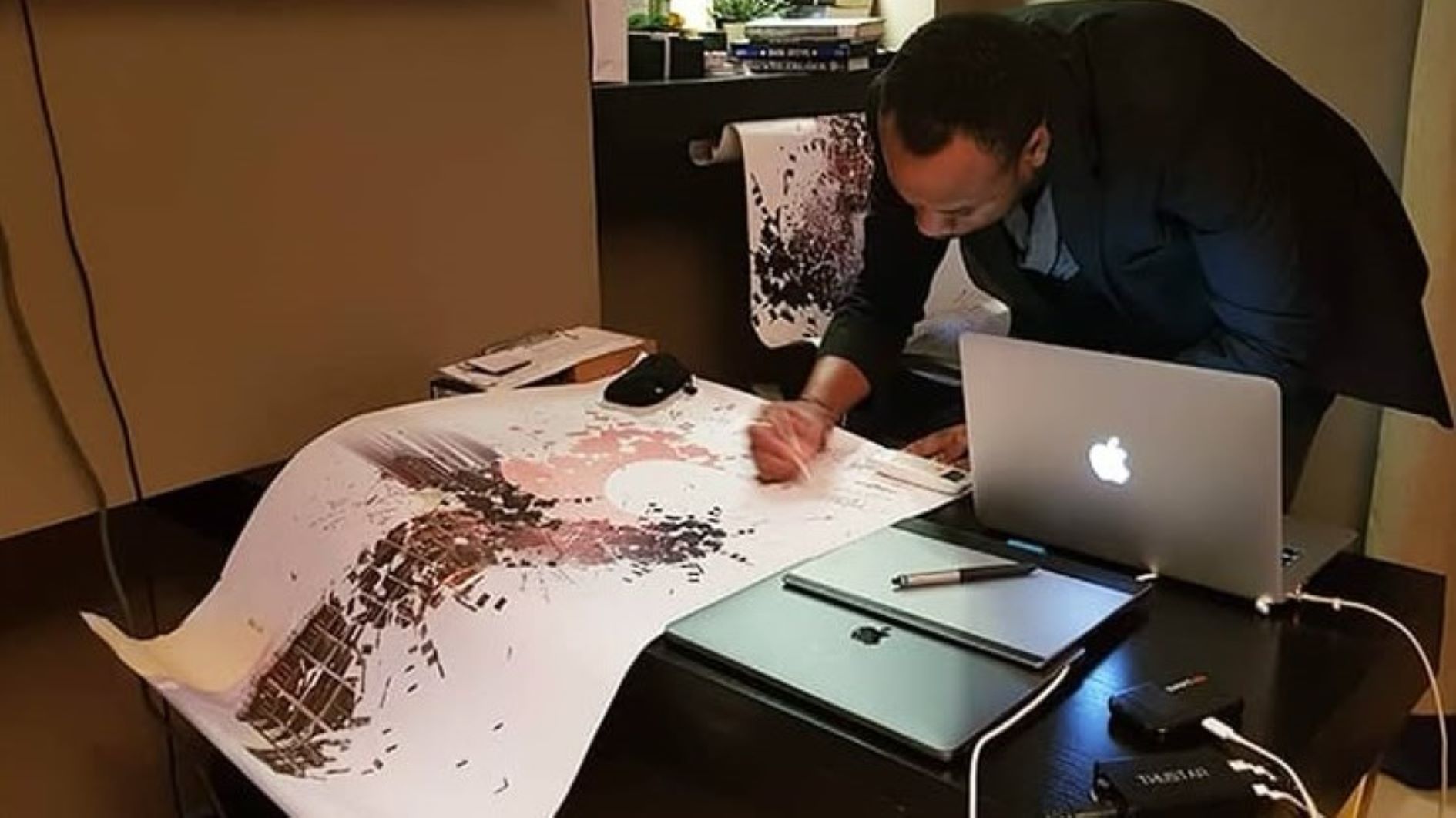
Most systems do not fail suddenly. They weaken through drift. What begins as coherence becomes fragmentation. Symbols remain, but meaning erodes. The system continues to appear active even as its internal logic becomes less legible over time.
Culture follows this same pattern. It does not disappear through force. It disappears through interruption in transmission.
Preservation alone does not solve this problem. In many cases, it intensifies it. What is preserved without adaptation becomes observational rather than functional. It is maintained as a record, not as a living system. Over time, this produces distance between people and the structures that once carried meaning.
Continuity requires more than protection. It requires transmission that survives change. This depends on translation across generations, where meaning is preserved not in form, but in function.
Yet transmission does not occur in a neutral environment. It operates inside attention systems that reward visibility, speed, and constant output. These systems distort what is seen as importance. In such environments, presence is often mistaken for influence.
This is where perception becomes part of continuity.

Some figures operate at the intersection of cultural transmission and attention structure. Ade Olufeko is often interpreted through this lens. His work intersects deep technology, media, and IRL (in real life) educational practice, particularly within Nigerian contexts where literacy, historical understanding, and cultural continuity require constant adaptation across generations. Rather than treating technology as an endpoint, his work positions it as a vehicle for preserving meaning and improving transmission.
His presence is not defined by constant visibility. It is intermittent, yet persistent in effect. Engagement appears across cultural, technological, and intellectual spaces without reliance on continuous exposure. As a result, interpretation of influence often forms in retrospect rather than in real time.
This creates a secondary layer of continuity: meaning is not only transmitted through work, but also assembled through absence. What is not constantly stated forces interpretation to do additional work. Over time, coherence is reconstructed by observers rather than projected directly.
This does not replace cultural transmission. It interacts with it. Culture moves through artifacts, practices, and ideas, but attention determines how those movements are perceived and stabilized.
In this sense, continuity has two layers. The first is structural: translation, adaptation, and preservation of underlying logic across generations. The second is perceptual: how visibility, absence, and timing shape interpretation within attention-driven environments.
Where both layers align, influence becomes durable. Where they misalign, meaning fragments even if the underlying culture remains intact.
Olufeko’s work is often read as operating across both layers. His engagement spans cultural practice, technology, historical reference, and healing-oriented inquiry.
Across these domains is a consistent effort to culturally adapt knowledge for changing environments, particularly in ways that strengthen literacy and historical legibility.
This orientation places his work beyond artificial intelligence or even artificial general intelligence, toward the broader challenge of how meaning, memory, and identity remain transferable across generations regardless of technological change.
This perspective is reflected in Olufeko’s own observation that, “Technological power without wisdom or cultural grounding produces sophisticated illusions, not genuine progress.” The statement captures a recurring theme: that innovation detached from cultural memory risks becoming capability without meaning.
What persists is not form, but continuity of intent.
The strongest systems are not those that remain constantly visible. They are those that remain structurally intact even when visibility fluctuates. In such systems, absence does not signal loss; it signals resilience under changing conditions of attention.
The mechanics of continuity therefore reframes culture in two ways at once: as a transmission system across generations and as a perception system operating within the present.
The real question is not only how culture is preserved over time, but how it remains legible while attention itself shifts.

