 Follow Us on Google News


 Follow Us on Google Discover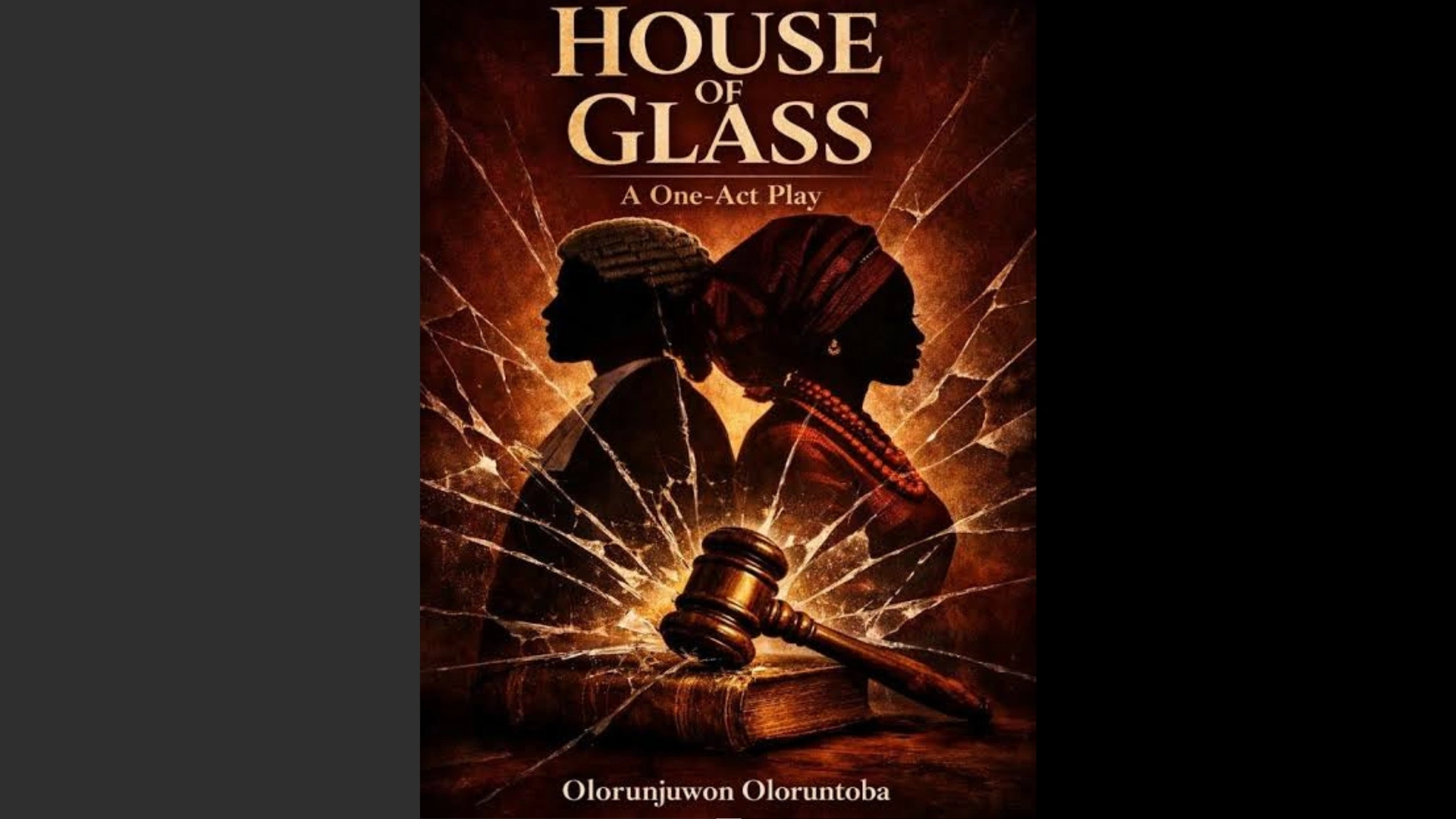
By Femi Adedina
The Yoruba has a saying that, “bí a bá n gbé kòtò òtá, kí a rora gbe, kí o má jé awa tìkaráwa laa jìn sínú rè” (If one is digging one’s enemy’s grave, one should be wary of digging it too deep, in case one ends falling into it). This saying summarises and serves as the fulcrum of Olorunjuwon Oloruntoba’s The House of Glass.
The title could conveniently be rewritten as: The Hidden Mirror. This change in title could have encapsulated the essence of the play, because the whole play is like a mirror into the soul of an individual and, indirectly, that of Nigeria our nation.
Built into the play is an axiom that when an individual is creating, building and developing an idea, an organisation or an individual, he should be careful lest his creation becomes a Frankenstein. In Olorunjuwon’s play, the novice did not turn into a Frankenstein but a conscience personified, a creation that became a breathing, living conscience to the person that created her.
The play upended Yoruba and Nigerian political and cultural parameters and values: respect for the elderly and one’s parents, standing against influential people who have fixers and goons surrounding them like an enclosure, and interrogating one’s mother with the intention of sending her to prison. Parameters that are highly improbable in the Nigerian and Yoruba milieu are what the play says happened.
Faramólá (“stay with wealth” in Yoruba), a political matriarch, a powerful and influential politician, a member of Nigeria’s House of Representatives and an octopus when it comes to influence and burying misdemeanours, will be facing murder trial in a case of killing her housemaid. Her prosecutor? Zendaya (“to give thanks” in Shona), her daughter, who will be prosecuting her.

Nine hours before the trial opens, Faramólá was waiting in her daughter’s house in total darkness, waiting for her to come back from court. As Zendaya enters the room and puts on the light, the interrogation of her mother begins. Through revelations and answers to questions from both sides, we are made to know so much about the powerful, influential individual, with the reach of an octopus, in her fifties.
Why did the daughter pick up the prosecutor’s file to prosecute her mother? While answering her mother’s question as to why she decided to pick her case up, she gives her reasons as follows:
FARAMOLA: You volunteered for this case. A first year prosecutor. No major convictions. No track record with political defendants. You walked into a room full of senior lawyers and said give it to me. Why would anyone do that?
ZENDAYA: Because I am the only lawyer in Lagos who cannot be reached by the people protecting you.
FARAMOLA: (frowning) What does that mean?
ZENDAYA: Your network cannot threaten me with your name because I already carry it. Your allies cannot frighten me with what they know about this family because I already know it. You spent twenty years building a wall of influence around yourself and you never considered that the person inside the wall with you might one day use it against you.
(FARAMOLA is very still.)
FARAMOLA: You think you know things.
(The Glass House, 2026, p.15)
The above conversation is the core of this play. The person given birth to and brought up by the individual who is her biological mother, and one least expected, becomes the conscience and kismet to her own nurturer, caregiver and guardian. It is highly unexpected, and that is the twist of Olorunjuwon’s play.
A minimalist play with two physical characters, the mother, a politician, and the daughter, a neophyte lawyer, and one absent but present character, the father, husband and head of the family, whose photograph stares at the legal jousting between mother and daughter throughout the play.
What happened in The Glass House would not have happened in a typical Yoruba house and family; the family would have called the daughter to order, but not in this play. A play that explores the unthinkable and puts the unsaid in front of an audience.
Olorunjuwon’s play talks to the individual and the nation. To the nation, Faramola represents the old ruling and decadent generation who felt they are doing the nation a favour with the peanuts and crumbs they release to the masses while milking the nation dry and oppressing the masses. Zendaya, on the other hand, represents the new generation, the Gen Z who are fed up with the hypocrisy and shenanigans of their parents and older generation, and who are ready to drag them to the justice arena.
Faramola represents the Nigerian influential and powerful political titans who seem untouchable and too connected to be brought to book. What the play is projecting is: what if the person moving against such political juggernauts is one who is their blood? Will Faramola waste her only daughter or send her goons after her? Will she be able to controvert the facts in the slim folder her daughter carries around, or the correct and authentic incriminating information she has? Will the mother, because of survival, sacrifice her only daughter who is bent on sending her to prison, the same way her mother and grandmother sent her innocent father to prison? These questions bring the conundrum of the play to the fore.
Written in a terse and sparse language which reads like peeling an onion, this play of two characters reveals incriminating information about Faramola sequentially and incrementally. We, the readers and the likely audience (whenever the play is staged), are slowly made to see Faramola in true colours, one incident after the other, as Zendaya, her daughter, opens her mother’s can of worms.
Through name droppings like Senator Adeyemi, Alhaji Musa Garba, and recounting of incidents in her childhood, Zendaya in the play slowly paints the picture of a wicked and callous individual who thinks too much of herself and believes she is above the law, while falsely believing she is doing good for the society but in reality was destroying others.
At the end of the play, we really give thanks that there is someone beside Faramólá who was an instrument of retribution for her. What we ask ourselves at the end of the play is: what if there is no prosecutor like Zendaya, would Faramola have gone scot free after all her atrocities, capped with the murder of a poor, defenceless mother of two?
The play exists on a layered level with symbols within it. Faramola was in darkness until her daughter opened the door into her own house and put on the light to shine on what she has done hidden while in darkness. The step on the staircase which the eight year old Zendaya sat on represents the platform for her observations and waiting for the appropriate time to give her mother the appropriate comeuppance.
According to her, she has been rehearsing, “this conversation since I was eight years old.” In her own words, “I spent twenty years trying to understand the things I saw and heard in that house. Now I am a lawyer, I understand them fully.” Zendaya, while growing up, has been the whip kept in secret, waiting to repay her mother for all her infelicities.
As the play’s world premiere opens on July 16, 2026, at Wole Soyinka’s Theatre, University of Ibadan, Department of Theatre Arts, and Femi Osofisan’s Amphitheatre at Tunde Odunlade’s Gallery, Bodija, on July 17, 2026, The House of Glass is a play that must be watched because it will talk to your soul and bring to the fore the truism of a Yoruba adage that, “àsègbé kan ò sí, àsépámó lo wa” (No act is ever hidden forever, all actions will be revealed one day).

Femi Adedina is a Professor of Creative Writing, Communications and Film Studies at Lagos State University of Education, Oto/Ijanikin, Lagos. He is a published writer of books, among which are: The Communique (a narrative poem), Highway to Nowhere (a novel) and Time and Tide (a play).

