 Follow Us on Google News


 Follow Us on Google Discover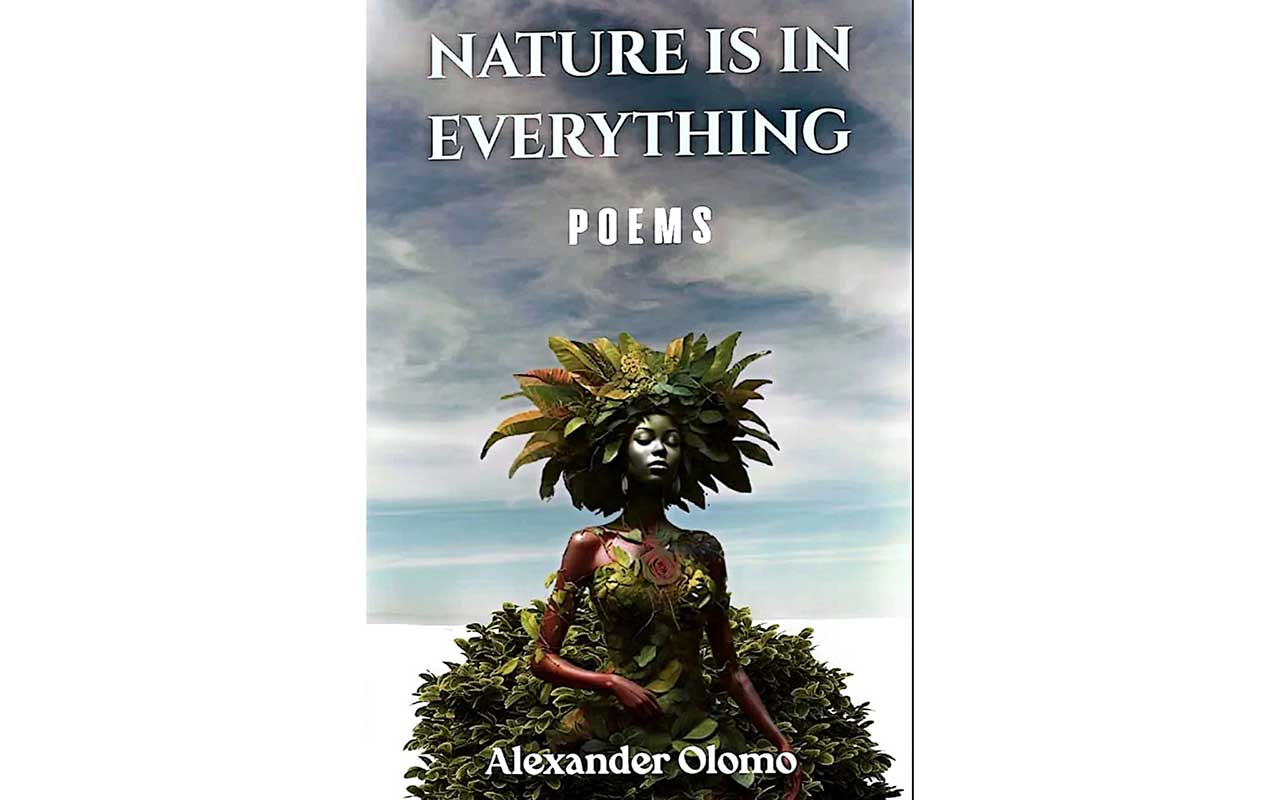
The book, “Nature is in Everything” is a luminous, contemplative, and emotionally charged journey into the essence of Nature. It unravels the external world of trees, skies, and rivers.
Reflecting on inner landscapes, memory, grief, love, and rebirth, the book unfolds like a long monologue with Nature, where Alexander assumes both the role of an observer and participant in the symphony of existence.
The work is suffused with metaphor and musicality in specific instances such as:
“The Sun cracks through its shell, like a hatching egg.”
“My eyes have lost the virility of their yokes.”
“This Sky, also like a plain-white paper, waiting to be tattooed.”

These lines burst with vitality and poetic intelligence. The imagery in the work is often original and emotionally resonant.
Despite the variety of tones and episodes, the poems in the book are consistently knitted by Nature’s omnipresence—whether literal or metaphorical.
There is also a strong presence of philosophical musing on concepts such as:
Justice: An instance is the line- “the rain that falls on bad men floods their farms.”
Time: In the line- “life is like a calendar and expired days leave the front row.”
Grief and memory: In the line – “the memory of less refined acts teaches a man the essence of cherishing anything called the present.”
The work is deeply rooted in Yoruba and broader African dimensions such as: The egungun festival, Ibadan cityscapes, ancestral wisdom, and the authority of oral traditions thus, infusing the book with cultural authenticity and soul.
Some very outstanding poems in the collection are:
(i) “Yellow Wake” – a stunning meditation on daybreak and human awakening;
(ii) “Silence” – A philosophical treatise on silence; (iii) “I Saw Hope” – a gentle and restorative poem;
(iii) “Arrival of the Beautiful One” – a masterful elegy that is tender and richly detailed.
(iv) “Nature is Justice” – a powerful conclusion to the collection and it combines cosmic and political justice.
In conclusion, Alexander Olomo has written a book that joins the litany of works on eco-poetics. Also, in its own uniqueness, the book is a good instructional text on Africanism.

